


Navigating the world of titles can feel like a grammatical minefield, especially when you’re trying to dodge an awkward social slip. If the whole Ms vs Mrs vs Miss debate has ever left you scratching your head, you’re in the right place.
Getting this right is a key life skill, and it becomes absolutely essential when you’re addressing your wedding invitations with perfect etiquette.
The History Of Female Title: Miss, Ms Or Mrs
The prefixes Miss, Mrs., and Ms. all trace their lineage back to the formal term “Mistress.” Way back in the 17th and 18th centuries, these labels didn’t actually broadcast a woman’s marital status at all. That entire connection shifted dramatically during the 19th century, which is precisely when Mrs. and Miss began their long association with whether or not a woman was married.
What’s The Difference Between Miss, Ms, And Mrs?
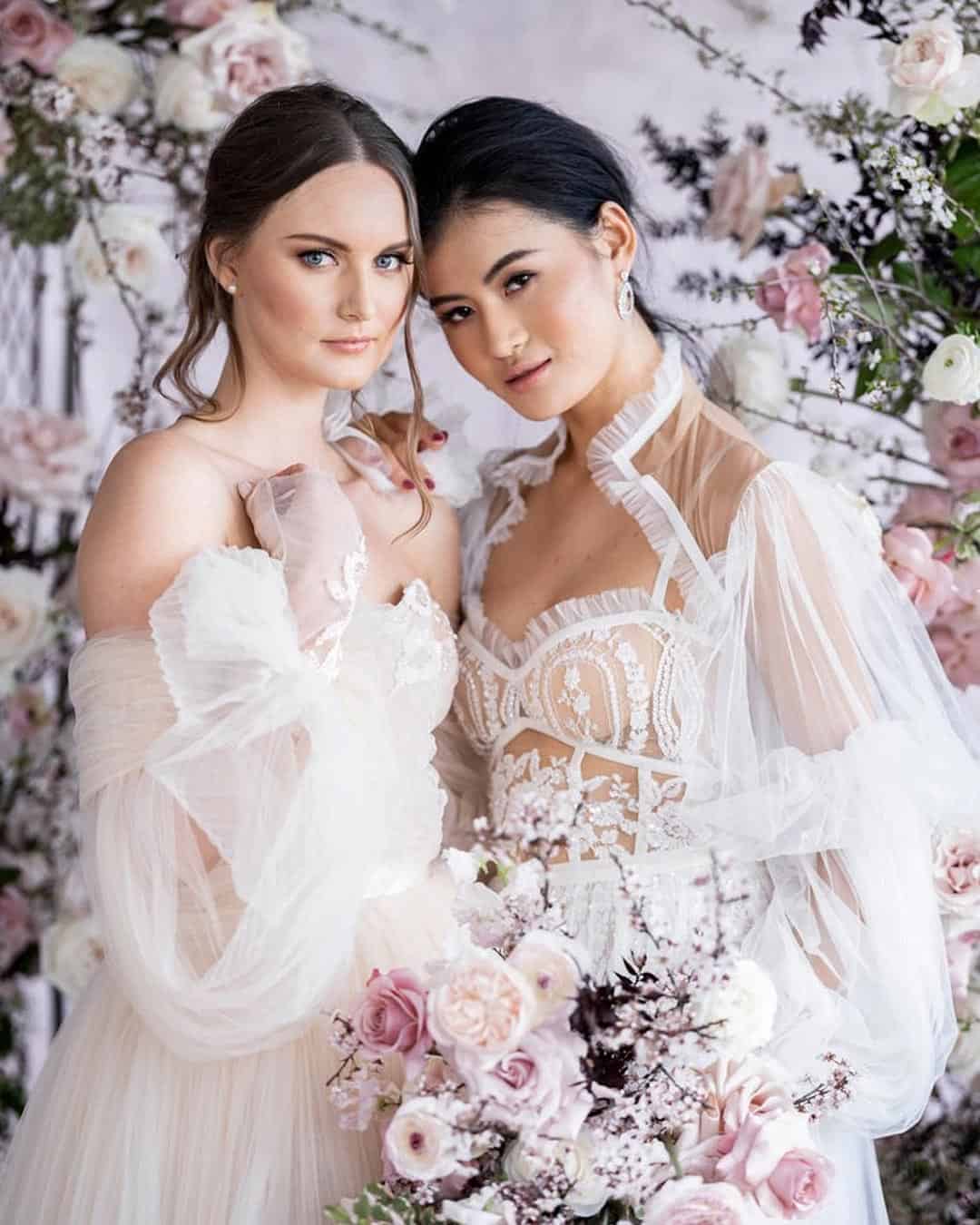
A permanent cloud of confusion seems to hover around the real difference between Miss, Ms., and Mrs., with a tangle of different answers floating around. To slice through the noise, the outline below is clean, simple, and instantly usable.
Main features of the “Miss” title
In the modern world, the title “Miss” gets pulled out when you’re speaking to or about a young girl, or an unmarried woman who is roughly under 30. It’s the classic go-to in classroom hallways for young female students or women who haven’t tied the knot.
Just think about all the places “Miss” pops up, from pageants like “Miss America” to a simple “excuse me, miss” in a crowded shop.
See some examples below:
- That vintage car belongs to Miss Frederick.
- Miss Roseline has been a professional ballet dancer for years.
- Miss cute smile is back again. That smile simply lights up the entire room.
Main features of the “Ms.” title
Reaching for the “Ms.” title is a much more general, broadly safe move. It’s the standard pick for addressing a woman when you’re totally in the dark about her marital status, when she’s kept her maiden name, or if she’s roughly over the age of 30.
This title shines because it serves up a dose of respect without sneaking in any assumptions about a partner.
You wouldn’t use it for young girls. It’s designed specifically for addressing adult women.
Examples for you below:
- Ms. Jordan-Bruno Adeline just celebrated her wedding yesterday.
- Ms. Bradley Marie tragically lost her husband.
- Ms. Bruno Stella is young, gloriously single, and absolutely thriving.
Main features of the “Mrs.” title
Using the title “Mrs.” is strictly reserved for a woman who is currently married or was married in the past. This title generally gets locked in once the marital status is confirmed.
Very often, women hold onto it even if their spouse passes away or the marriage ends in divorce, although there’s absolutely no rule that says they have to.
Here are some examples:
- Mrs. Stevens owns a sleek black dog.
- Mrs. Brad Stevens owns a sleek black dog.
- Mrs. Stevens Alicia owns a sleek black dog.
When You Get Married Is It Ms Or Mrs

After the wedding confetti settles, you get the chance to change your last name to match your partner’s, though it’s completely optional. If you decide to take that post-wedding name leap, you’ll most commonly be addressed as Mrs. But if your plan involves proudly keeping your maiden name or you simply prefer to keep your marital status private, the door is wide open to use Ms. instead.
Mrs Vs Ms Vs Miss: Which To Write On Wedding Invitations

When your gorgeous suite of invitations is ready to hit the mailbox, you need to be certain your etiquette game is 100% flawless. If you’re hunting for a rock-solid way to know exactly when to deploy these titles on your envelopes, this quick little guide is your answer.
Mrs. belongs on an invitation when it’s heading to a married woman, or naturally, a married couple when using the classic “Mr. & Mrs.” format. Ms. should be your default choice for addressing all female guests who are roughly over 30, whose marital status is a mystery, or whenever you just want to show a baseline level of respect.
Honestly, if you’re ever frozen in uncertainty, this title is the safest harbor. Miss should make an appearance on a wedding invitation only when it’s going to a very young girl attending the festivities, or someone navigating their teens and 20s.
How To Address A Woman If Her Marital Status Is Unknown
The absolute safest route to take when a woman’s marital status is a total question mark is to lean on the title Ms. By sticking with Ms., you’re saluting her respectfully while staying completely neutral. No broadcasting any guesses.
Most of the time, a widow who previously used the title Mrs. will hold onto it after her partner has passed, but this isn’t a universal rule. If you can’t politely ask or dig up the info, falling back on Ms. keeps you on perfectly safe ground.
Much like the situation with widows, some divorced women keep both their married last name and the Mrs. title as a permanent fixture. Others make a clean switch to Ms. or might even bounce back to their maiden name entirely.
If you can’t unearth the details on how a divorced woman prefers to be addressed, you can always rely on Ms. as your sign of pure respect.
Mrs Vs Ms Vs Miss Pronunciation
While they might look somewhat similar on paper, the pronunciation for Mrs., Ms., and Miss travels down three very different paths. It can be seriously tricky to catch the subtle differences when someone says the title out loud, but knowing the distinct sound of each one is vital.
The rules for voicing Mrs. can even shift slightly based on where you are geographically. The most widely followed rule, however, dictates that Mrs. sounds exactly like “mis-iz.” Even though Ms. and Miss might sound remarkably alike to the ear, the title Ms. is actually a shorter sound and frequently comes out as “miz.” The easiest way to nail the pronunciation of “Miss” is to simply remember that it rhymes perfectly with “this” or “hiss.”
Additional Titles

Of course, the universe of formal address expands far beyond just Ms. vs. Miss vs. Mrs., and you’ll probably need a few more arrows in your quiver, especially when tackling those wedding invitation envelopes.
Madam
This weighty title is typically reserved for a woman holding a high office or position of power, think “Madam President.” You won’t bump into this one nearly as often as Ms., Miss, or Mrs., but it can still surface on rare occasions.
Mr. or Mister?
Mr. is simply the shortened, snappy version of Mister, and both are universally used to address or refer to a man regardless of whether he’s single or married. No guesswork needed there.
Doctor
Out of deep respect for their earned professional status, the title Doctor drops in right before the person’s name and completely steamrolls over any Miss, Ms., or Mrs. If you’re addressing an invitation to a couple where the woman holds the medical degree, the proper form is “Doctor & Mr. [Name].”
Figuring out the right way to address someone can be slightly tricky, along with knowing exactly which title fits best. But by understanding a touch of the history and the core meaning behind each one, the whole process should start to feel a little easier.
When it comes time to formally address all those wedding invitations, always tap your family and your future in-laws for accurate title information alongside the names and addresses.