

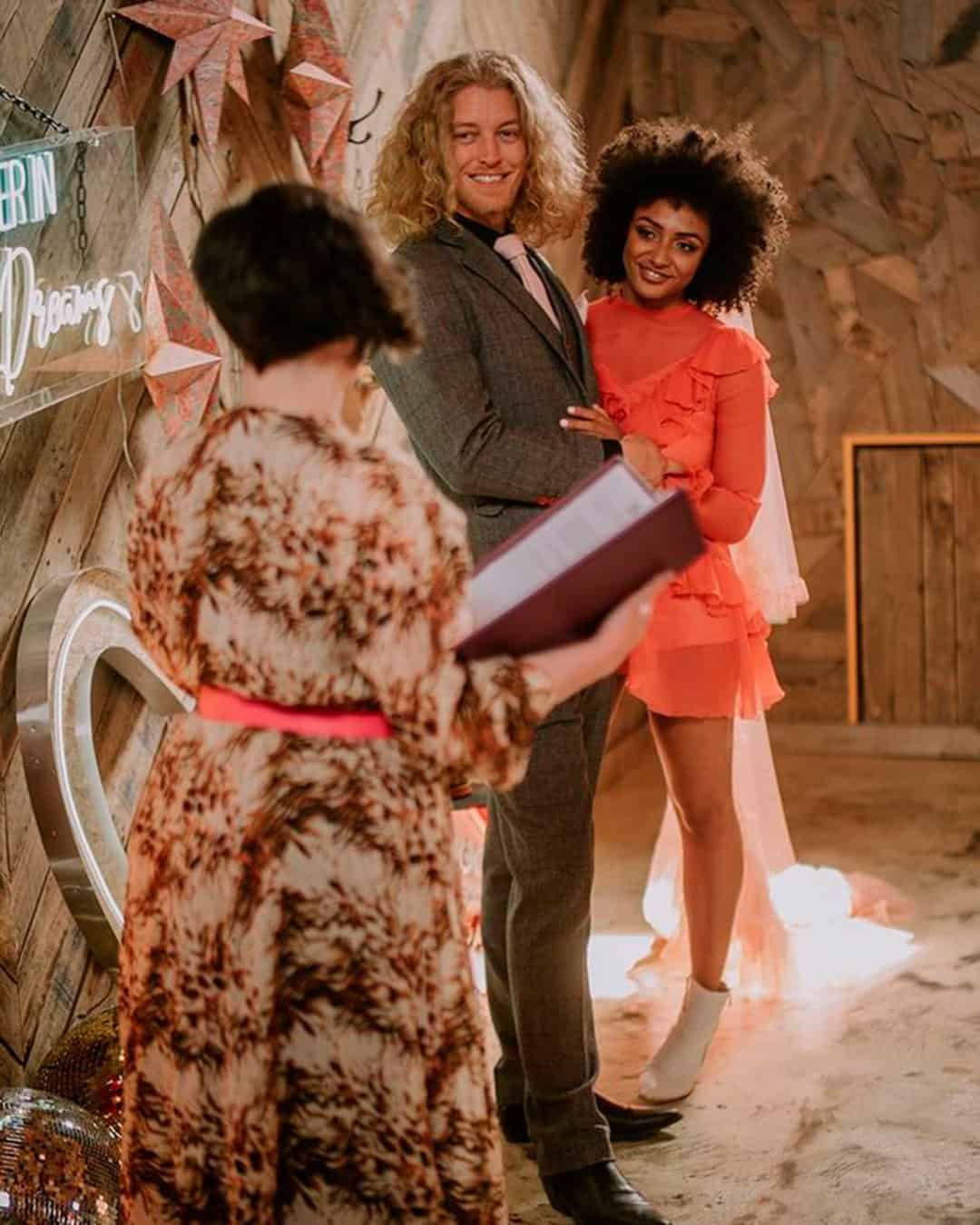
A wedding ceremony hums with joy and deep meaning, and mapping out its sequence is the secret to a seamless, unforgettable experience for everyone involved. Every piece, from the opening processional to the tender exchange of rings, fits together to shape a warm celebration of love.
This guide walks you through the ideal wedding ceremony order, offering a detailed look at each key moment so you can shape a day that flows beautifully.
So, ready to pencil this into your wedding planning timeline?
Traditional Ceremony Order?
Broadly speaking, a thoughtfully arranged wedding ceremony makes space to honor specific people. Beyond the gathered guests and the couple themselves, a typical service includes the bridesmaids, the maid of honor, the best man, the groomsmen, flower girls, ring bearers, and the parents of the couple.
Much like a well-planned wedding day timeline, these steps outline the heart of a traditional wedding ceremony order of service.
- Procession: The moment the bride is ready, entrance music begins and guests rise to their feet, welcoming her arrival.
- Bridal Entrance: The flower girl and ring bearer typically lead the way, followed by the maid of honor and bridesmaids. The bride makes her entrance last, walking on the arm of her father or a chosen male representative.
- Welcome/Introduction: The officiant steps forward to share a few words about the couple and offer a reflection on marriage. After that, the congregation is asked if anyone objects to the union, and a pause allows for a response or peaceful silence.
- Vows Exchange: The couple faces each other and speaks their promises, often repeating phrases delivered by the minister.
- Exchange of Rings: With the rings brought forward by the ring bearer, the couple continues with more vows, each sliding a band onto the other’s finger as the minister guides them.
- Man and Wife: A brief, powerful pronouncement rings out as the minister declares the couple husband and wife. The groom then kisses the bride, sparking applause.
- Exit: The newlyweds step away to sign the marriage register, which clarifies the function of a marriage license. What follows is the recessional, their joyful departure from the traditional ceremony.
Wedding Ceremony Processional Order
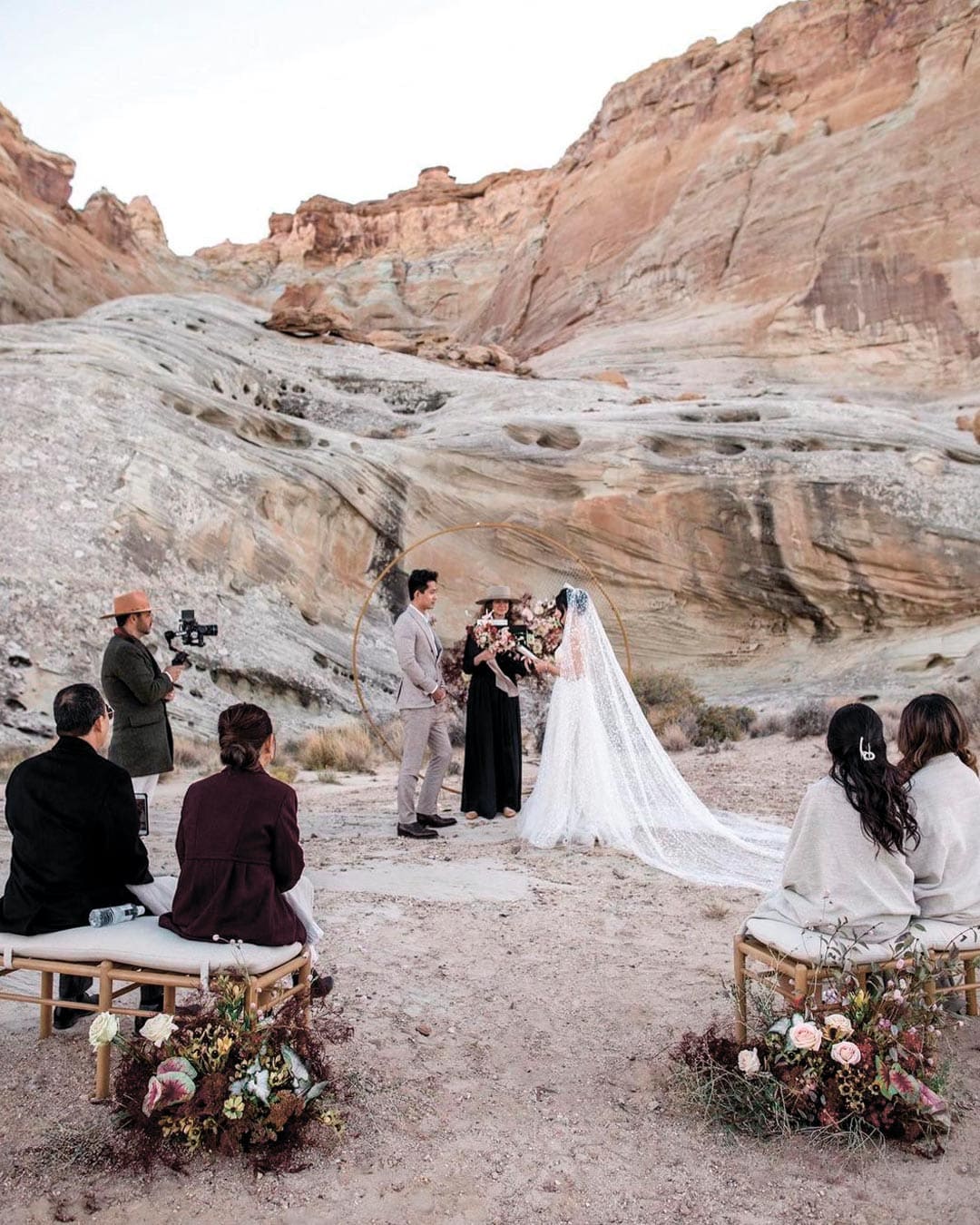
The flow of the wedding processional can shift according to personal taste, cultural or religious customs, and the size of the wedding party. Still, this general sequence holds true for a traditional Western style ceremony:
- The Officiant: The officiant walks in first and moves to their position at the altar.
- The Groom: Next, the groom enters and takes his place at the altar, often joined by his best man.
- The Parents of the Bride: The mother of the bride is usually escorted by an usher to her seat in the front row.
- The Wedding Party: Bridesmaids and groomsmen process down the aisle in pairs, arranging themselves on either side of the altar.
- The Maid or Matron of Honor: She enters next, making her way down the aisle alone.
- The Flower Girl and Ring Bearer: If children are part of the celebration, the flower girl and ring bearer follow, typically walking as a duo.
- The Bride: Finally, the bride makes her entrance, usually escorted by her father or another beloved family member. She glides down the aisle to meet the groom waiting at the altar.
Keep in mind that the ceremony processional is wonderfully flexible and entirely yours to customize. You might choose to have the groomsmen and bridesmaids enter separately or let the flower girl and ring bearer walk down the aisle at different times.
Guide Yourself Through Parts Of A Civil Wedding
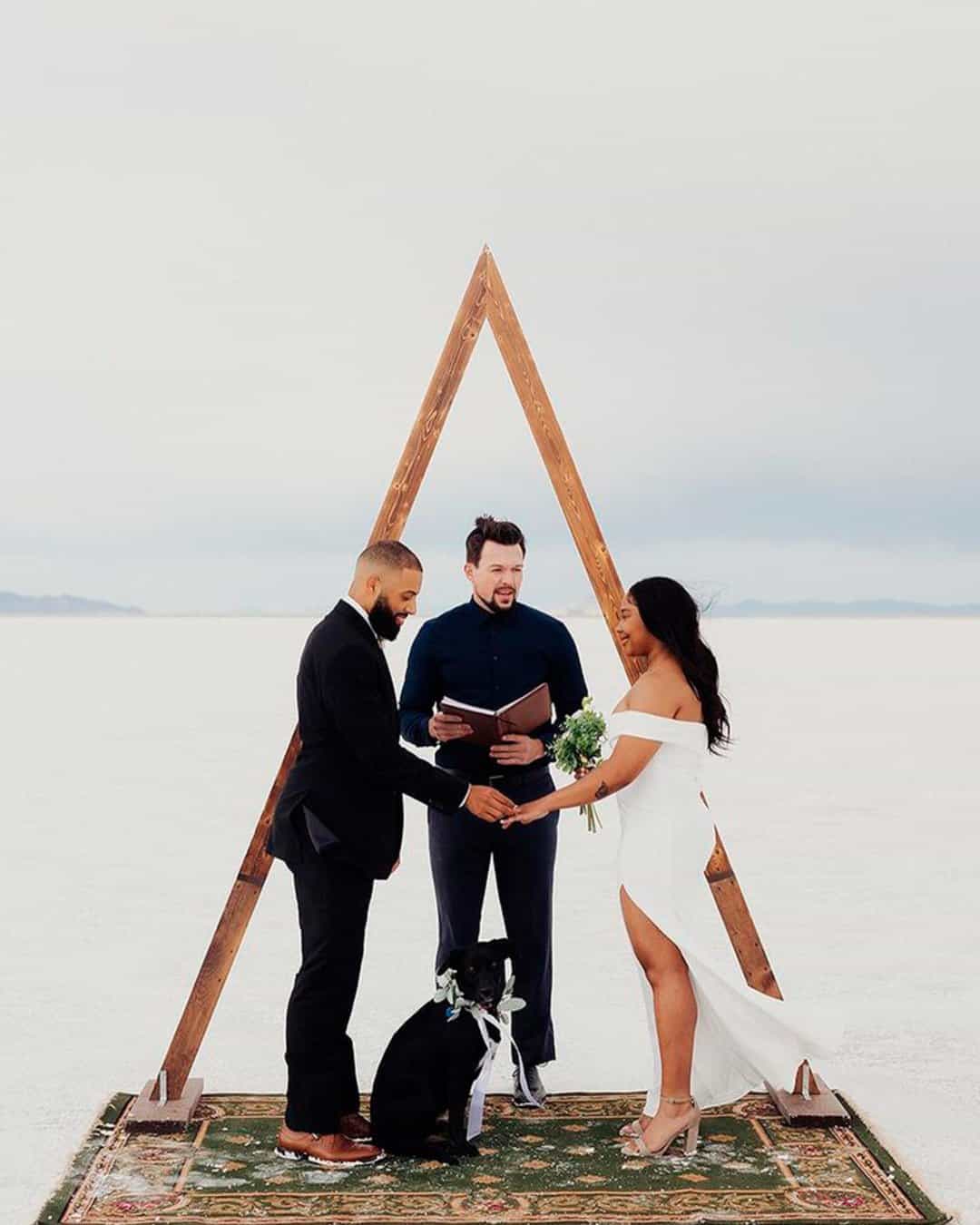
A civil service might carry a reputation for being dull or impersonal, but it absolutely does not have to be that way. You can infuse parts of your wedding with personal touches to make it uniquely yours.
Just as subtle distinctions carry weight, your celebration can stand apart from every other.
- Prelude (Optional): Soft music plays while guests find their seats and settle in.
- Procession: Music announces the bride’s arrival and the guests rise.
- Bridal Entrance: The bridal party marches in, followed by the bride.
- Welcome/Introduction: The officiant shares a few thoughtful words about the couple and the meaning of marriage.
- Reading: (Optional)
- Music (Optional): A soloist might perform a song, or gentle background music sets the mood.
- Vows Exchange: The couple speaks their vows to one another.
- Exchange of Rings: Rings are exchanged between the couple.
- Rose Ceremony (Optional): In some gatherings, the couple exchanges roses and also presents them to parents and family members.
- Man and Wife: The officiant pronounces the couple man and wife.
- Exit: The ceremony concludes, and the couple along with the bridal party makes their exit. They are now officially Mr. and Mrs.
Religious Wedding Order Of Events
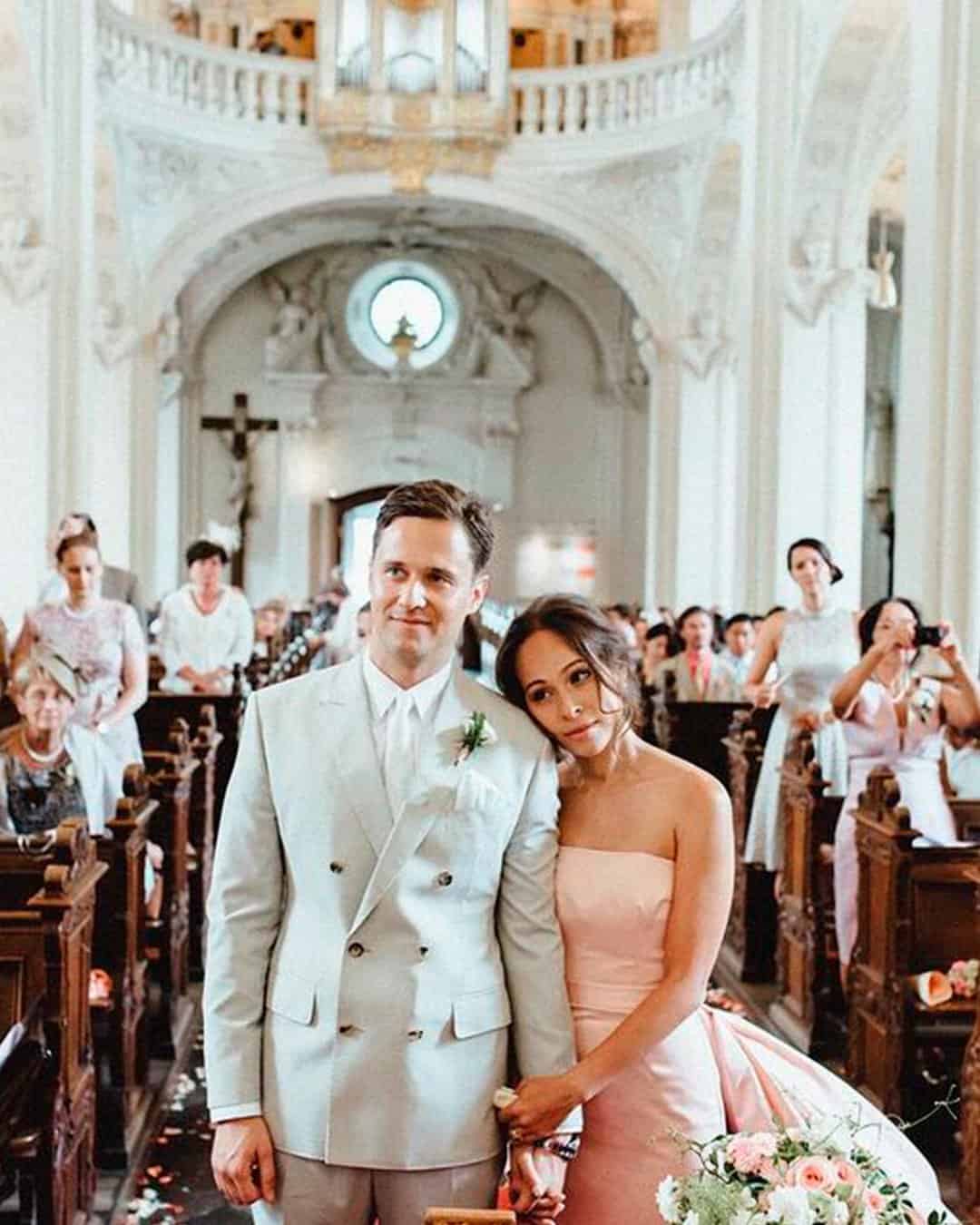
Within a religious setting, the wedding ceremony order usually aligns with the guidelines of the chosen faith.
Traditional Jewish Wedding Ceremony Order
- Kabbalat Panim: Guests are warmly welcomed.
- Bedeken: The groom veils the bride.
- Chuppah: Processional Bride’s entrance Standing under the chuppah.
- Betrothal Blessings: Rings are exchanged and the ketubah, the marriage contract, is read aloud.
- Sheva B’rachot: The seven blessings are recited and the cup of wine is shared.
- Breaking of the Glass: The groom shatters a glass beneath his foot.
- Yichud: The couple retreats for a moment of private seclusion.
- Reception and Celebrations: Shouts of mazel tov and congratulations fill the air during the festive meal and dancing.
Jewish wedding ceremonies can vary widely depending on custom and personal preference.
Hindu Wedding Ceremony Order
Pre-Wedding Rituals:
- Ganesh Puja: An invocation to Lord Ganesha. Varapuja: The groom’s feet are washed.
The arrival of the Groom:
- Baraat: The groom makes a grand entrance surrounded by family and friends.
Welcome of the Bride:
- Swagatam: The bride arrives and receives a traditional welcome. Aarti: The groom’s mother performs a ritual lamp-waving ceremony.
Mandap Ceremony:
- Kanya Aagaman: The bride proceeds to the mandap. Jaimala: The couple exchanges garlands.
Vedic Rituals:
- Kanyadaan: The bride’s parents give her hand to the groom. Panigrahana: The groom holds the bride’s hand. Saptapadi: The couple takes seven sacred steps around the fire.
Mangalsutra and Sindoor:
- Mangalsutra: The groom ties a sacred necklace. Sindoor: Vermillion is applied to the bride’s hair.
Blessings and Prayers:
- Ashirvad: Elders bless the couple. Mangal Aarti: A sacred fire ritual accompanied by devotional songs.
Wedding Reception:
- A celebratory feast filled with cultural performances.
Hindu wedding ceremonies take on different forms shaped by regional customs and personal wishes.
Traditional Christian Wedding Ceremony Order
- Prelude: Music fills the space, setting a reverent atmosphere.
- Processional: Family members are seated and the bridal party with the bride makes their entrance.
- Welcome and Opening Remarks: The officiant offers a greeting and an opening prayer.
- Reading(s) and Sermon: Scripture is read aloud, followed by a sermon on love and marriage.
- Exchange of Vows: The couple voices their commitment, reciting personalized vows.
- Exchange of Rings: The rings are blessed and then the couple exchanges them.
- Unity Ceremony (optional): A symbolic act represents the merging of two lives.
- Pronouncement and Blessing: The officiant pronounces the couple as married and extends a blessing.
- Recessional: The newlyweds and guests exit as joyful music plays.
Christian wedding ceremonies can include variations based on denominational practice and personal taste.
Same-Sex Ceremony Order
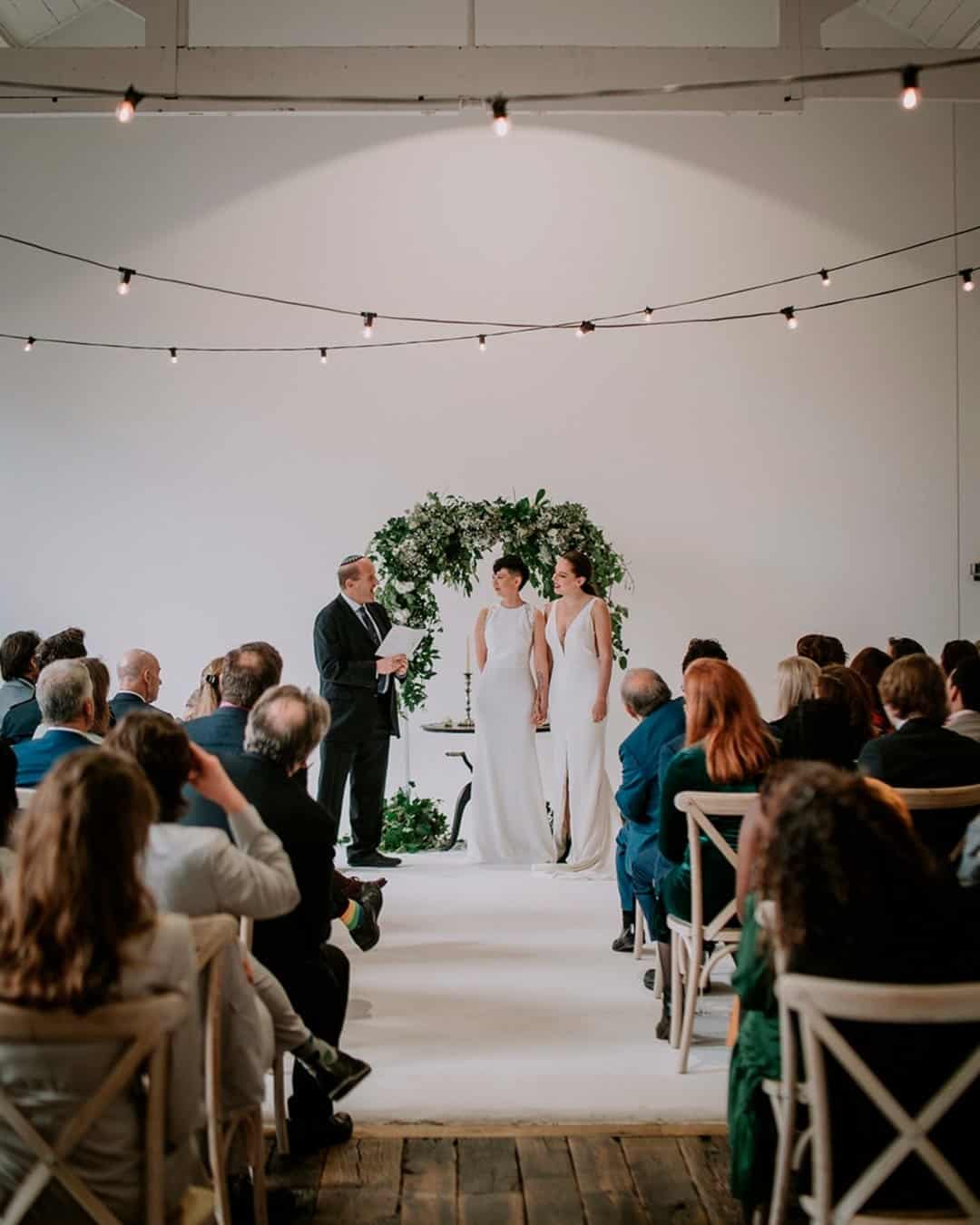
Same-sex marriage ceremonies can unfold a little differently than heterosexual ones. Both partners can walk down the aisle together, or one partner may enter with the other.
Another beautiful option lets partners process one after the other, escorted by one or both of their parents.
- Word of welcome: The welcome address often sits first in the wedding ceremony outline. During this time, the officiant greets the guests, introduces the couple, and names the union everyone has gathered to witness.
- Reading: Whether you are working from a traditional ceremony outline or a Christian one, the options for a ceremony reading are abundant. It might be prayers, a passage from a sacred text, meaningful quotes, or beloved poems, often read aloud by chosen guests.
- The expression of intent: This moment in the wedding ceremony layout is where the couple publicly agrees to marry each other. Known as the declaration of intent, it holds the powerful “I do’s.”
- The affirmation of family and friends: Here, the officiant turns to the assembled guests, asking for their blessing of the union and relaying their response back to the couple.
- The exchange of vows: After the readings and affirmations, the couple steps into this part of the schedule to exchange their wedding vows. These are the promises made to one another, whether the standard words of a traditional ceremony or vows they have written themselves.
- The giving and receiving of rings: Following the vows, inside the typical structure, the couple slides wedding rings onto each other’s fingers. This act symbolizes the bright start of their lives together. A few additional words are often spoken during the ring exchange.
- Affirmation of the marriage: The affirmation of the marriage within the order of service is sealed with a kiss. The officiant speaks words along the lines of, “I now pronounce you husband and husband, wife and wife, or husband and wife,” and then declares that you may seal the marriage with a kiss. That kiss officially declares your union in front of friends, family, and everyone you hold dear.
- Declaration of Marriage: At this point in the wedding service, after the couple has sealed their marriage with a kiss, the officiant officially declares them married. In a religious ceremony, closing prayers might follow, or the officiant might share a few words of encouragement for the couple in a non-religious ceremony.
- Signing of the Marriage Register: This moment in a typical ceremony signals the near conclusion of the event. The couple, alongside the registrar and their witnesses, takes turns signing the marriage register.
- Introduction of the couple: As in any standard ceremony, the couple is officially introduced to their guests as married. The wedding ceremony is complete, and their union is a done deal.
Alternative Wedding Ceremony Orders
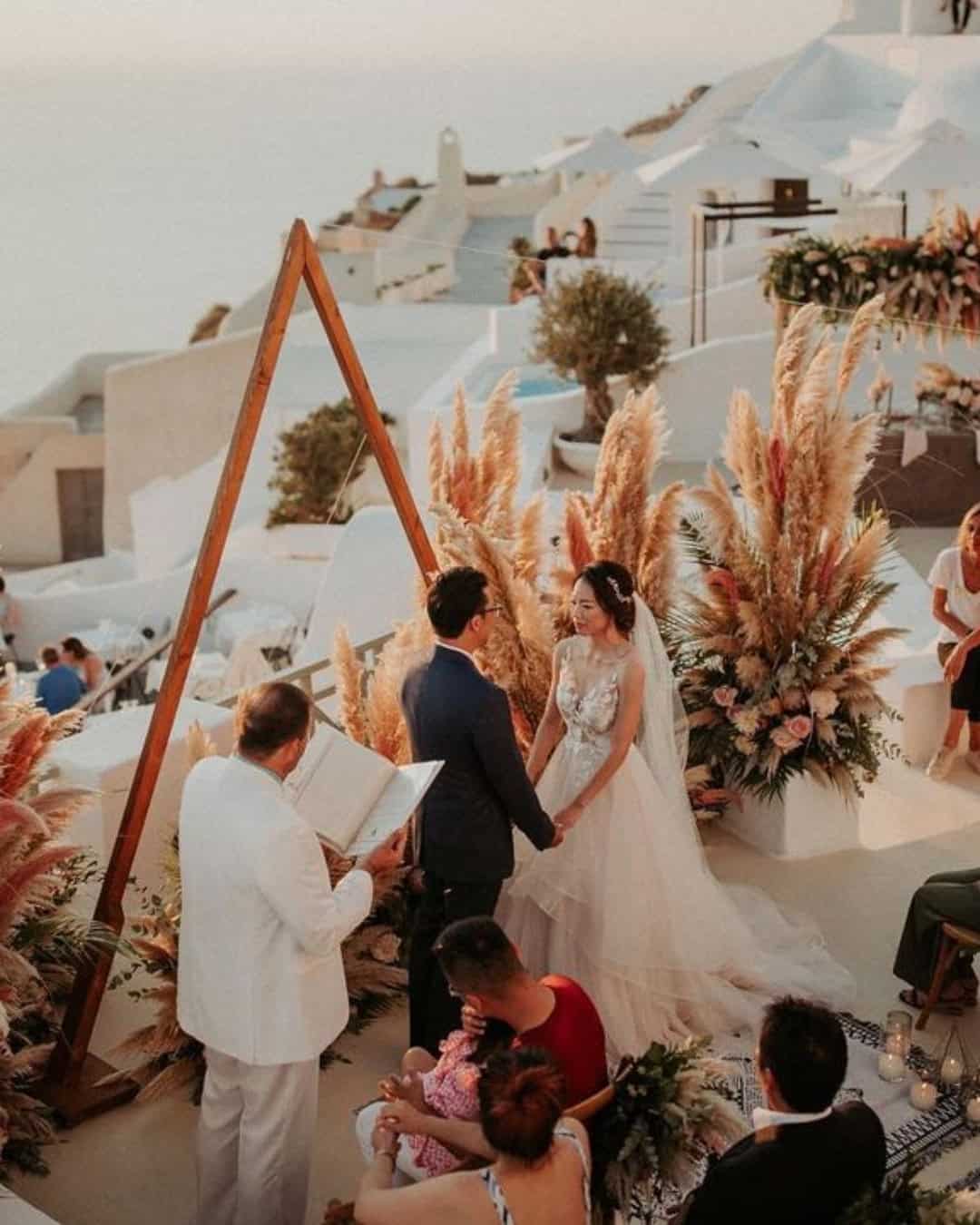
When it comes to planning your celebration, there is no fixed or “correct” sequence you must obey. The structure and rhythm of a wedding ceremony can be completely shaped to fit the preferences and values of the couple getting married.
Here are a few alternative wedding ceremony orders worth considering:
Non-Traditional Order
- Processional: The couple walks in together, or each partner enters separately.
- Welcome/Greeting: The officiant welcomes everyone and warmly acknowledges the purpose of the gathering.
- Readings/Music: Weave in readings, poems, or musical performances that hold special meaning.
- Personal Vows: The couple shares personalized vows written specially for each other.
- Exchange of Rings: The couple swaps wedding rings as a shining symbol of their commitment.
- Unity Ritual: Perform a unity ritual, like a sand ceremony or tree planting, to symbolize the beautiful merging of your lives.
- Pronouncement of Marriage: The officiant declares you married and introduces you as a couple.
- Recessional: The couple and the wedding party exit together.
Circle Ceremony
Arrange the chairs in a circle to create an intimate and deeply inclusive atmosphere.
- Opening Blessing or Invocation: Start with a spiritual or secular blessing that sets the entire tone for the ceremony.
- Sharing Circle: Allow guests to share stories, blessings, or warm well-wishes for the couple.
- Personal Vows: The couple shares their vows in the center of the circle or while facing each other directly.
- Ring Exchange: Exchange rings while guests offer silent blessings or murmurs of support.
- Group Blessing: Invite all the guests to join in a collective blessing or prayer for the couple.
- Pronouncement of Marriage: The officiant declares the couple married, and everyone celebrates with applause or a joyful activity.
- Closing Ritual: Close the ceremony with a symbolic gesture, such as a group hug or the releasing of balloons.
Modern and Creative
- Prelude: Set the mood with modern and upbeat tunes as guests arrive.
- Surprise Entrance: The couple makes a surprise entrance, perhaps through a choreographed dance or another unconventional method.
- Welcome Address: The officiant shares a lighthearted and personalized welcome, sprinkling in anecdotes about the couple.
- Love Story: A friend or family member narrates the couple’s love story, highlighting funny and heartwarming moments.
- Surprise Performances: Sprinkle in surprise musical or dance performances by talented friends or professionals.
- Vows and Promises: The couple shares vows, promises, or personal statements about their love and commitment.
- Symbolic Gestures: Perform unique and imaginative symbolic gestures, like releasing butterflies or planting a tree.
- Pronouncement and Celebration: The officiant declares the couple married, and the celebration bursts to life right away with music, confetti, or other festive touches.
Remember, these are simply alternative springboards, and you can mix and match elements to create a ceremony order that mirrors your personalities and desires. Feel completely free to add or leave out any traditional elements based on what feels right.
Factors to Consider When Crafting the Ceremony Order
Crafting the ceremony order calls for thoughtful care to guarantee a smooth and deeply meaningful flow. Several factors come into play when you are planning the order of a ceremony:
- Tradition and Cultural Significance: Weigh any traditional or cultural practices that hold importance for the couple or their families. Weave in rituals or customs that carry special meaning to build a personalized and inclusive ceremony.
- Couple’s Preferences: Truly understand the couple’s vision and preferences for their ceremony. Talk with them to pinpoint specific elements they want to feature, such as readings, vows, or special music selections.
- Venue and Logistics: Look closely at the layout and logistics of the venue. Map out the best flow for the ceremony to accommodate the space, seating arrangements, and any necessary equipment or props.
- Officiant’s Guidance: Collaborate closely with the chosen officiant to grasp their style and approach. They can offer valuable insights into the flow of the ceremony based on their seasoned experience and expertise.
- Welcome and Introduction: Open the ceremony with a warm welcome to establish the right tone. Introduce the officiant, the couple, and any important individuals involved, like parents or close family members.
- Opening Remarks: Include opening remarks that mirror the couple’s story, values, and the immense significance of the occasion. This is a beautiful chance to highlight their journey and express gratitude for the presence of family and friends.
- Readings or Performances: Fold in readings, poems, or musical performances that resonate with the couple. These can be delivered by friends, family members, or professional performers. Select pieces that echo the couple’s personalities and reflect their love and commitment.
- Vows and Ring Exchange: The exchange of vows and rings sits at the very center of the ceremony. Decide whether the couple will recite traditional vows or write their own, and determine the order in which they will speak. Consider any rituals, such as handfasting or unity candle lighting, that might take place during this portion.
- Special Ceremonial Elements: If the couple desires, incorporate special elements like a sand ceremony, tree planting, or a cultural ritual that symbolizes unity, love, or unwavering commitment. These elements add a personal touch and create a truly memorable experience.
- Pronouncement and Kiss: Conclude the ceremony with the pronouncement of marriage by the officiant and the iconic kiss. This moment signifies the official union of the couple and celebrates their love.
- Closing Remarks and Blessings: End the ceremony with closing remarks, voices of well wishes, and blessings offered for the couple’s future together. This is the perfect opportunity to thank the guests for their presence and warmly invite them to the reception.
Remember that these factors serve as guidelines, and the specific order of the ceremony will always depend on the couple’s preferences, cultural traditions, and the overall atmosphere they dream of creating. Flexibility paired with open communication with the couple will ensure a ceremony that beautifully reflects their one of a kind love story.