

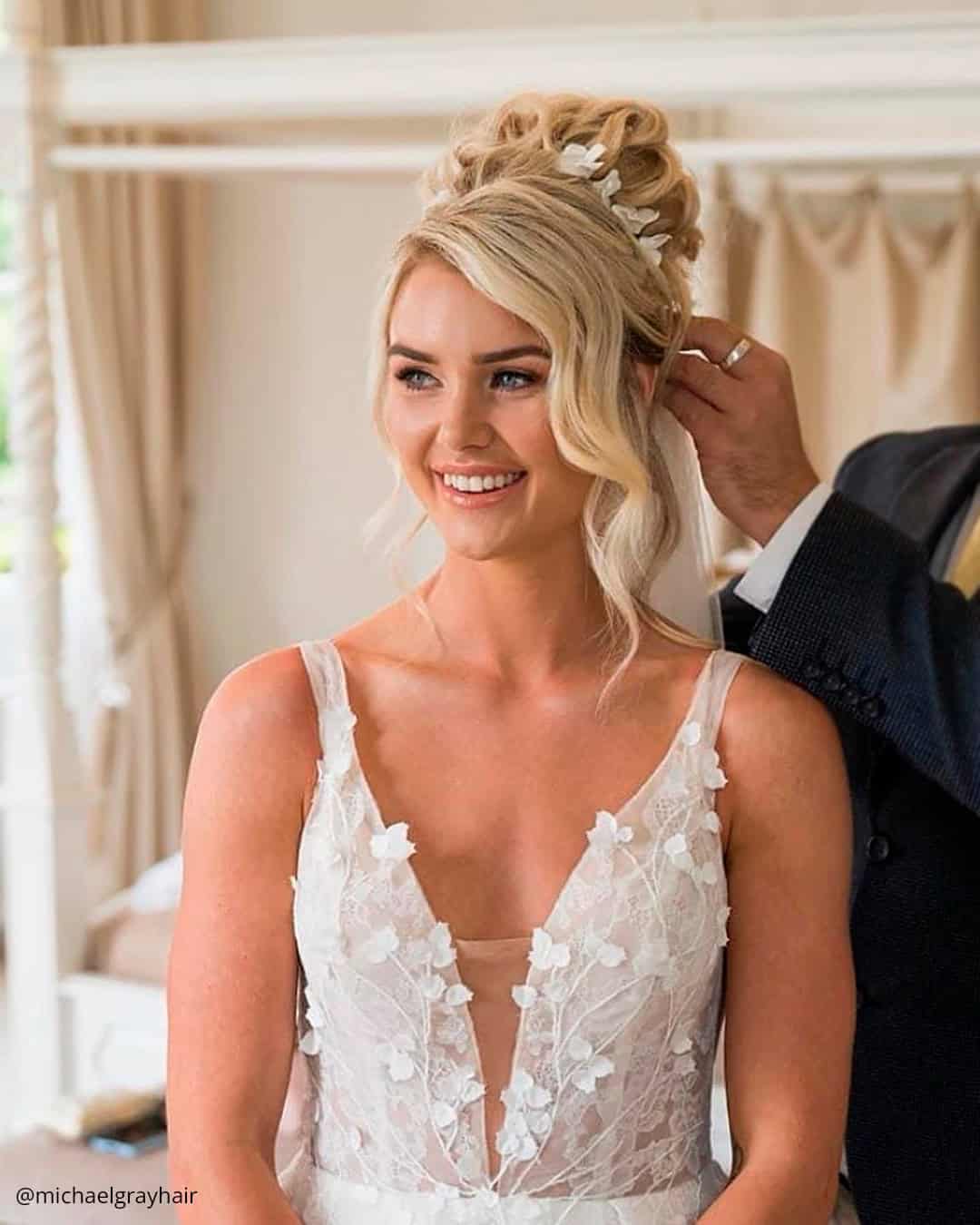
A veil can pull your entire bridal vision together and make it feel wonderfully complete. These days, a veil isn’t just a lovely tradition, it also serves as a brilliant way to showcase your own personal style.
This guide walks you through inspiring ideas for every hair length and texture, plus practical wisdom on picking the right veil.
You will discover how things like veil weight, placement, and the method of attachment interact with your chosen hairstyle. Keep exploring to uncover a look that feels secure, genuinely comfortable, and perfectly matched to your dress and the whole vibe of your celebration.
Do You Have to Wear a Veil?
Choosing to wear a veil is totally up to you. According to bridal designer Tanya Maras, it can be a way to honor tradition, finish off your look, show your personality, or craft that iconic bridal moment you’ve always pictured.
What truly counts is how it all feels together with your dress, your hair, the setting, and your own authentic style.
If a classic veil doesn’t feel quite right, picking a different accessory is just as significant. Toward the end of this article, you’ll find gorgeous alternatives to the wedding veil, spanning bridal capes and wings to floral crowns, hair combs, headpieces, and delicate decorative pins.
Wedding Hairstyles For Long Hair With Veil
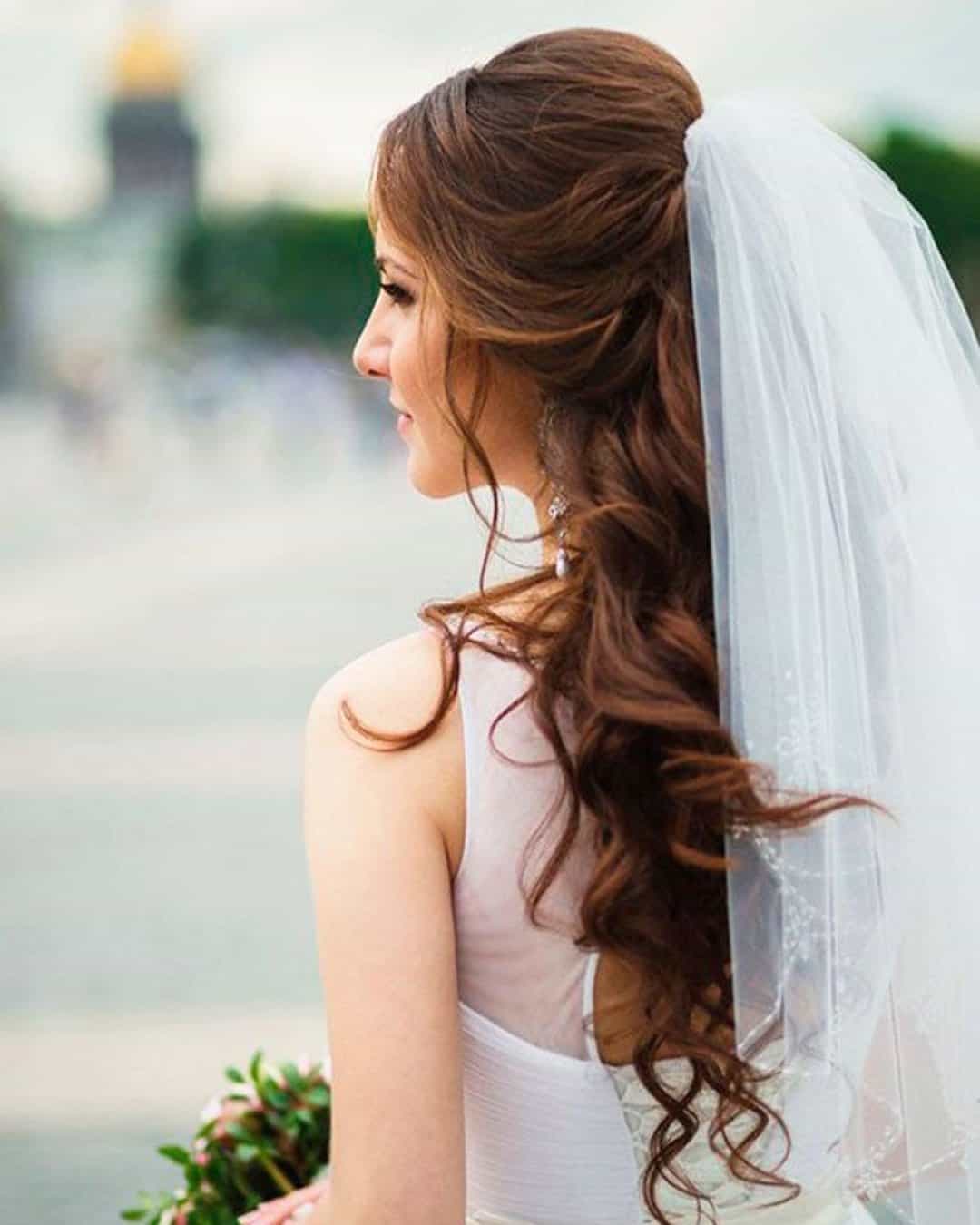
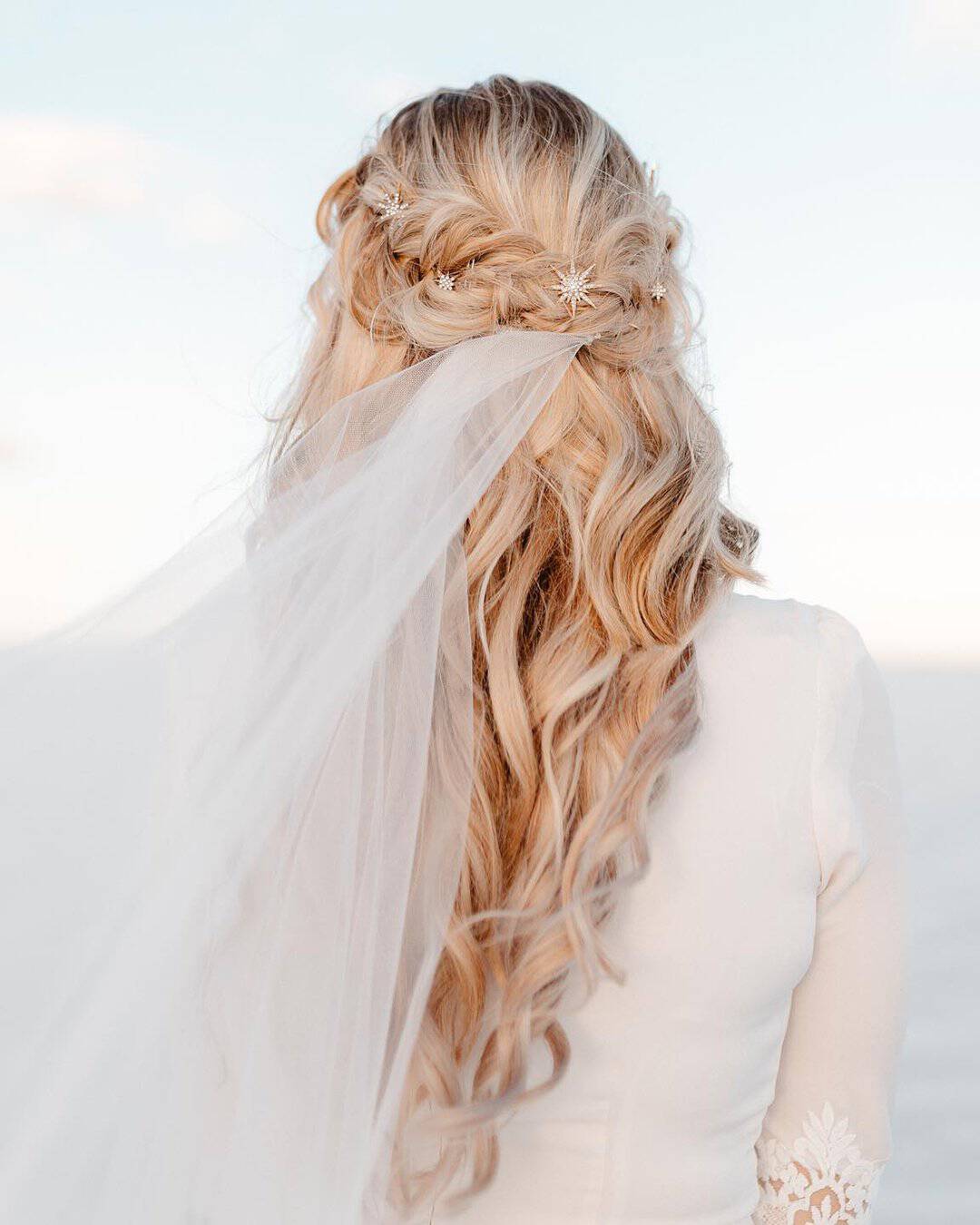
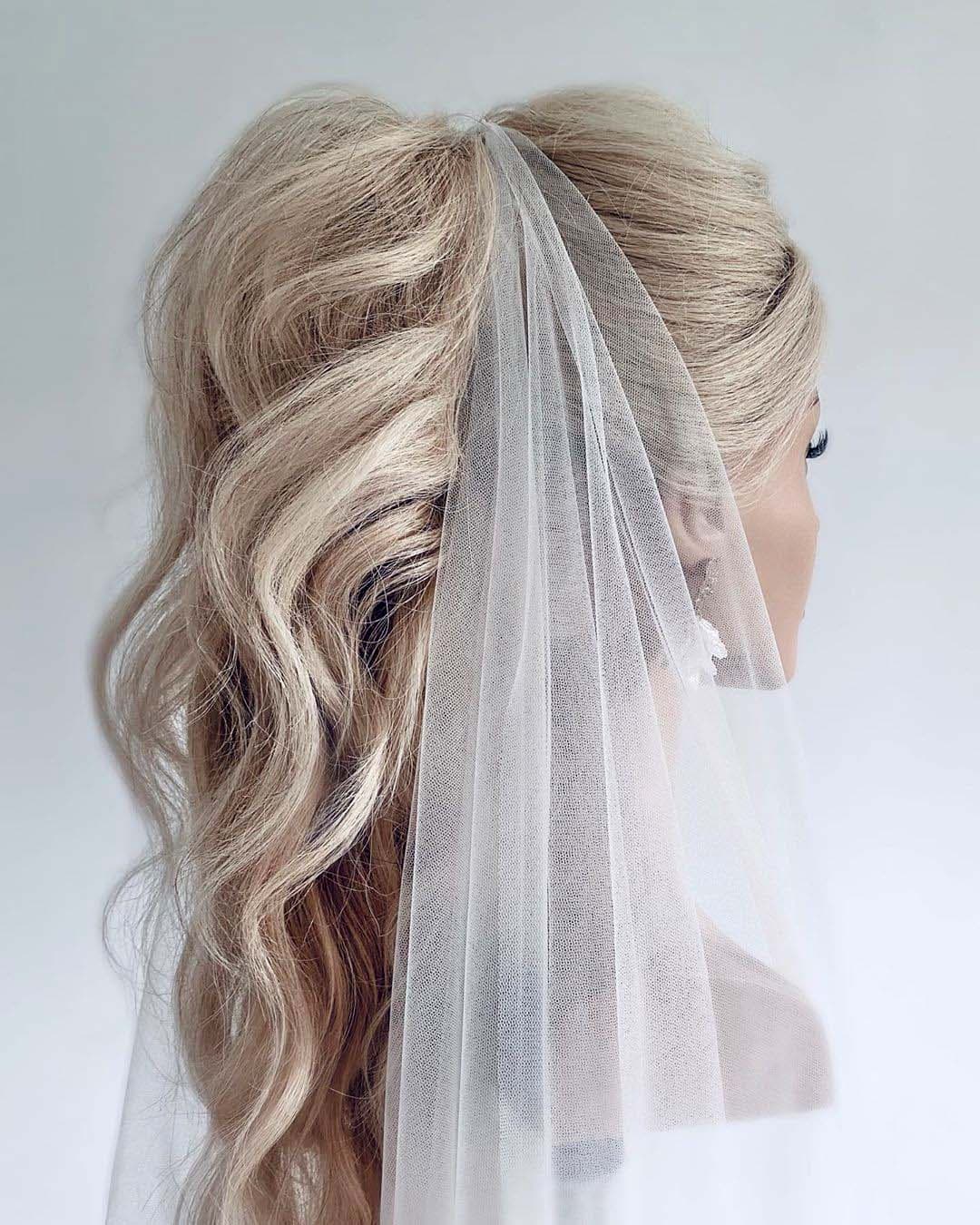
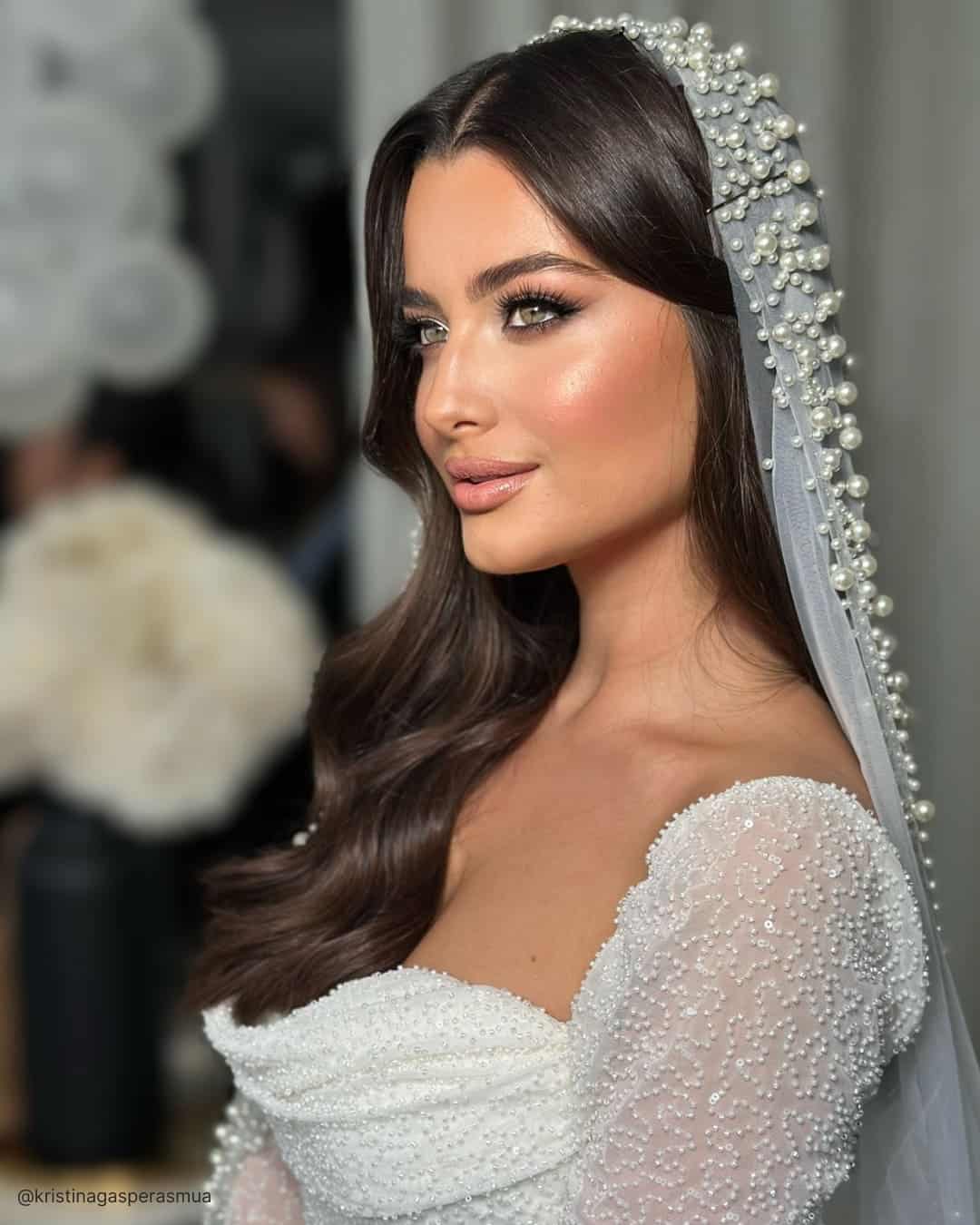
Long hair hands you an incredible range of styling possibilities, making it a dream for any wedding theme. Flowing tresses look absolutely stunning in half-up half-down creations and elegant updos paired with a veil.
Wearing your hair completely down is also an easy option, even though the veil won’t have a structured base like a bun to rest on.
So what’s the game plan? You can secure your veil firmly with bobby pins or consider clip-in hair extensions to build a stronger internal anchor.
If you’re wondering how to keep your veil securely in place while nailing a flawless finish, expert hairstylist Michael Gray shared some key advice. ‘The key to a comfortable and secure veil is to use a finer tooth comb for placement,’ the stylist suggests.
Michael also highlights smart prep work: ‘Start with a strong backcomb at the base, then secure the veil with horizontal grips on either side to prevent any movement.’ And what about wearing your hair down? ‘A hidden scalp braid under the veil’s placement area can work wonders for keeping it stable without being visible.’
For your inspiration, here is stunning work showcasing a classic and delicate bridal look with a veil.
Medium Length Hair Wedding Hairstyles With Veil
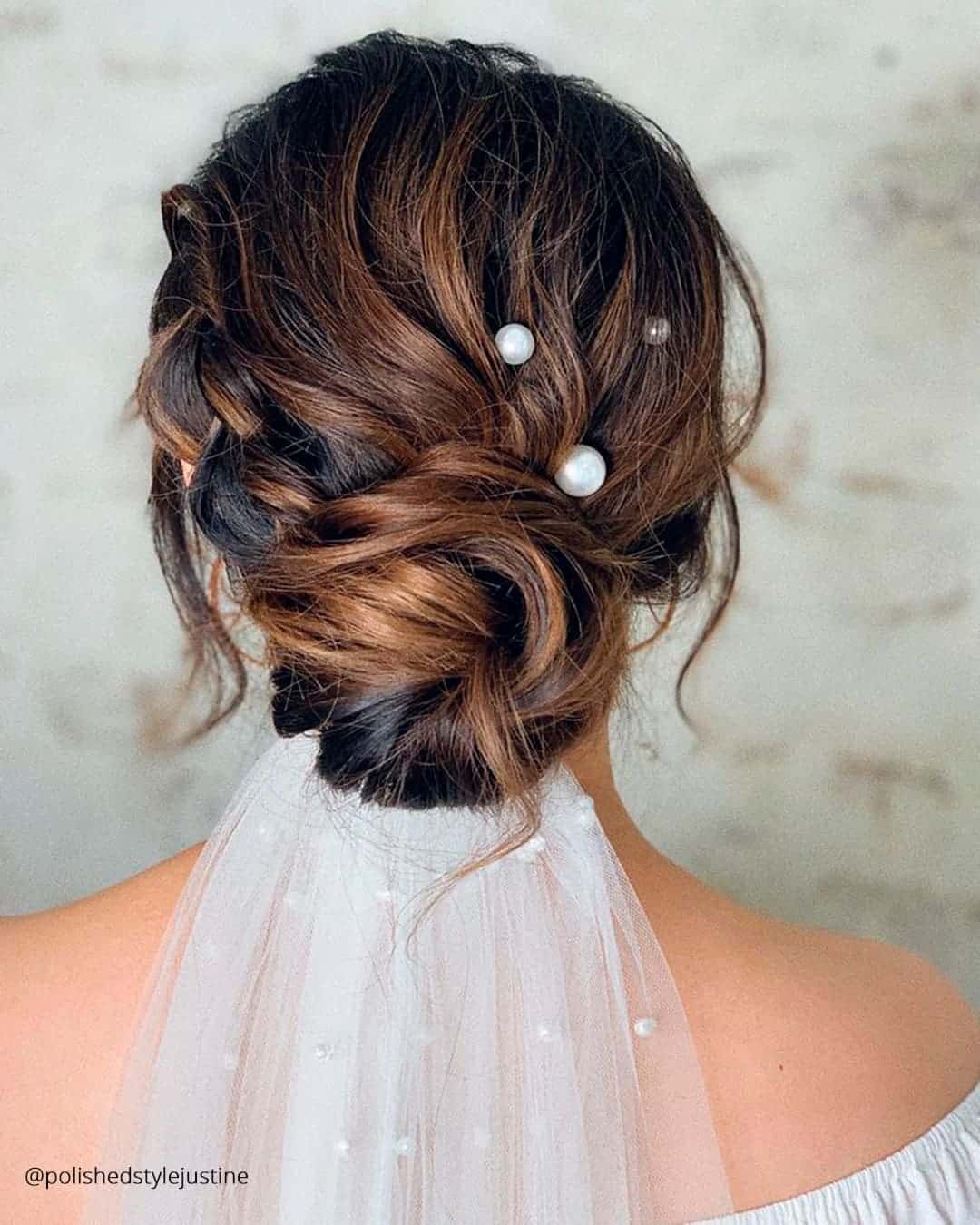
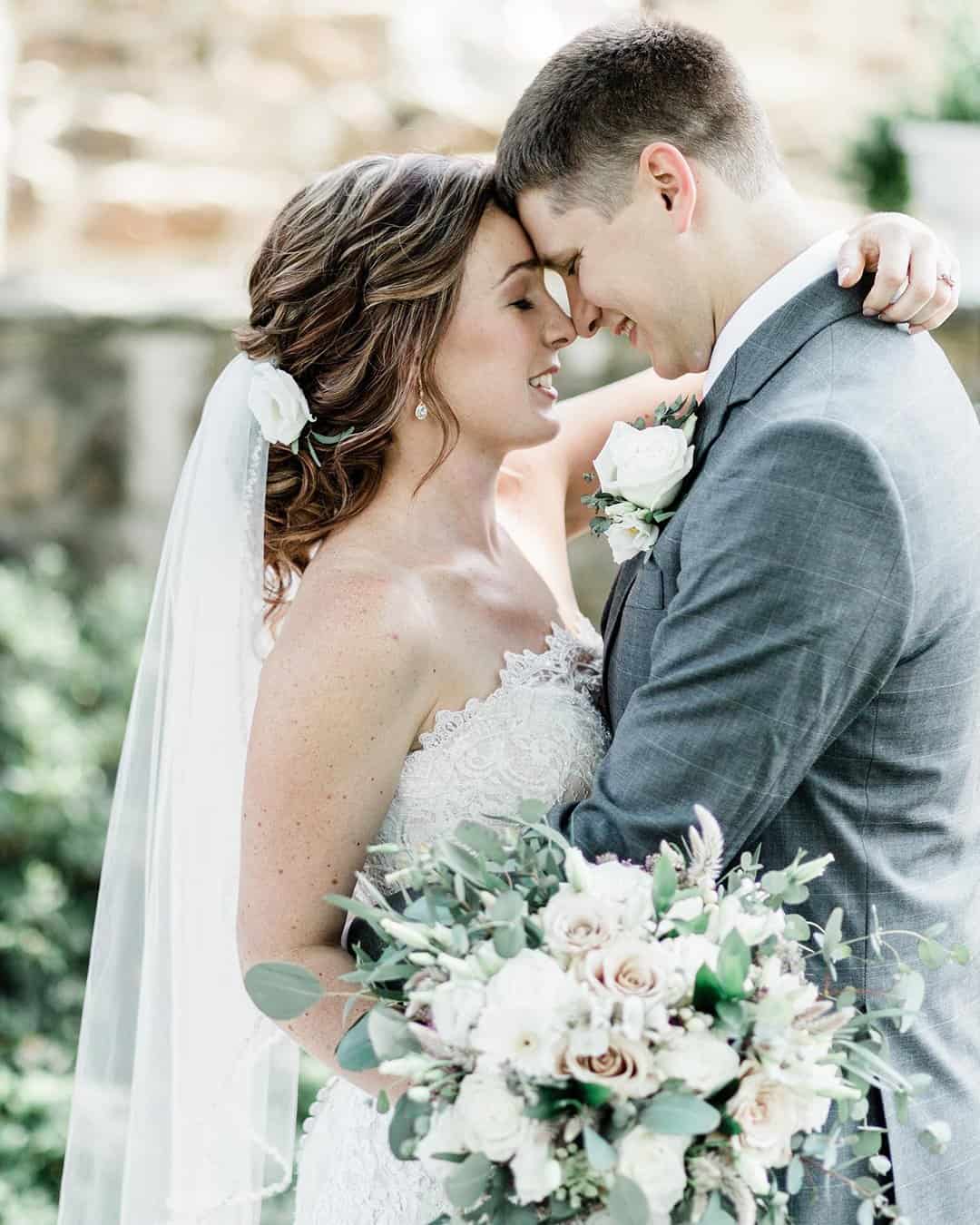
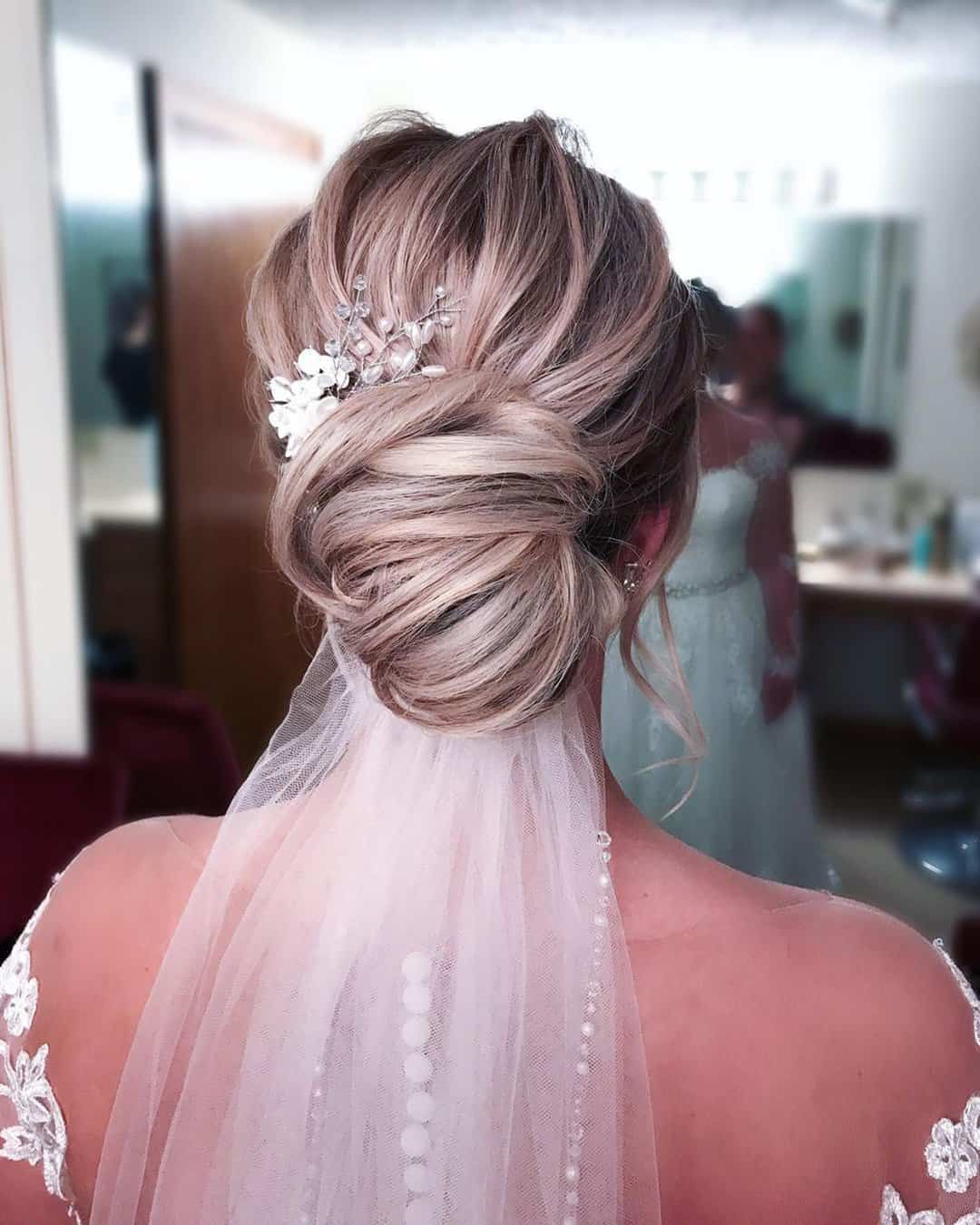
Three standout wedding hairstyles for medium length hair with a veil include the timeless chignon, the effortlessly cool messy bun, and low, graceful updos. You can create lift and an airy effect by anchoring the veil right on top of the hairstyle.
Another clever trick is to fix it just below the bun, which gives the illusion of extra length.
If a perfectly undone yet ethereal mood is your goal, reach for tousled curls or a variety of soft waves. The half-up half-down style is another absolute gem for medium hair.
The veil and the hairstyle should ideally sit around the crown of your head or just beneath it. Weave in some beaded hairpins, elegant hair combs, and other fitting bridal accessories to absolutely own this look.
Short Wedding Hairstyles With Veil
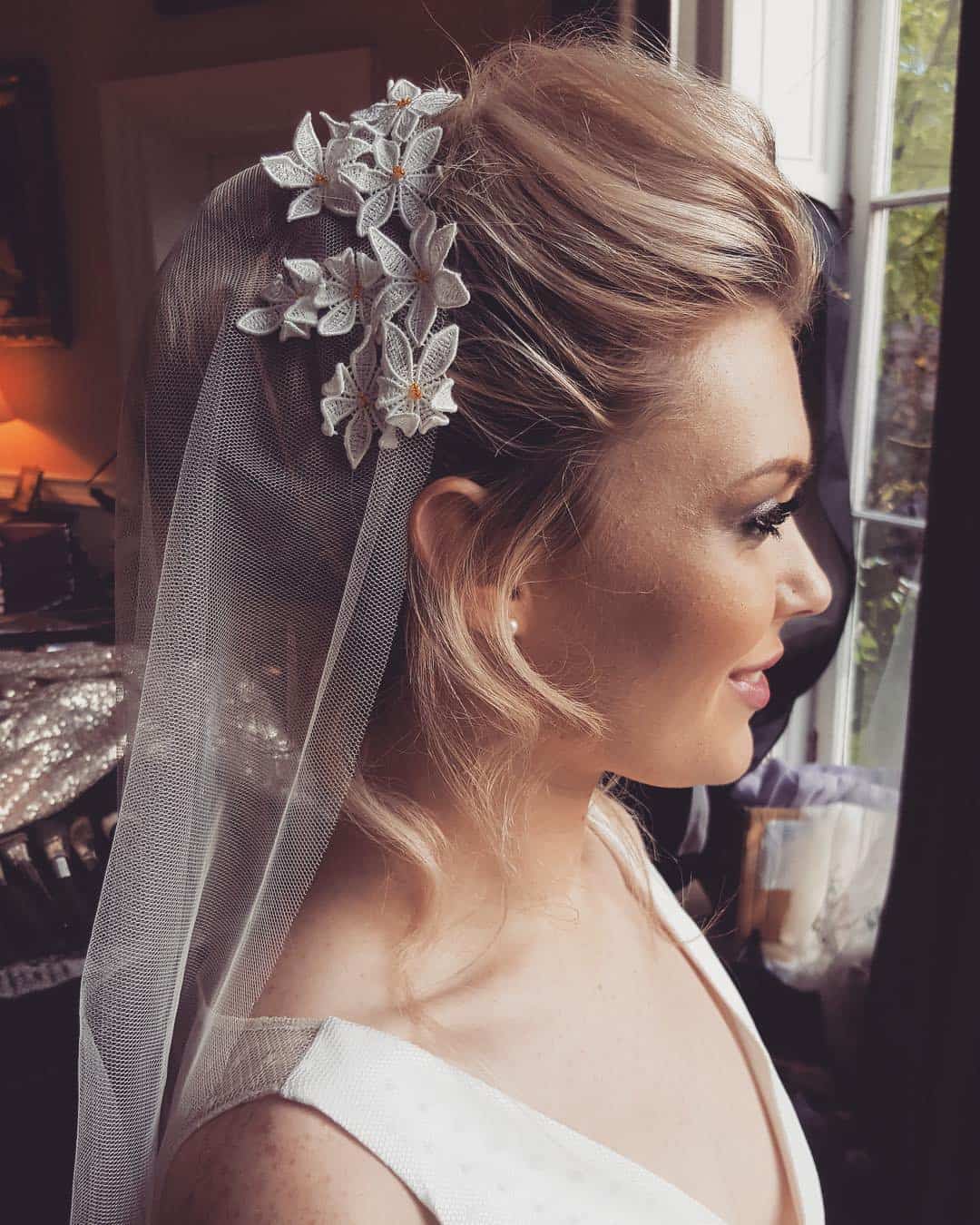
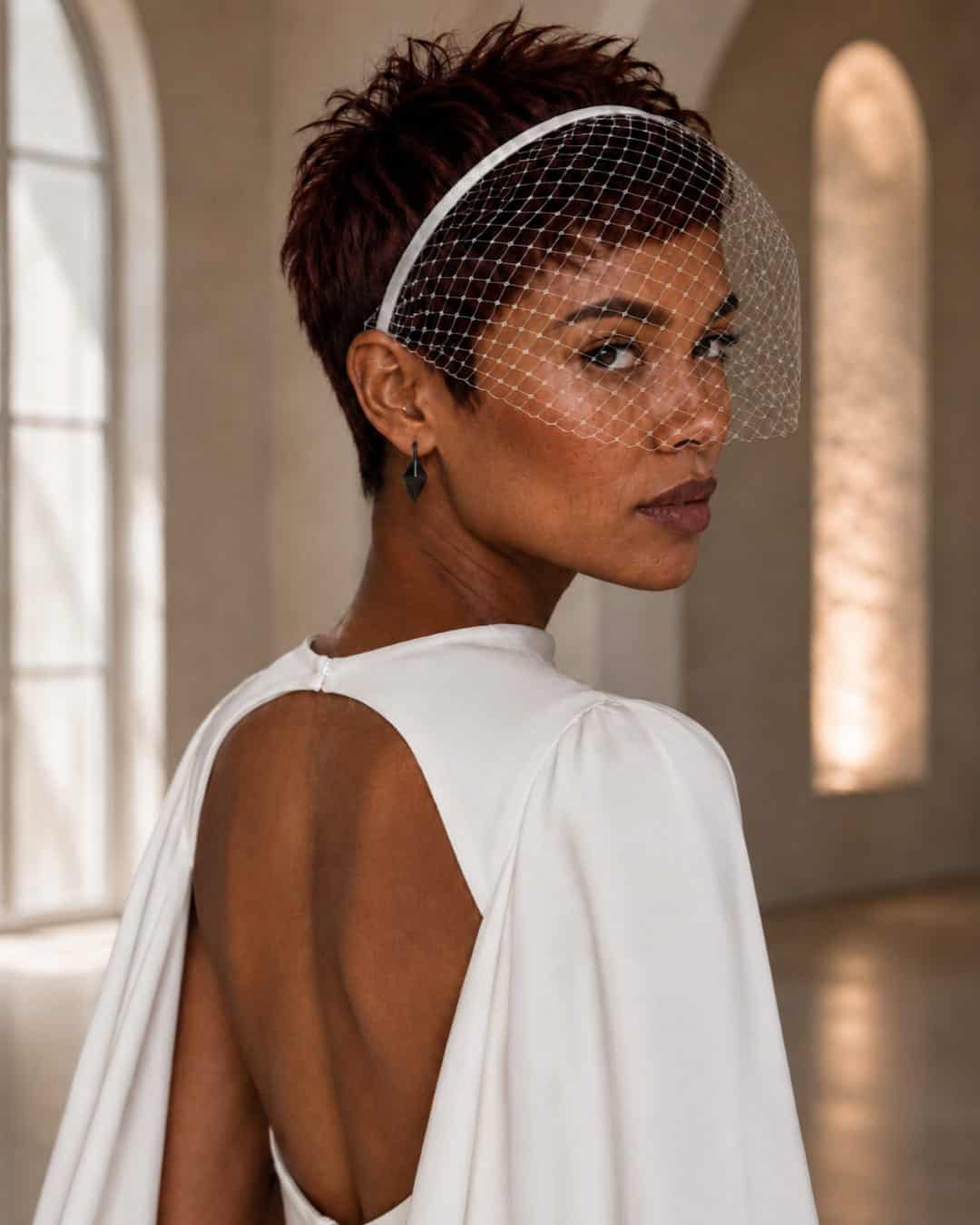
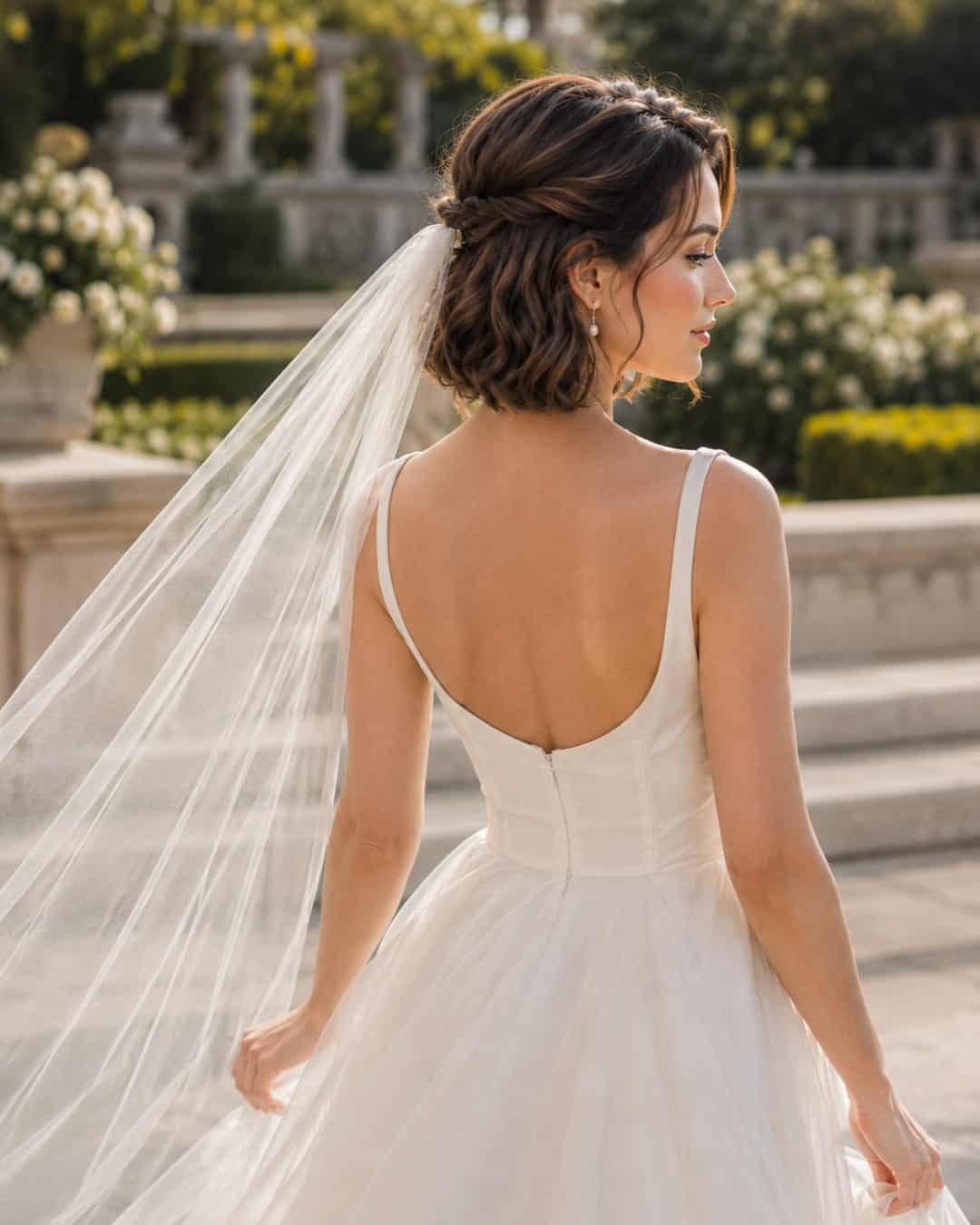
Brides rocking short hair can achieve a look that’s every bit as elegant and dreamy with a veil. Pixie cut wedding styles often find their perfect match in a birdcage veil, a shorter design, or another lightweight piece.
A decorative clip, chic headband, or a subtle pinning system can lock the veil in place without overpowering the cut.
A short bob paired with a veil opens up a few more styling adventures. You might add soft bends, polished waves, or a sleek, smooth finish, then set the veil above the hairstyle or tuck it securely under a gently pinned-back section.
For a reliable veil attachment on short hair, pick a method suited to the exact length of your cut.
A mini comb, crossed hair grips, bobby pins, or a headband-supported fastening can work brilliantly for a pixie cut. A short bob might also hold a tiny hidden braid or a concealed elastic anchor when there’s enough length.
Lightweight wedding veils are typically the most comfortable match for short hair. Heavy fabrics or a large, bulky veil comb can put too much strain on limited anchor points, so be sure to test your veil during the wedding hair trial to guarantee it feels both secure and comfy.
Looking for wedding hairstyle ideas? Check out top Pinterest trends!
Wedding Veil Length Guide: How to Choose the Right Veil Length
Wedding veil lengths directly influence how the veil harmonizes with your dress, hairstyle, venue, and the overall bridal picture. When figuring out how to choose a wedding veil length, think about the gown’s silhouette and train, the formality and space of your venue, the structure of your hair, the attachment point, and whether you intend to keep the veil on after the ceremony ends.
The fabric and how the veil is built also play a huge role. A design with lace, pearls, or heavy embellishments may demand more support than a whisper-light tulle piece, while a two-tier veil is typically heavier than a single-tier version.
A mantilla veil can be crafted in a range of lengths, so it’s better to think of it as a veil style rather than a fixed length category.
Short and Face-Framing Veils: Birdcage, Blusher, and Shoulder Lengths
A birdcage veil is a short wedding veil crafted from structured netting that usually covers a portion of the face. It can project a vintage vibe or a sleek modern energy without hiding your dress or most of your hairstyle.
Its compact size makes it a natural fit for civil ceremonies, intimate gatherings, bridal suits, shorter dresses, pixie cuts, bobs, loose waves, and structured updos.
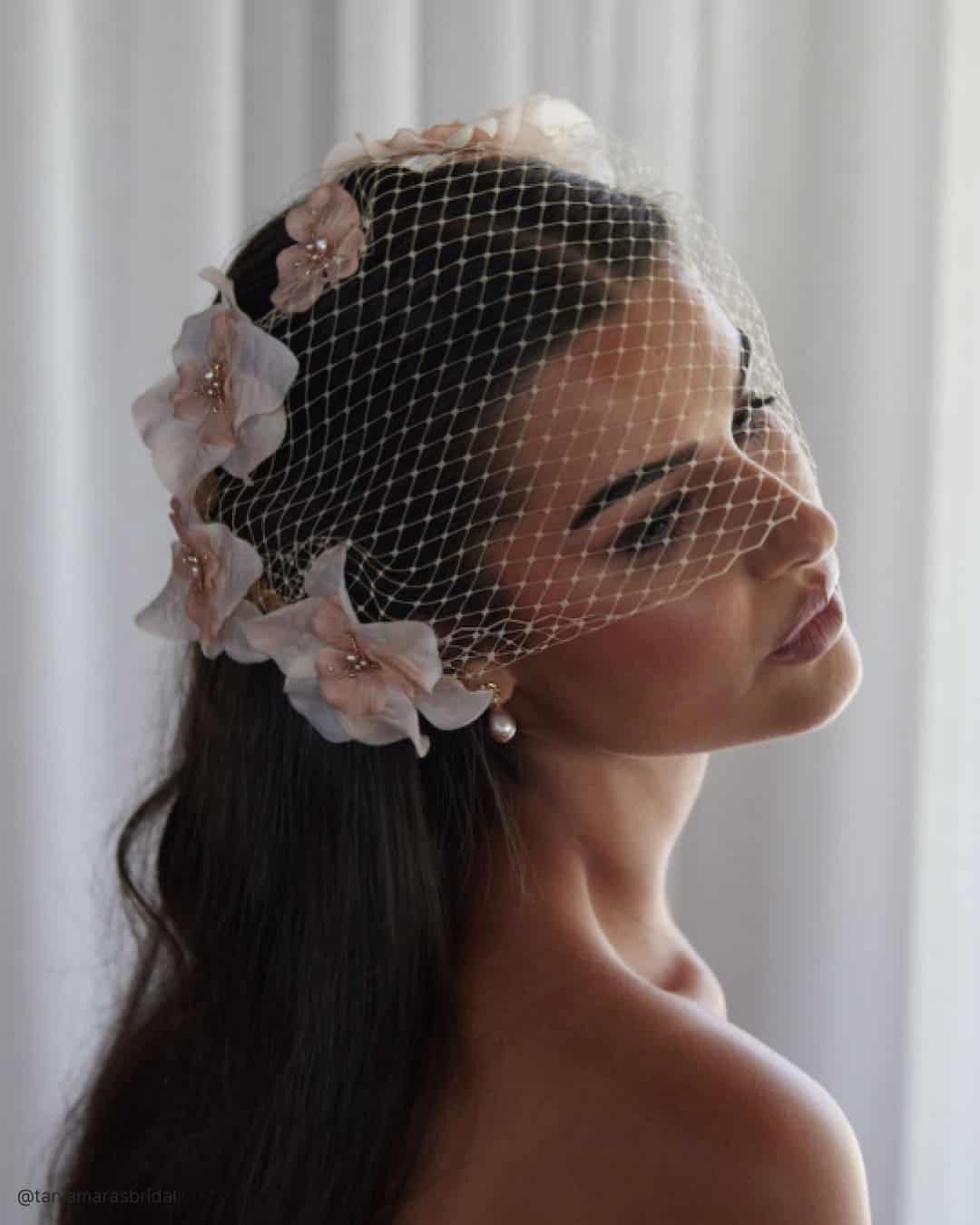
A blusher veil is a face-covering layer rather than a specific veil length. It can be worn solo, secured to a longer veil, or featured as the shorter tier of a two-tier design.
During the ceremony, the blusher can be lifted back from the face while the longer layer stays elegantly in place.
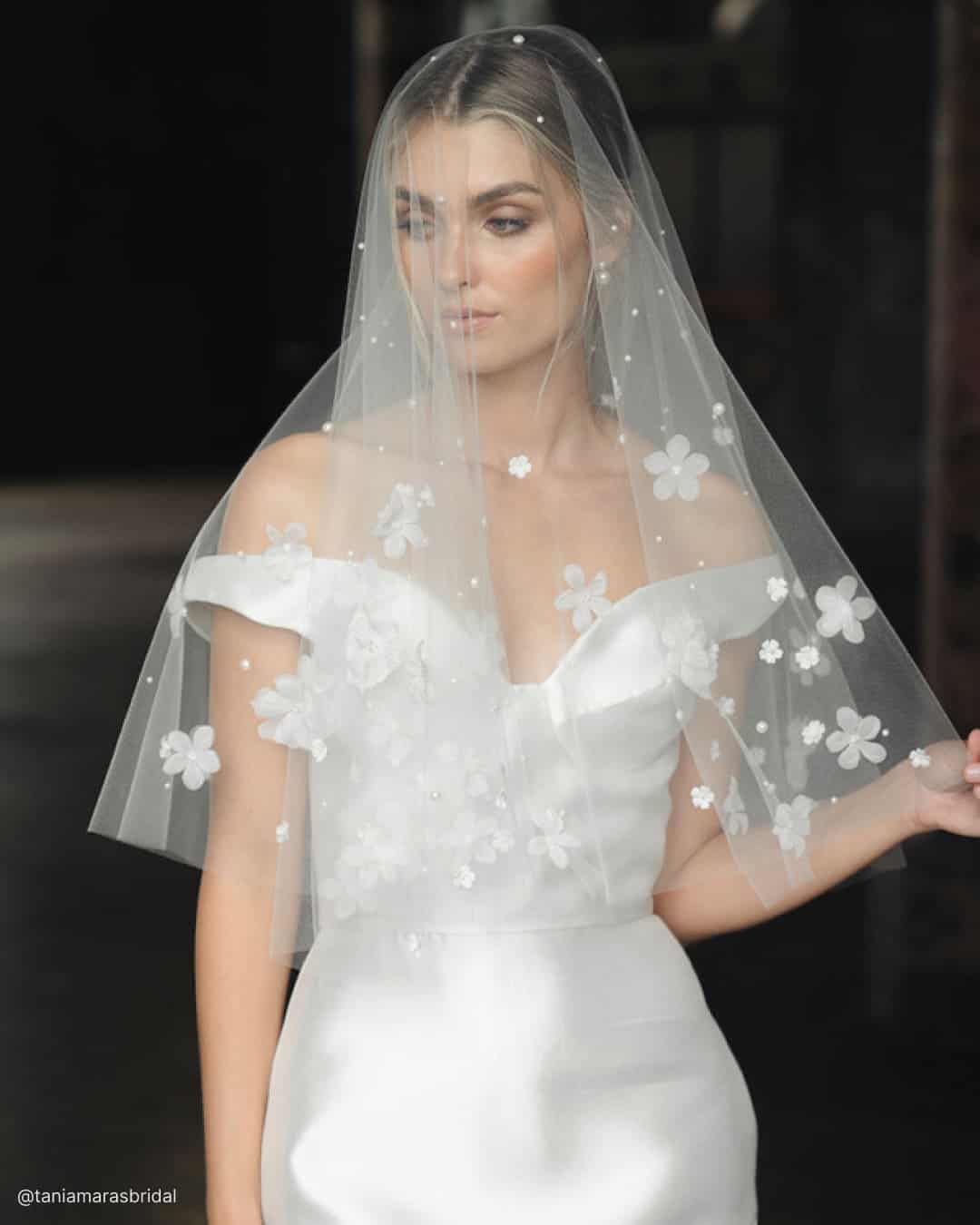
A shoulder-length veil finishes around the shoulders or upper back. It introduces softness without obscuring an open back, an intricate neckline, or a decorative bodice.
Since it’s usually lightweight, it needs less anchor support and keeps the hairstyle beautifully visible.
Mid-Length Veils: Elbow, Fingertip, and Waltz
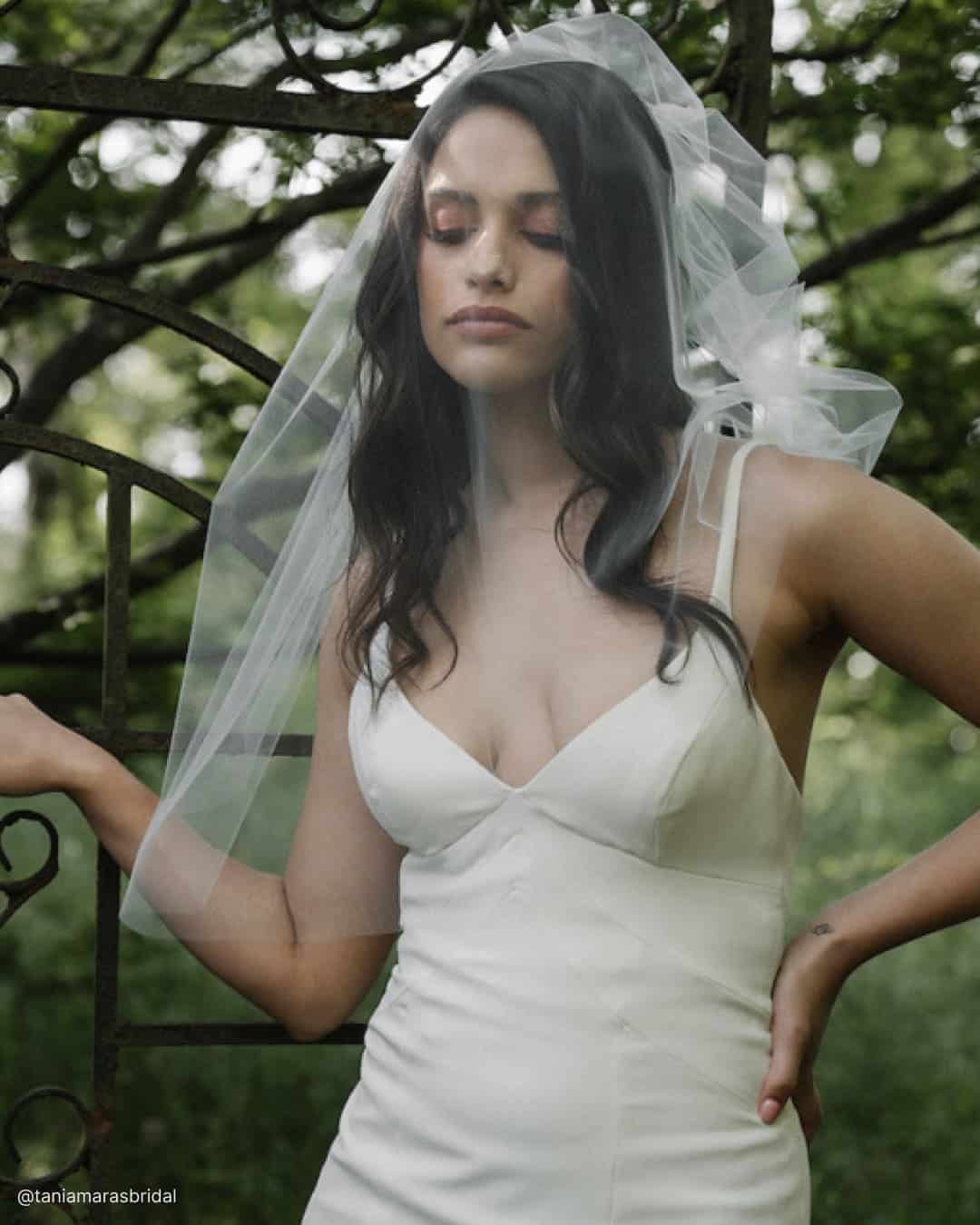
An elbow-length veil typically lands near the elbows or waist, depending on your height and where the veil comb sits. It generates noticeable movement without swallowing the full skirt or train, making it a beautifully balanced pick for fitted gowns, A-line dresses, indoor ceremonies, and celebrations out in the open air.
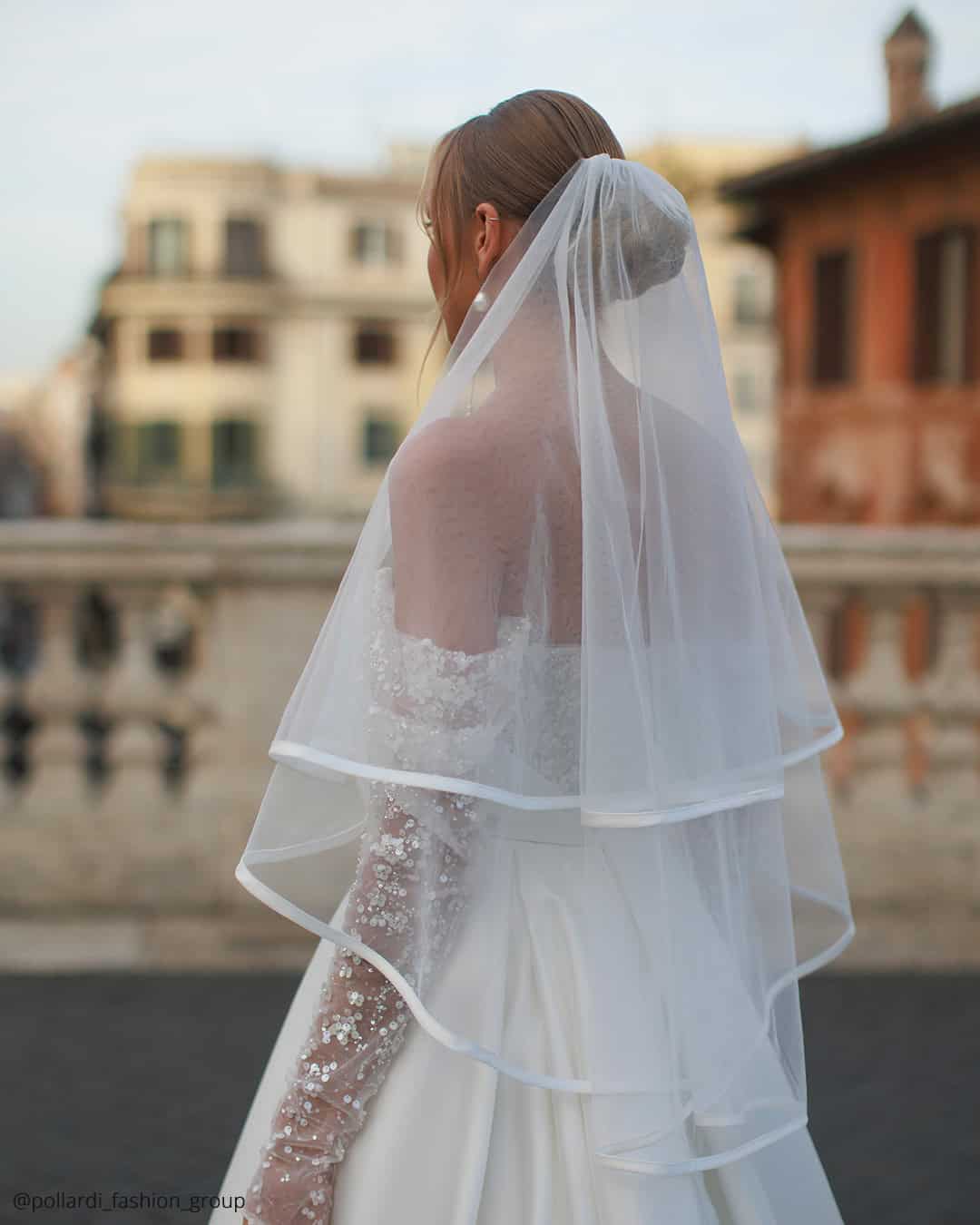
A fingertip veil falls roughly to the fingertips when your arms rest naturally at your sides. This versatile length flatters most dress silhouettes and pairs wonderfully with bridal updos, half-up hairstyles, ponytails, and loose, flowing waves.
It delivers that classic bridal effect without the extra management a long train demands.
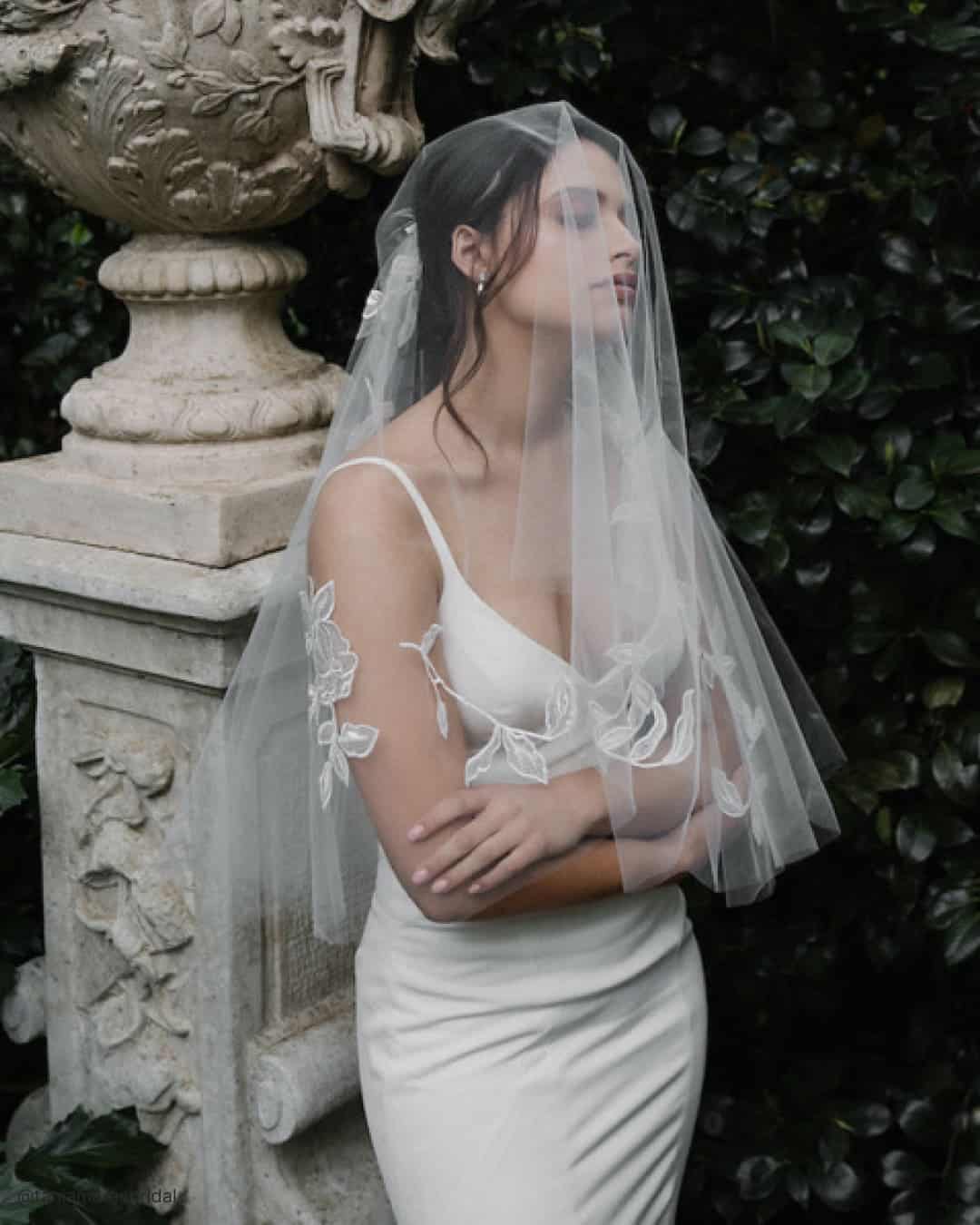
A waltz veil, sometimes called a ballet-length veil, usually ends around the calves or ankles. It provides more softness and fluid movement than a fingertip veil while staying much easier to handle than floor-skimming styles.
Brides who want to wear their veil during the reception or while dancing may find this length especially practical and freeing.
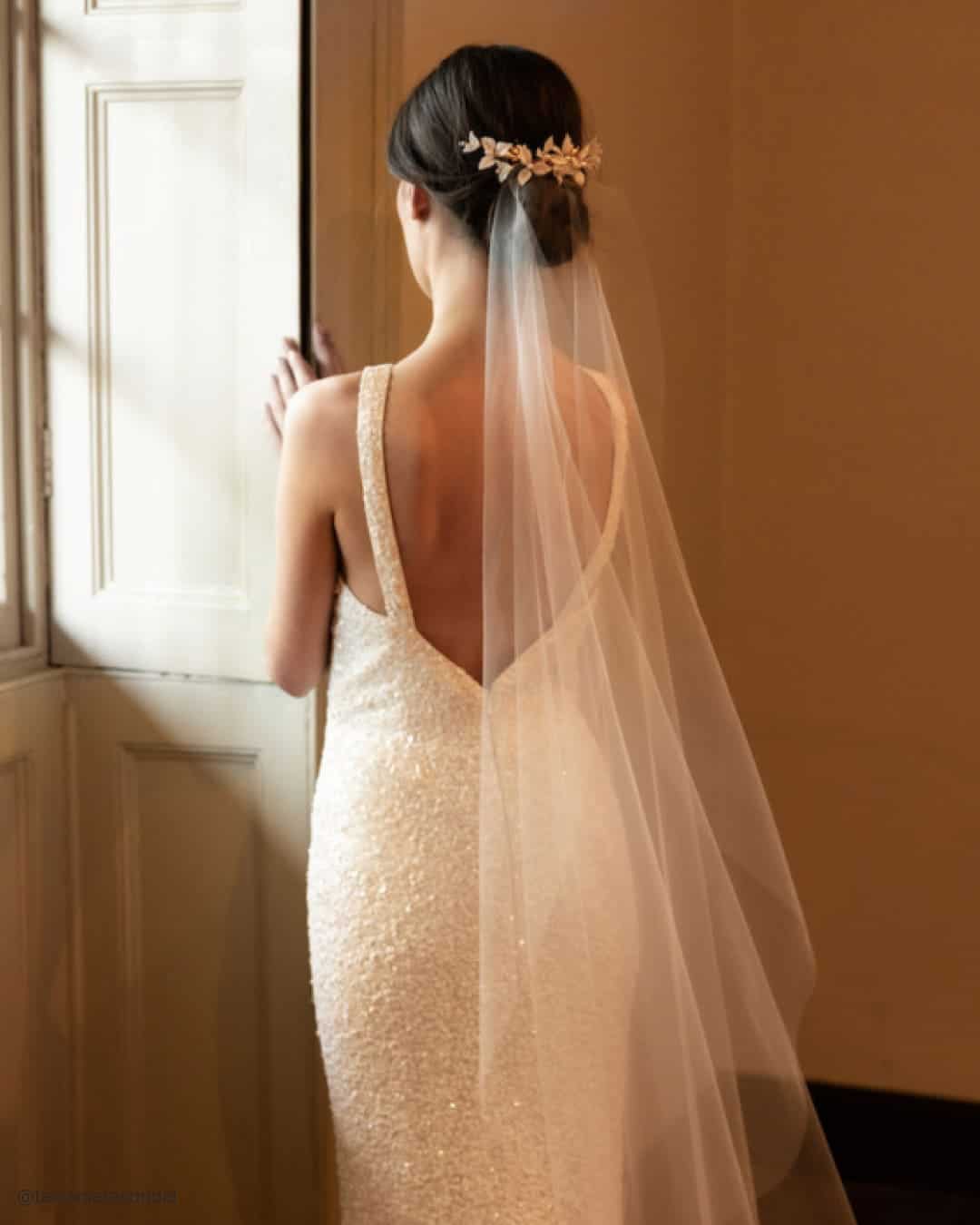
Long Veils: Floor-Length, Chapel, and Cathedral
A floor-length veil reaches the floor but generally doesn’t trail far behind you. It conjures the look of a long wedding veil without piling on a substantial train.
This length shines with full-length gowns, formal indoor events, and outdoor venues that feature a clean, open aisle.
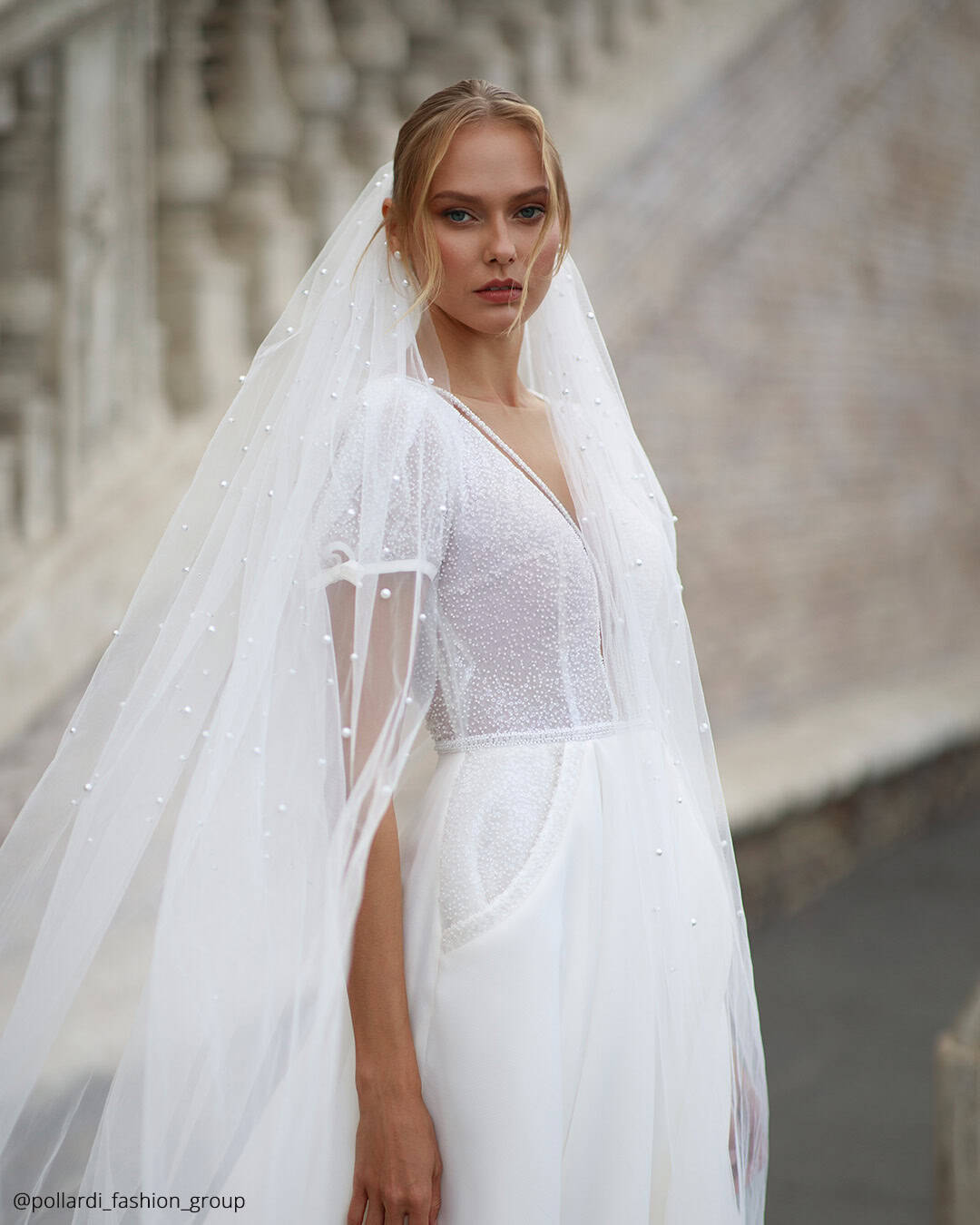
A chapel veil extends just past the hem of the gown and forms a soft train behind you. It pairs especially beautifully with full-length dresses and gowns that have short or moderate trains.
Your hairstyle should offer a very secure anchor, and the veil might need a little occasional adjustment during portraits or when moving between locations.
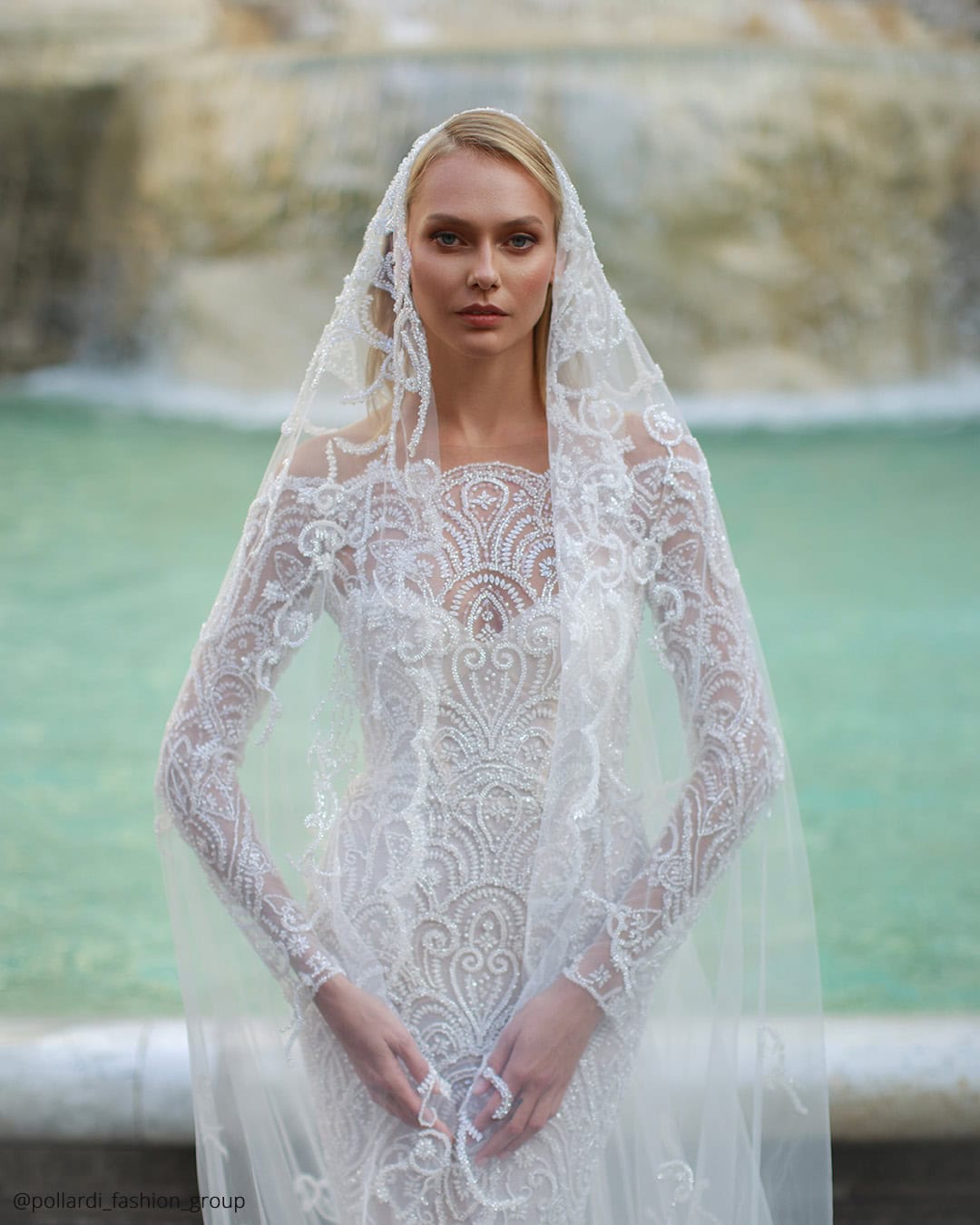
A cathedral veil delivers the longest, most dramatic impact, typically flowing well beyond the wedding dress train. It’s a particularly striking choice for church weddings, ballroom bashes, formal ceremonies, and spacious outdoor aisles.
Cathedral veil hairstyles demand a robust attachment point, think a structured updo, a stable half-up section, or another firm base for the veil comb.
Because of its length and heft, a cathedral veil also calls for more room and a helping hand. A stylist, planner, or trusted member of your bridal party can assist in arranging it for the ceremony, photographs, and when it’s time to take it off.
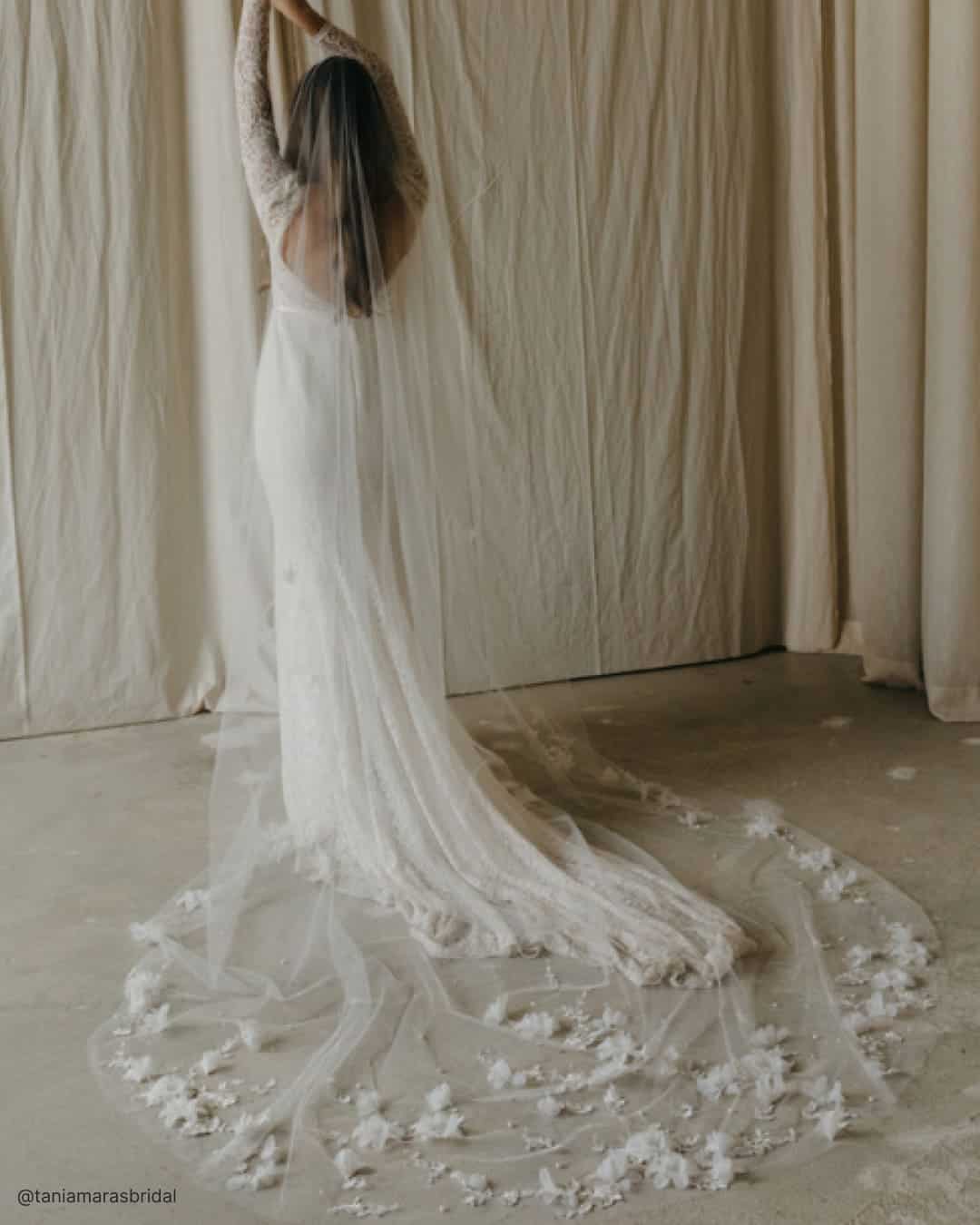
How Veil Length Works With Your Dress, Venue, and Hairstyle
For a short, modern bridal look: Birdcage, blusher, and shoulder-length veils fit right in with civil ceremonies, intimate weddings, bridal suits, and shorter dresses. They also suit pixie cuts, bobs, and structured updos because they require less support and leave the hairstyle clearly on display.
For a versatile and classic choice: Elbow and fingertip veils complement most wedding dress silhouettes and feel right at home at both indoor and outdoor celebrations. They pair beautifully with half-up hairstyles, low buns, ponytails, and loose waves without hiding too much of the dress’s detail.
For softness and movement: Waltz and floor-length veils create a flowing, graceful effect without the weight or handling demands of a long train. They stand as a practical option for garden weddings, outdoor venues, or brides who want to keep the veil on well past the ceremony.
For a formal or dramatic entrance: Chapel and cathedral veils look particularly striking with full-length gowns and dresses that feature trains. They need a secure hairstyle anchor and enough space to maneuver comfortably, so chat through the placement, support system, and removal game plan with your hairstylist well before the wedding day.
Exact veil measurements can shift depending on the bride’s height, the comb’s position, and the proportions of the specific design. During your final fitting or hair trial, examine how the veil falls from its attachment point, whether it hides any important dress details, and how smoothly it can be removed after the ceremony.
Bridal Updo With Veil
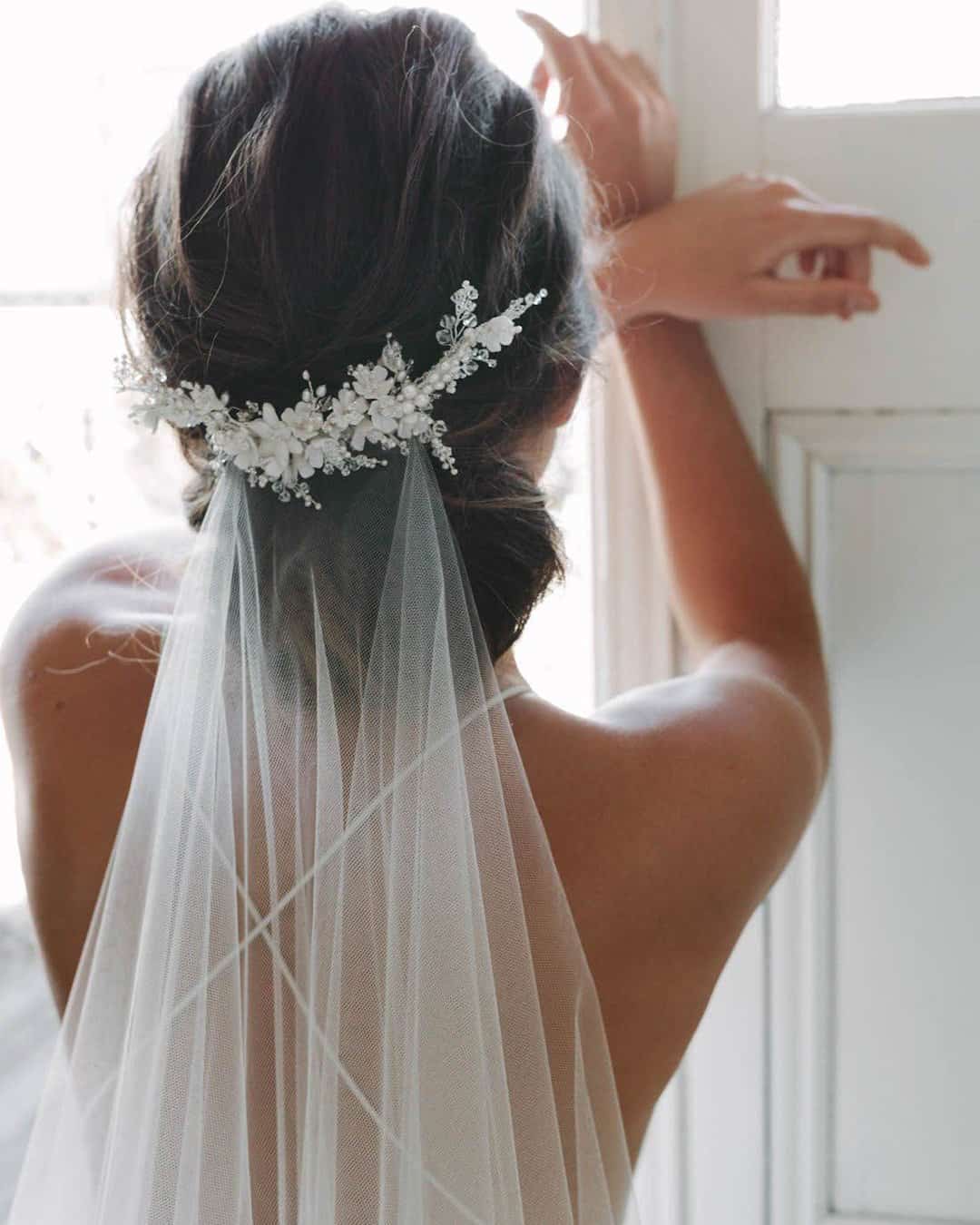
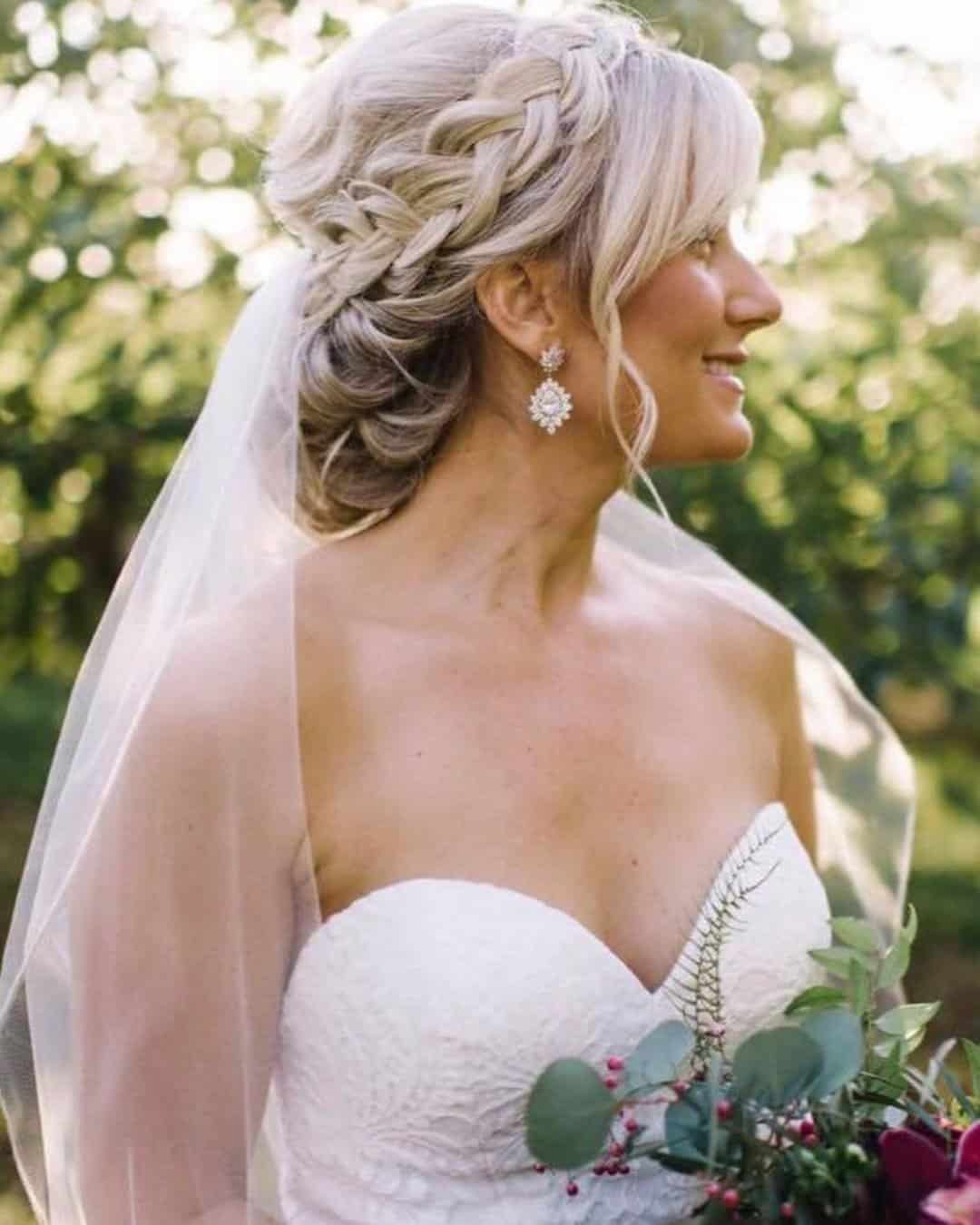
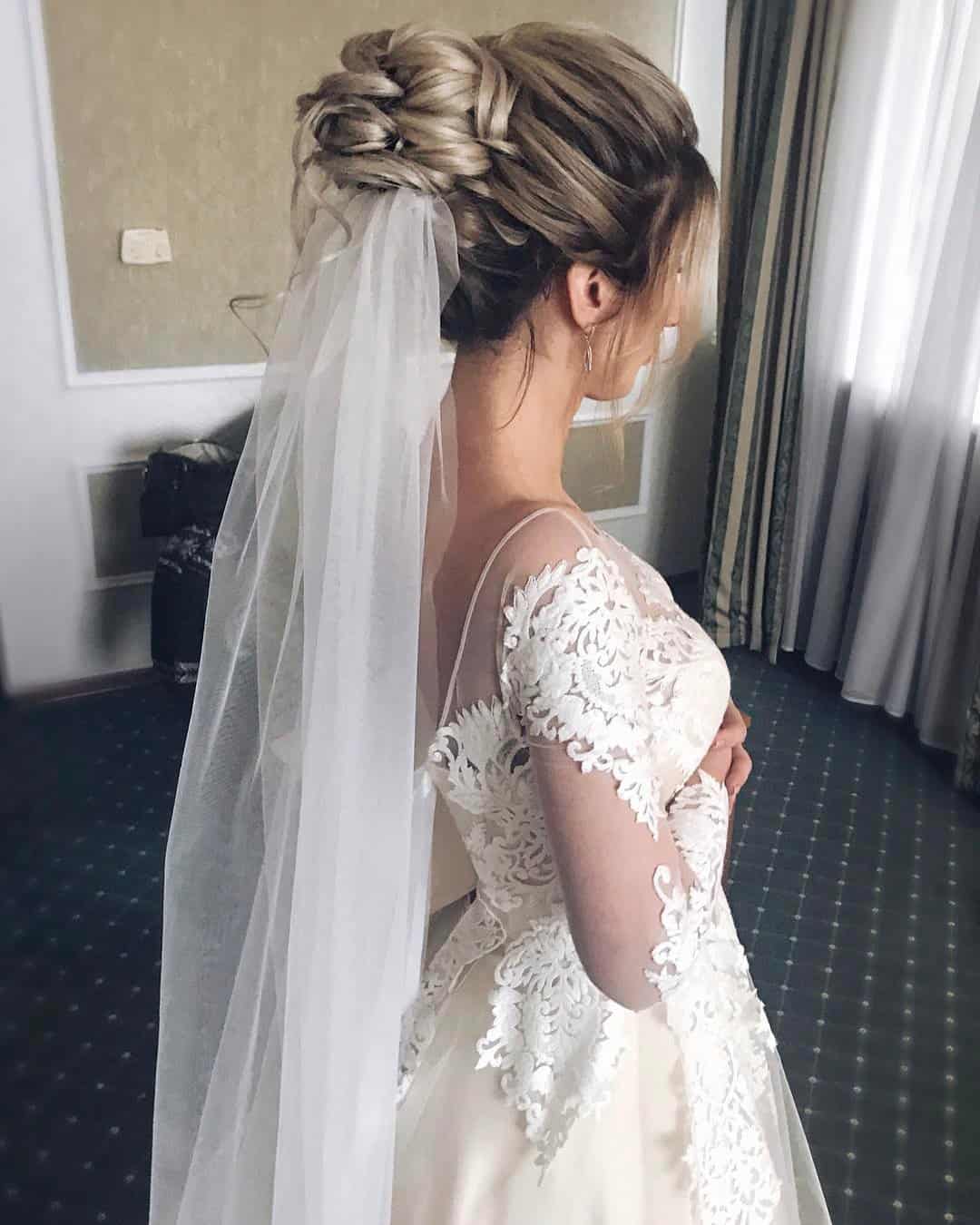
Wedding updos paired with a veil are a practical and graceful choice, especially if you’re aiming for your hair to stay perfectly put all day long. With a high bun and veil, placing the veil above the bun injects height and volume but may partially mask the hairstyle.
Positioning it directly behind the bun allows more of the structure to stay visible while giving the comb a reliable anchor. A veil tucked under the bun fashions a softer, more contemporary bridal silhouette and leaves the updo fully in the spotlight, though the stylist might need extra support pins to keep everything absolutely secure.
A bridal ponytail with a veil can be styled with the veil placed above or tucked beneath the base of either a high or low ponytail. The veil comb and any extra pins need to sit firmly without loosening the elastic or disturbing a neatly wrapped ponytail base.
Half Up Wedding Hairstyles With Veil
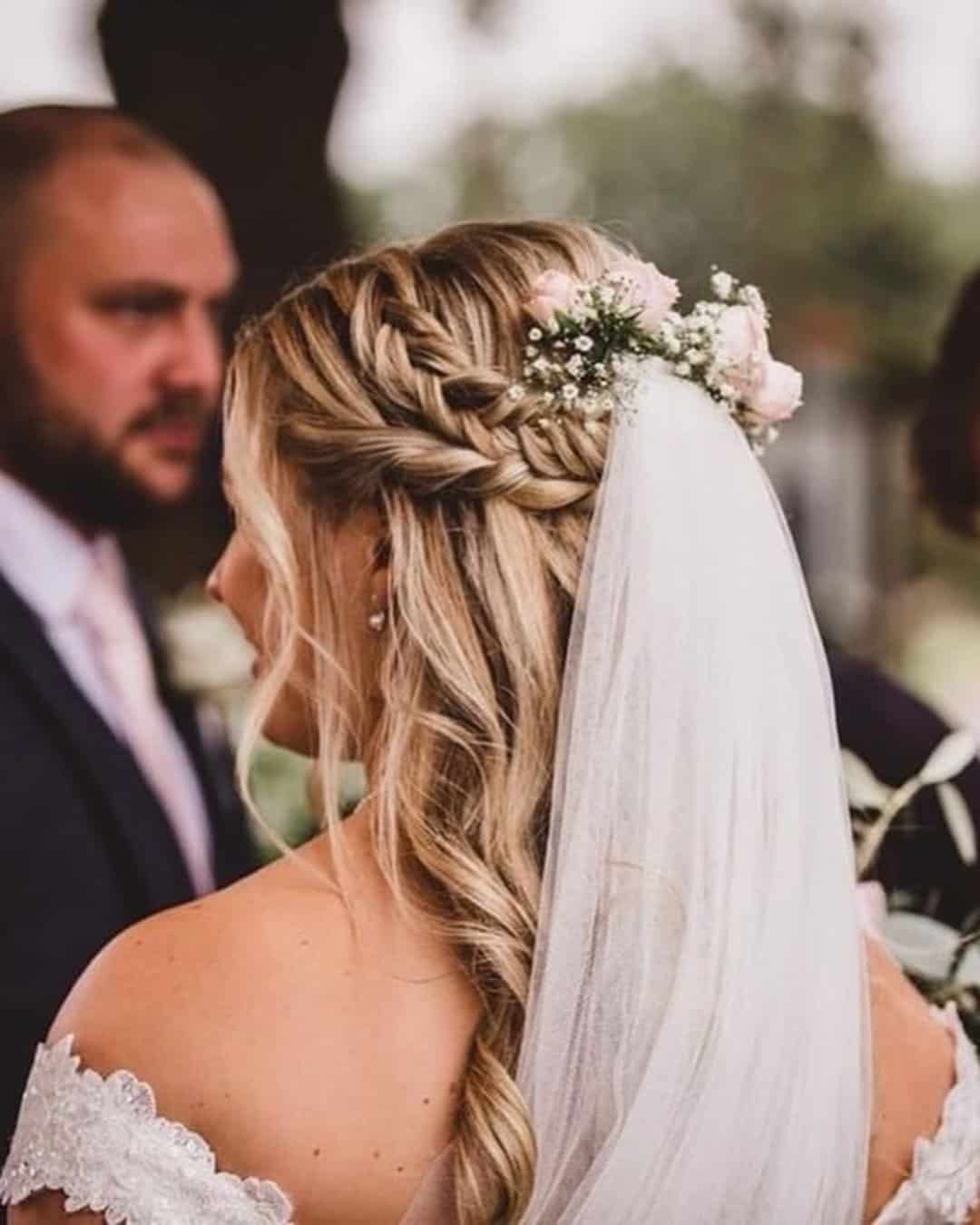
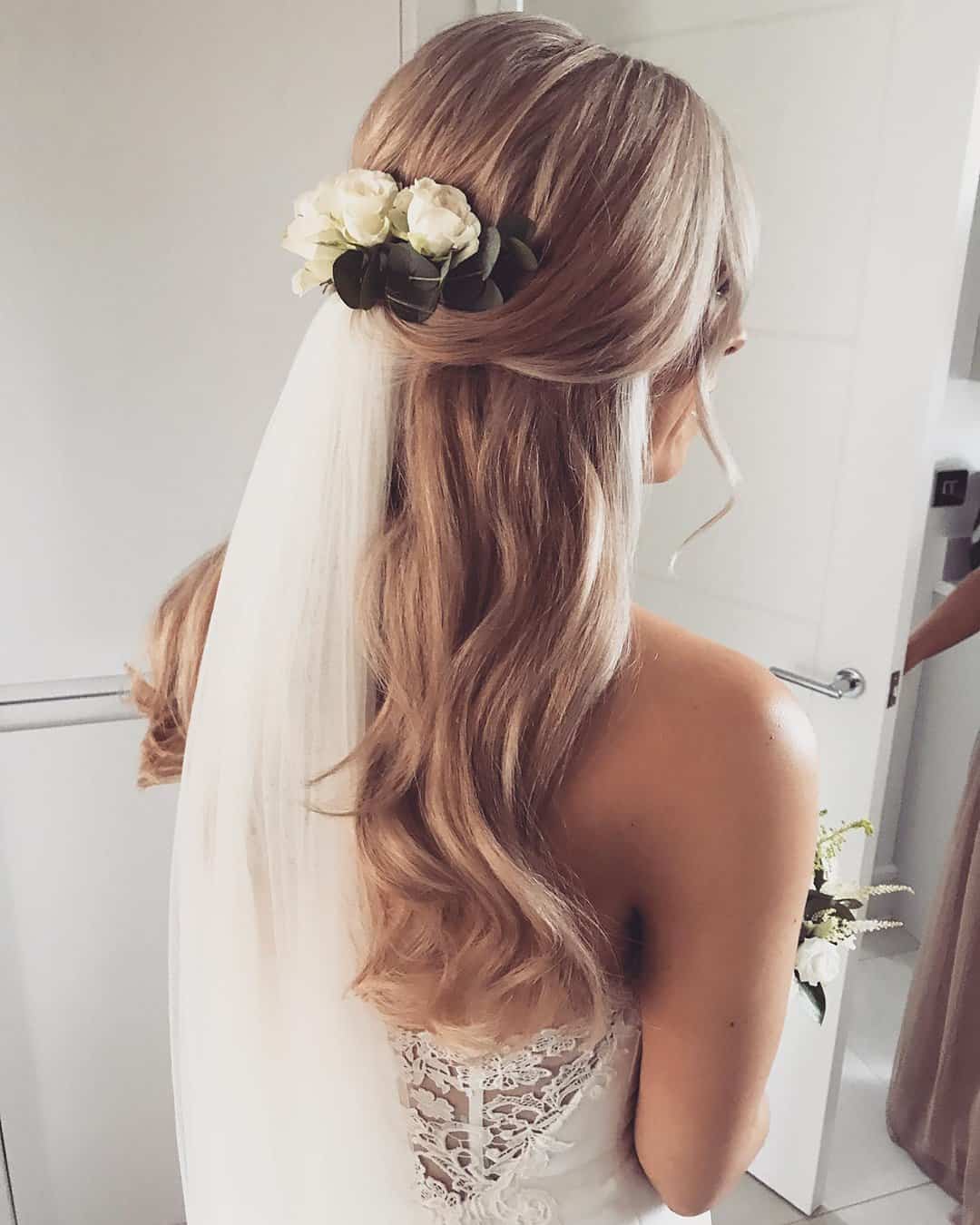
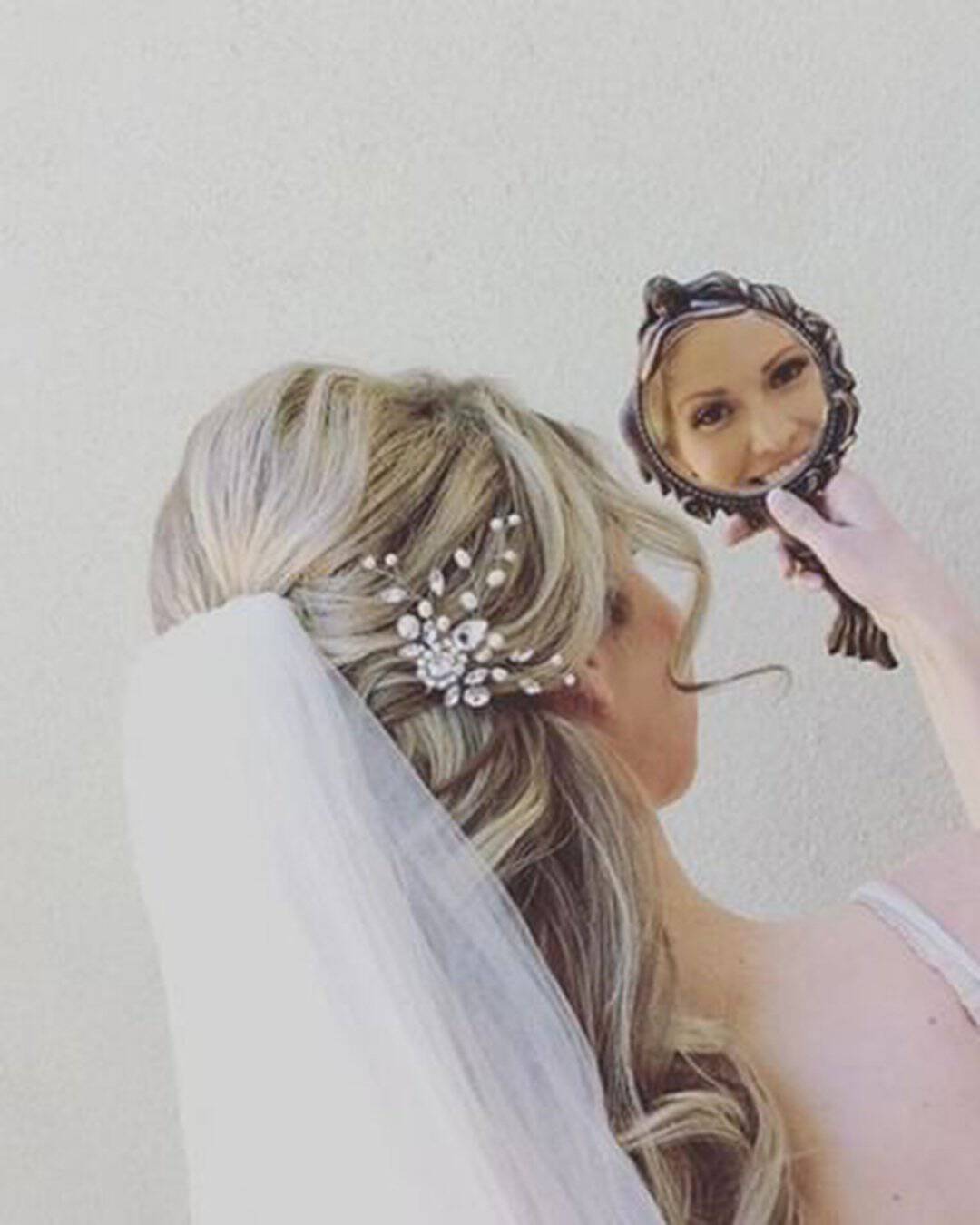
Half up wedding hairstyles for long hair with a veil are just perfect for brides hunting for that sweet spot between elegance and romance. Ideal for bohemian, rustic, classic, and garden weddings, this style works gorgeously with dresses that feature intricate bodices or alluring open backs.
It spotlights the natural length and texture of your hair while piling on soft, touchable volume.
If your veil is on the simpler side, think about a curly half-up style paired with a bejeweled comb placed just above it. This pairing shapes a timeless, effortlessly romantic bridal look.
The secured half-up section also happens to provide a steady anchor point for the veil comb, whether you choose to place the veil right above the gathered hair or hide it beneath. If you’re wearing a tiara or another bridal headpiece, make sure to leave enough breathing room between the accessories so their combs and pins don’t battle for the same spot.
Side Swept Wedding Hairstyles With Veil
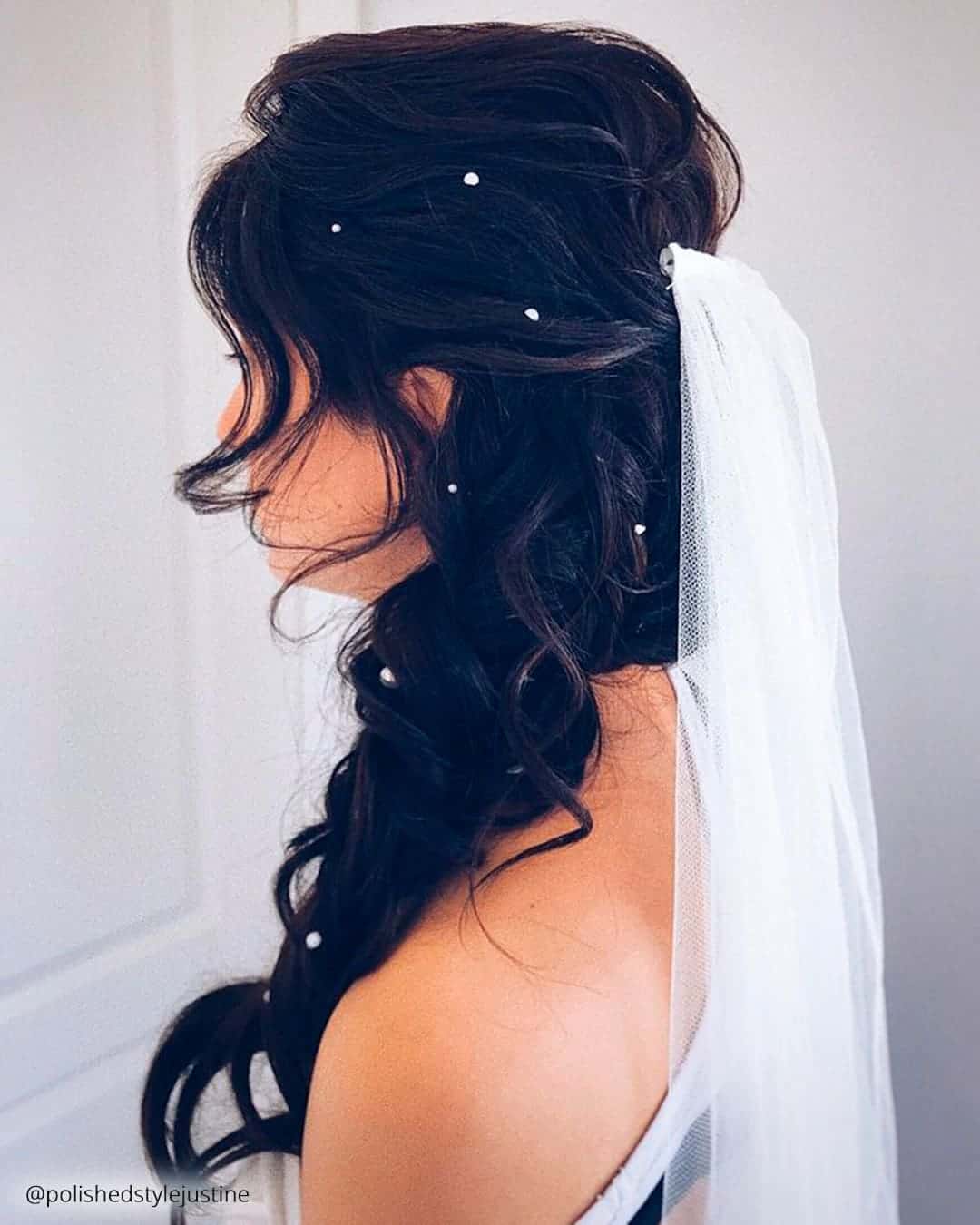
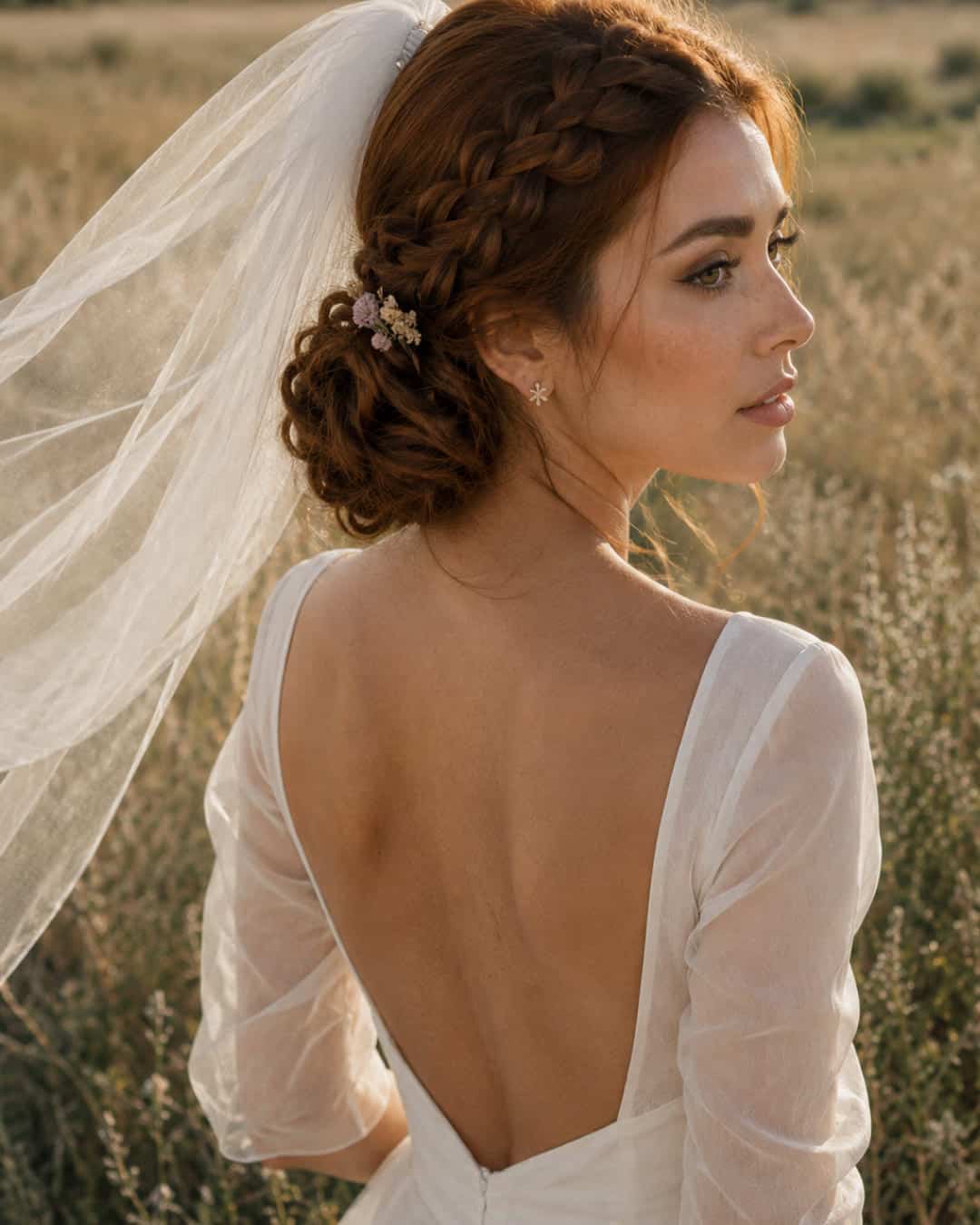
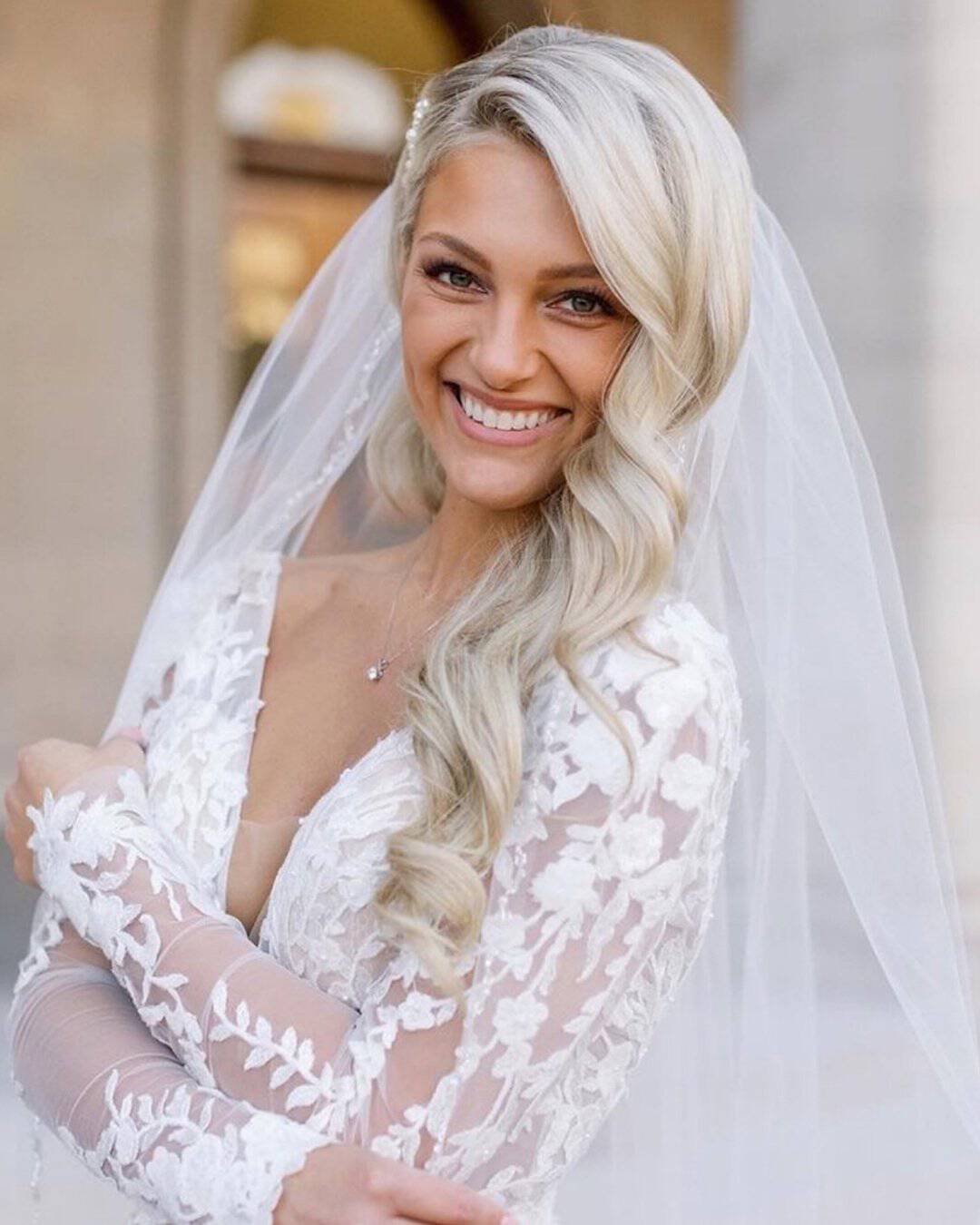
A side-swept wedding hairstyle with a veil is a gorgeous choice for long or medium hair. It feels particularly at home at outdoor weddings, but it can radiate just as much elegance inside a grand ballroom.
Sweeping the hair over one shoulder can highlight your favorite facial angle and naturally pull focus toward your smile.
The veil can be anchored at the crown or playfully shifted slightly to one side, depending on the hairstyle and the effect you’re chasing. Side-pinned loose waves create a soft, deeply romantic feel, while a side braid projects a relaxed and modern energy that’s perfect for a beach wedding.
Tousled curls, loose waves, defined curls, and cropped side parts can all be draped to one side for a polished bridal finishing touch.
Wedding Hairstyles Down With Veil
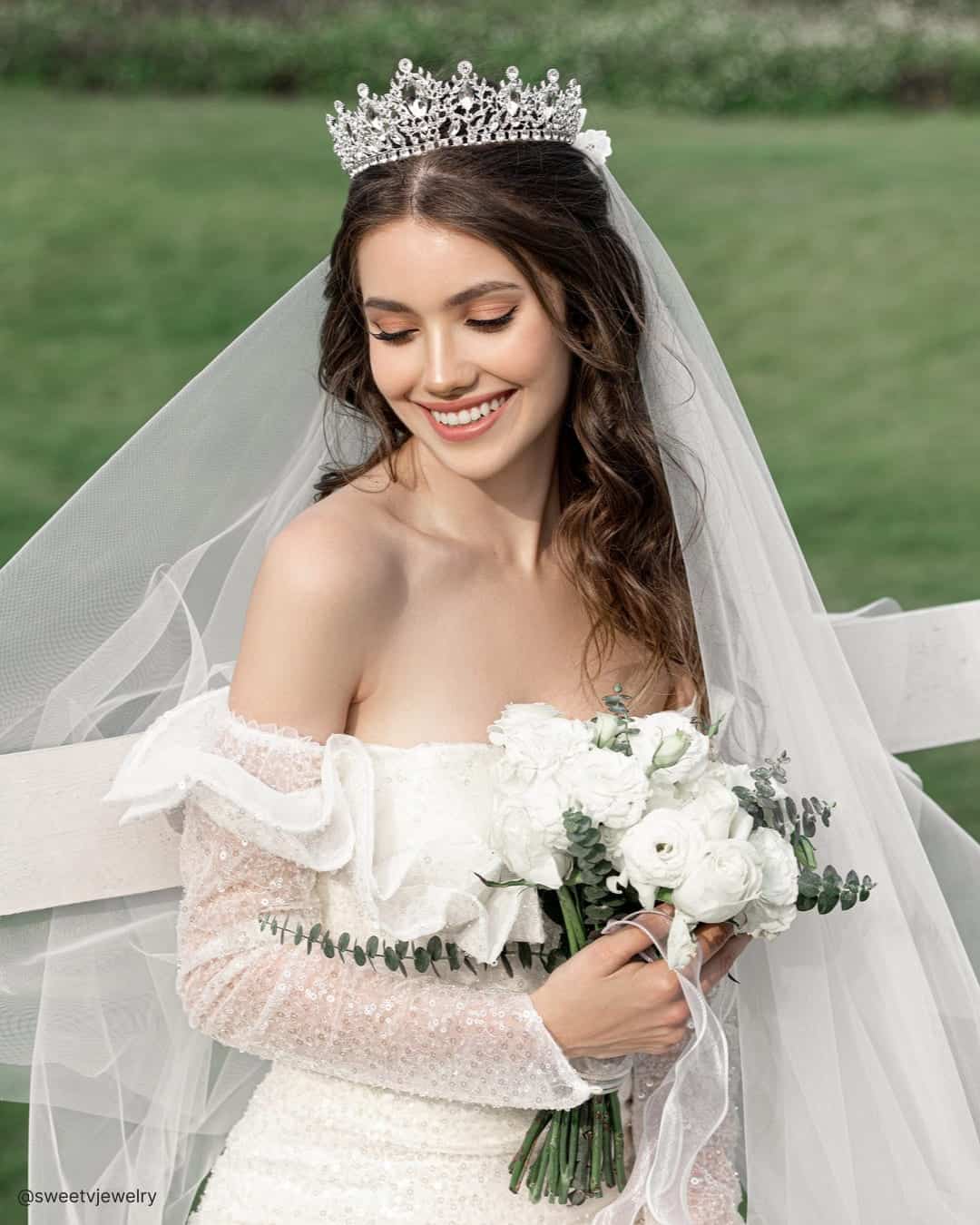
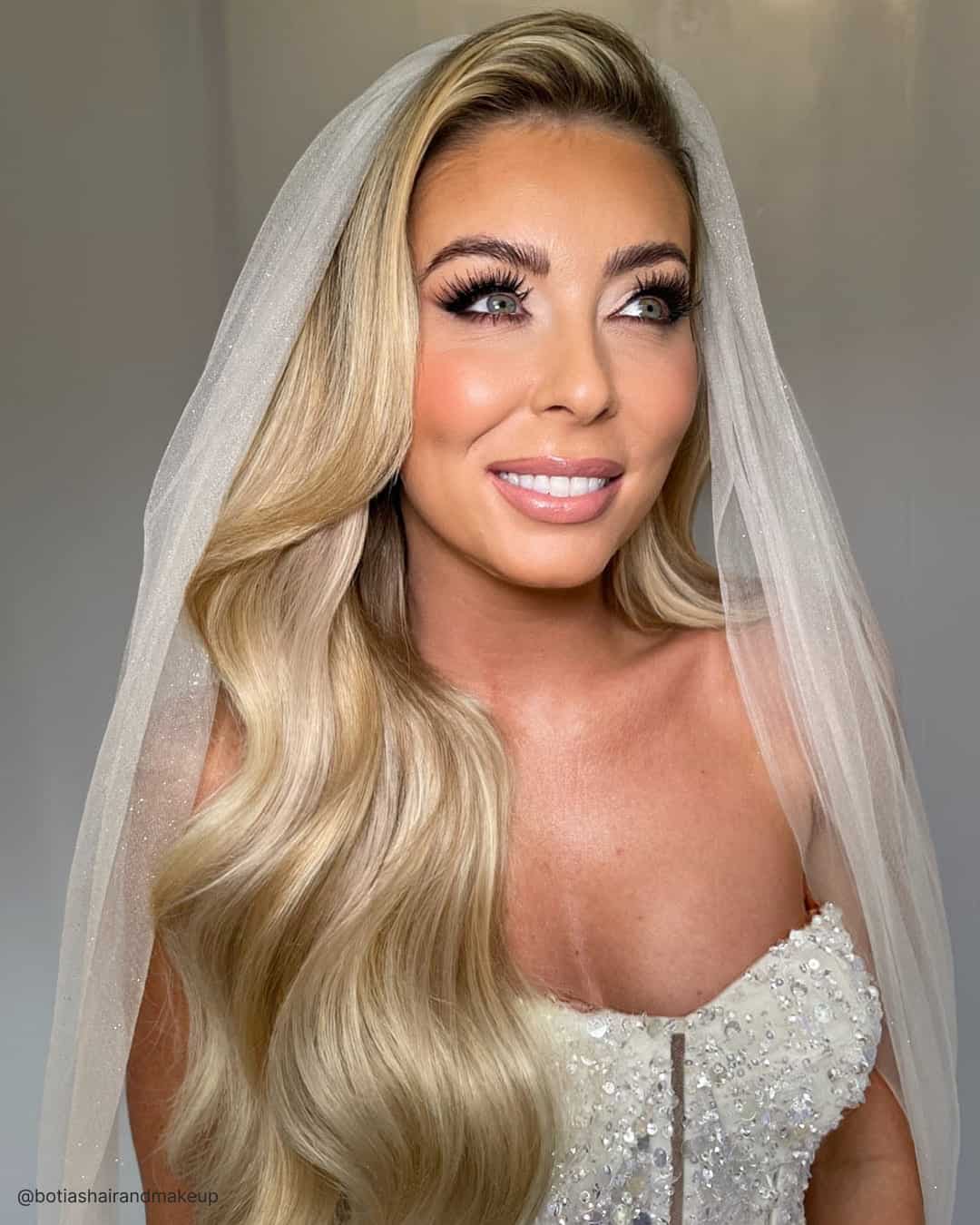
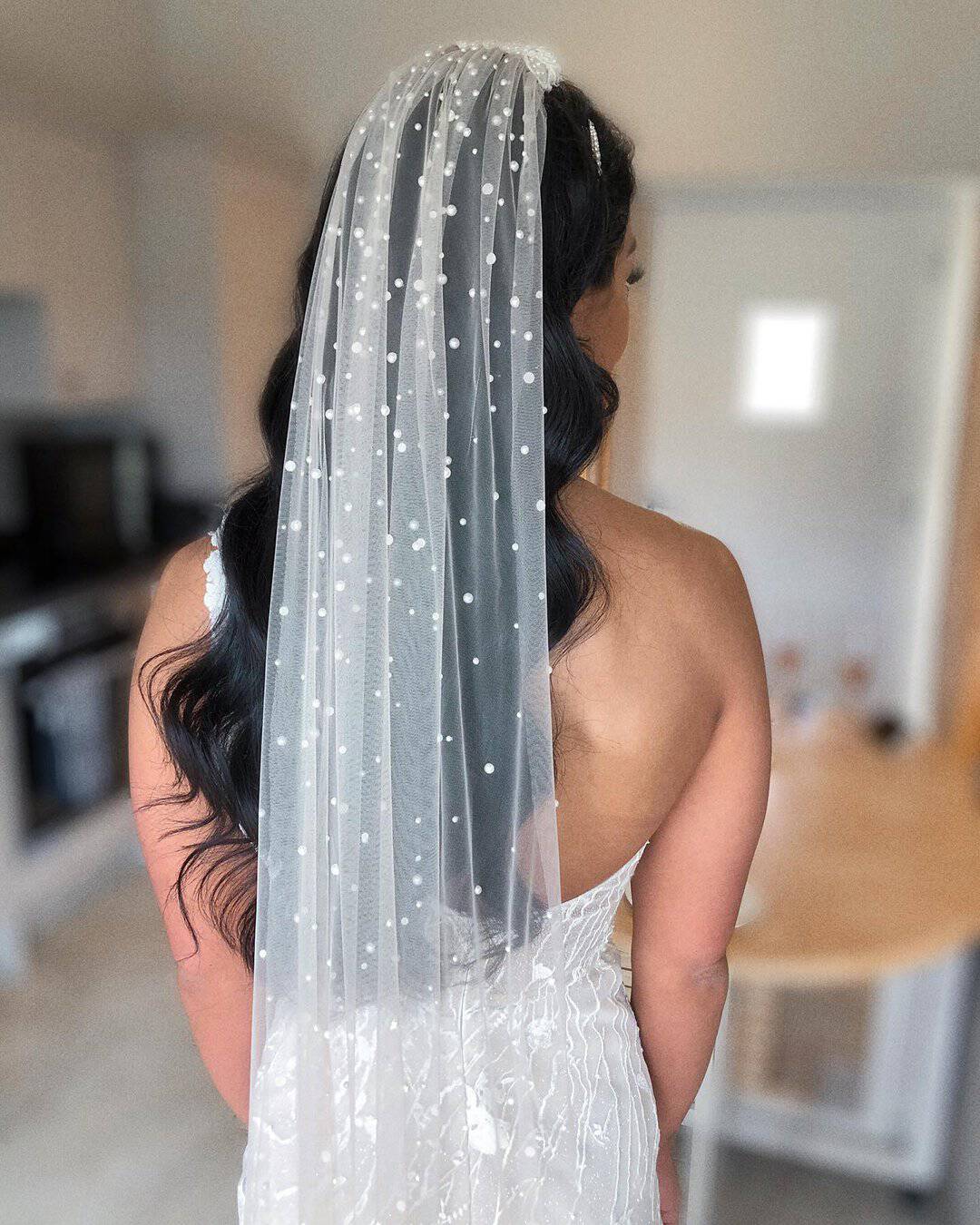
Setting the veil at the crown makes it a more prominent feature and adds a beautiful lift to your bridal silhouette. A lower, rear placement keeps more of your loose waves or curls in full view and produces a softer, more gentle effect.
Classic hair-down wedding hairstyles or half-up, half-down looks with a veil frequently showcase large, lush waves and tousled curls.
These understated yet refined styles can beautifully balance a gown loaded with detail and embellishment. Mantilla veils, classic tulle veils, and Juliet cap veils can all enhance loose bridal hair, while fingertip and chapel-length styles work especially well with asymmetrical waves and strapless dress necklines.
For brides puzzling over how to secure a veil with hair down, bridal designer Tanya Maras recommends building a concealed anchor hidden beneath the top layer of hair. Fine, straight, or slippery hair can be coaxed into cooperation with light backcombing, crossed bobby pins, small clear elastics, or a narrow hidden braid.
The veil comb should slide cleanly into this prepared base rather than just resting limply in loose strands, and extra pins can be crossed over the comb’s teeth for that extra hit of security.
A lightweight veil normally demands less structural support and places far less tension on the hairstyle. During your hair trial, test the removal process thoroughly to make sure the comb doesn’t loosen the curls, flatten your volume, or leave the attachment point looking messy and unfinished.
Wedding Hairstyles With Veil Front View Ideas
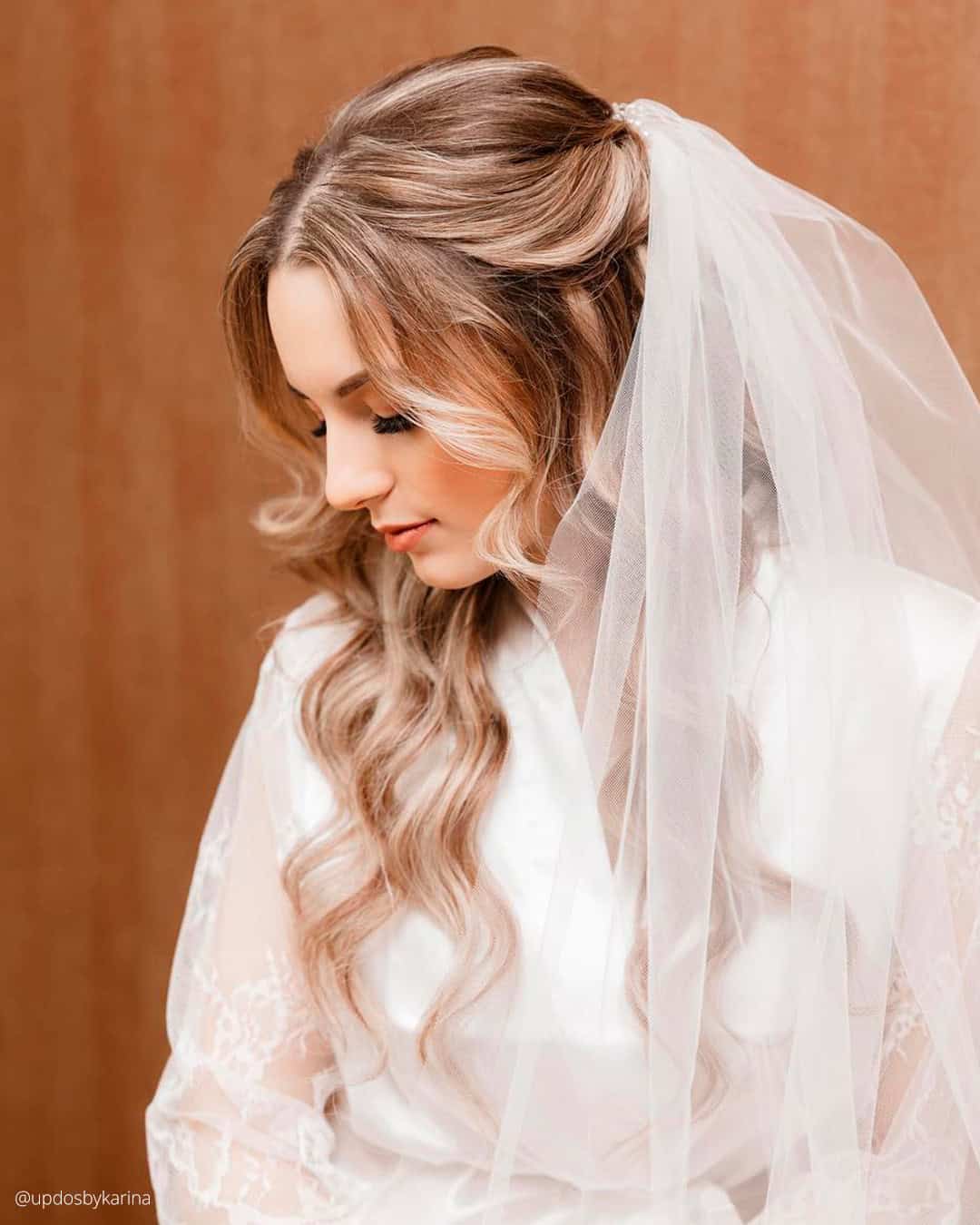
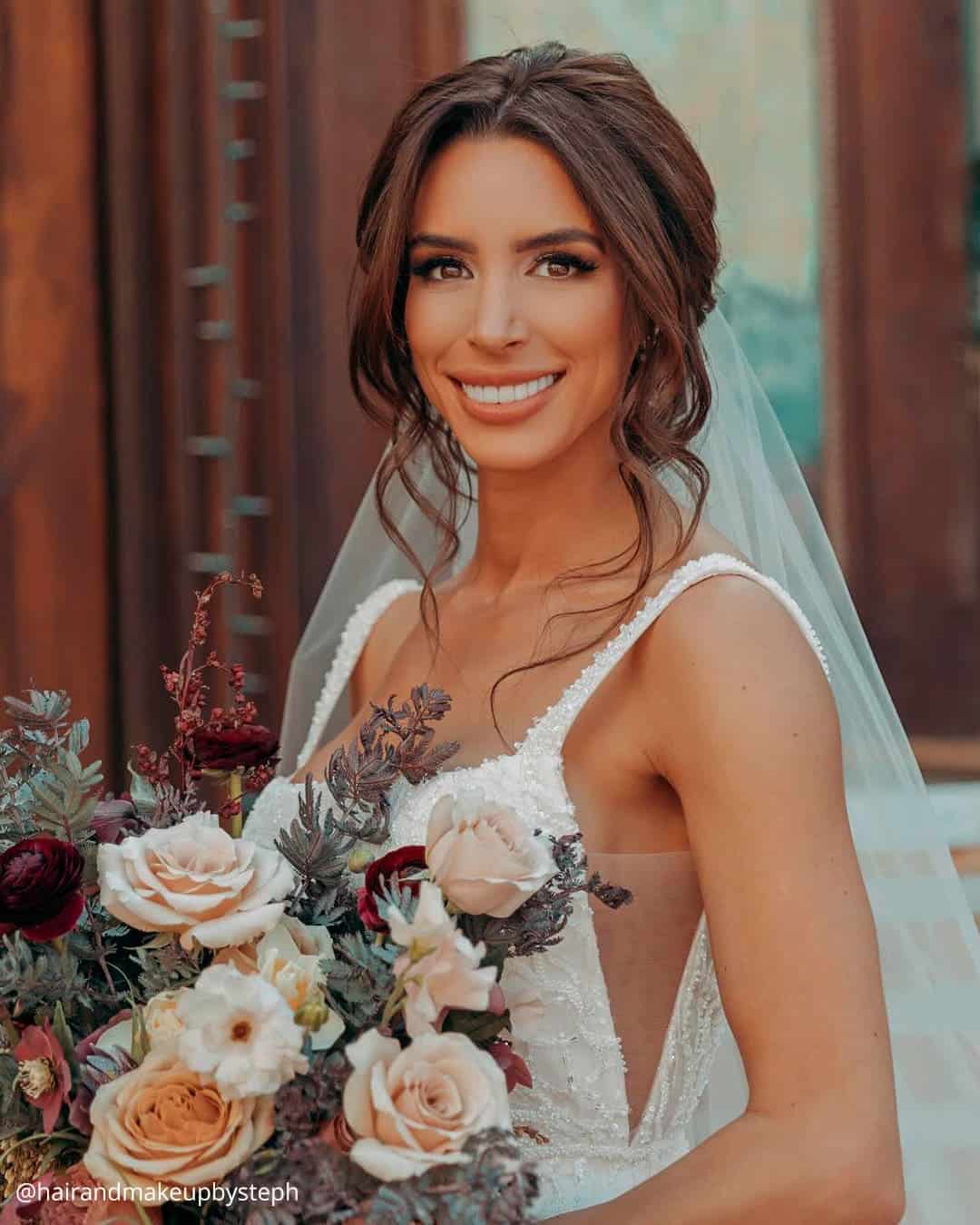
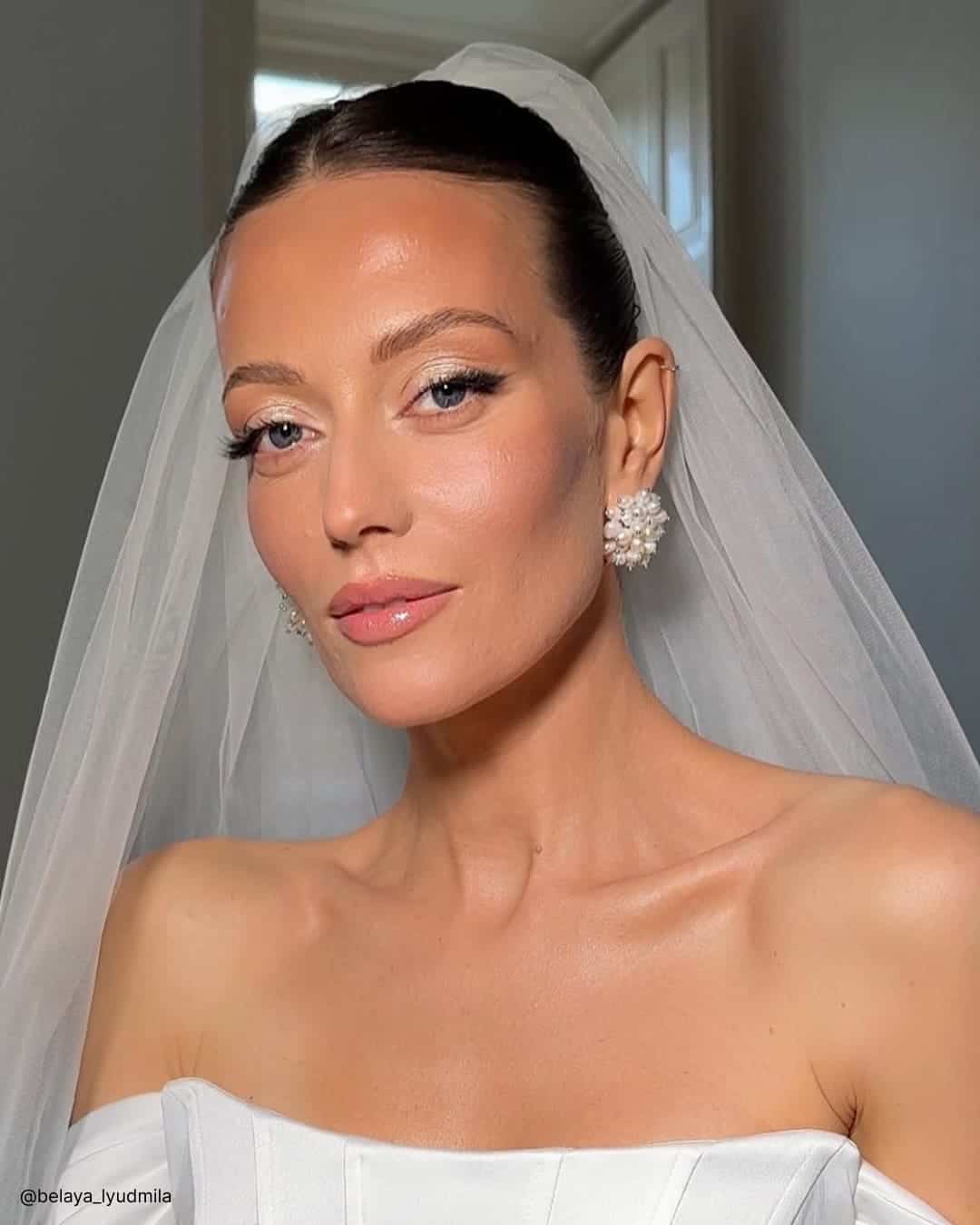
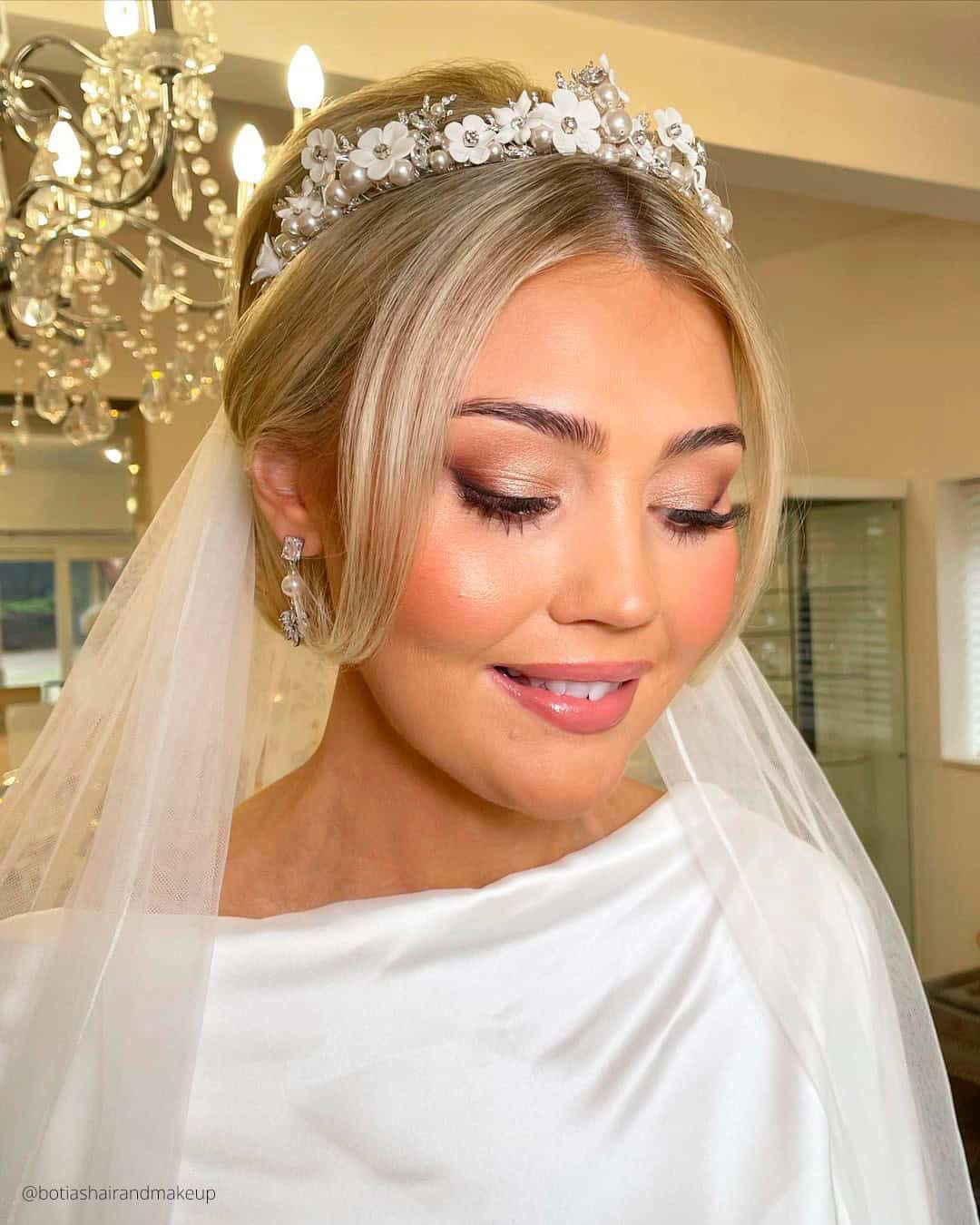
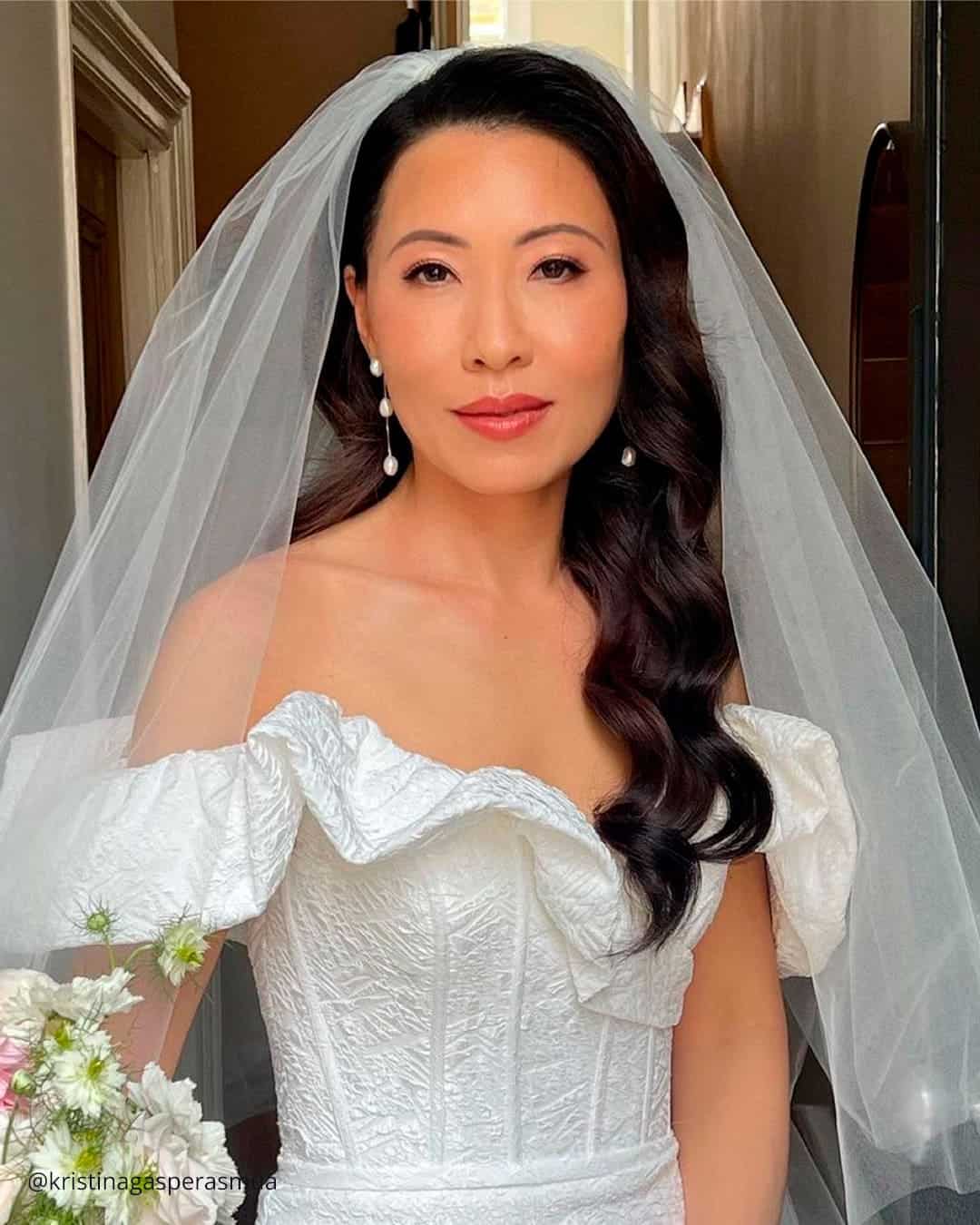
Your hairstyle has to look just as breathtaking from the front as it does from the back, seeing as it frames your face and rounds out the total bridal vision. Here are five flattering front-view styles to consider: When mulling over bridal hairstyles for a round face with a veil, think moderate crown height, a side or off-center part, and carefully controlled face-framing strands to help conjure balanced proportions.
Steer clear of placing the veil too high or too wide, since extra volume around the crown can shift how the hairstyle reads from the front.
Wedding hairstyles with bangs and a veil should be plotted so the comb doesn’t squash curtain bangs, blunt bangs, or a side-swept fringe. Crown placement can pair beautifully with curtain bangs, while straight or side bangs often look more successful when the veil is positioned just a touch farther back.
Your final choice should flatter your face shape, dance well with your dress, match your wedding style and personal preferences, and above all, feel comfortable and genuinely true to you.
How to Wear and Secure a Wedding Veil
How you wear and secure a veil hinges on the architecture of your hairstyle, the chosen wedding veil placement, the available anchor point, and the sheer weight of the fabric. The right marriage of these elements should keep the veil rock-steady without flattening your style, yanking on your scalp, or clashing with other bridal accessories.
Choosing the Best Veil Placement
Veil placement shapes how much of the hairstyle stays visible, where the volume appears to live, and how the veil alters your overall silhouette. Consider the build of your hairstyle, the veil length, and whether you want your hair or the veil to be the headline act.
- Over the hairstyle: This placement pushes the veil into a starring role and creates a soft, romantic layer draped over the hair. It pairs well with structured or voluminous updos that can firmly brace the veil comb.
- Behind the bun: Positioning the veil behind the bun keeps the lion’s share of the hairstyle visible while letting the bun offer a steady, reliable anchor. It crafts a balanced, seamless transition between the updo and the flowing fabric.
- Under the bun: A veil under bun placement leaves the updo completely visible and lets the fabric cascade naturally from beneath it. This option frequently sculpts a lower, softer, and more modern silhouette.
- At the crown: Crown veil placement introduces height and turns the veil into a dominant feature of the front and side profile. It can flatter loose waves, half-up styles, and hairstyles sporting moderate crown volume.
- Under a secured half-up section: The veil comb can be hidden beneath the gathered hair, using the secured half-up join as a clever, discreet anchor. This keeps the attachment nearly invisible while letting the loose length remain fully on display.
Wedding Veil Under the Bun
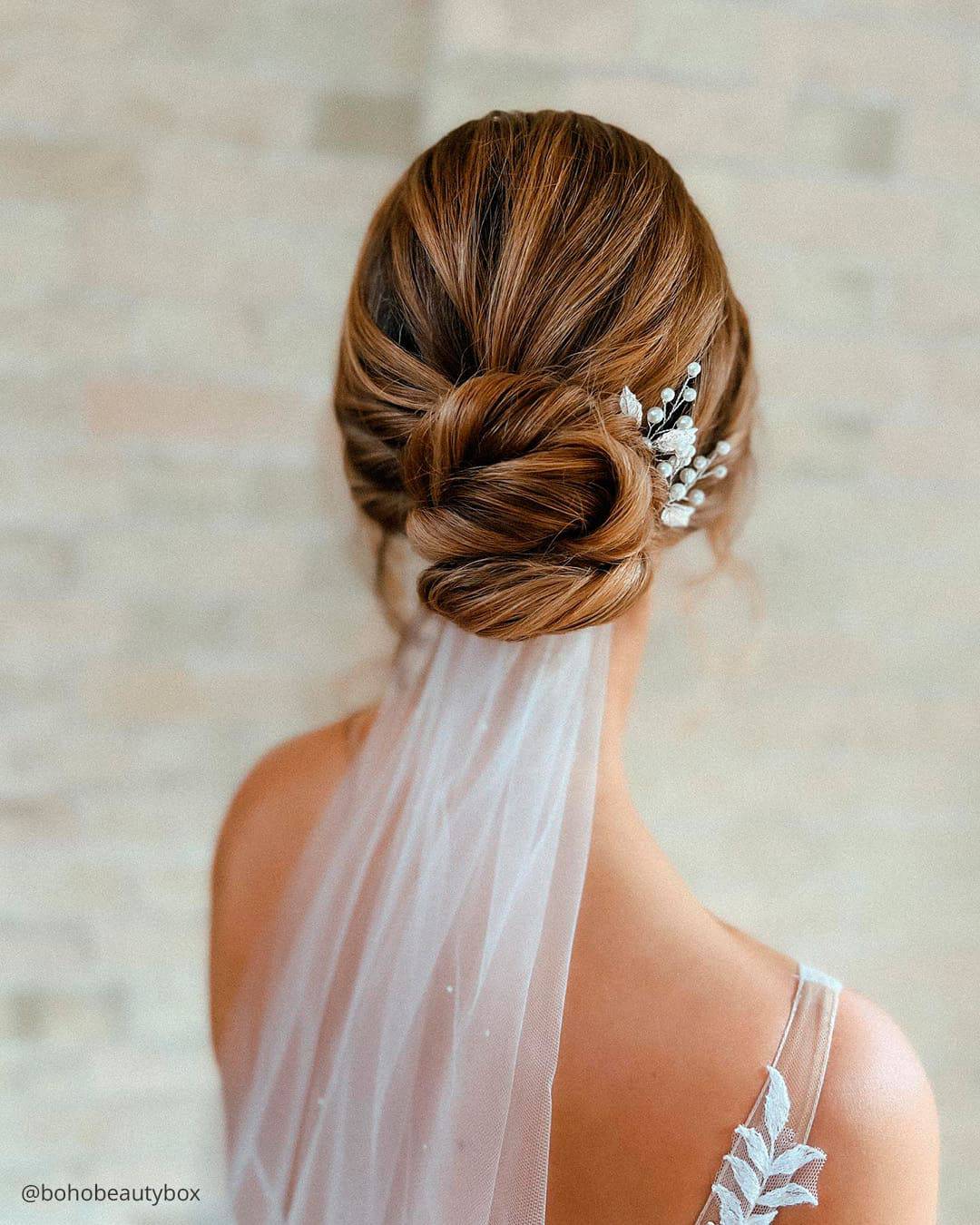
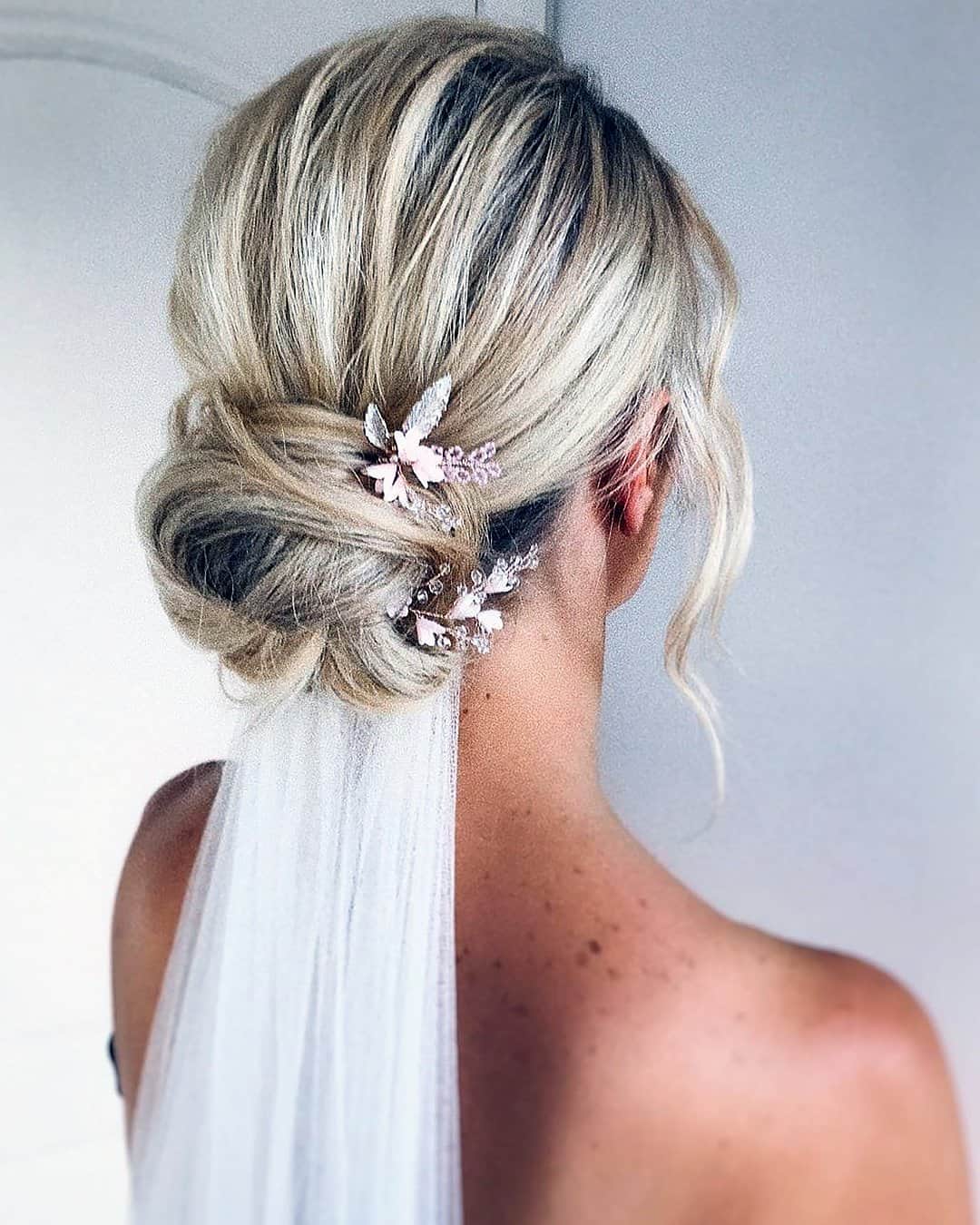
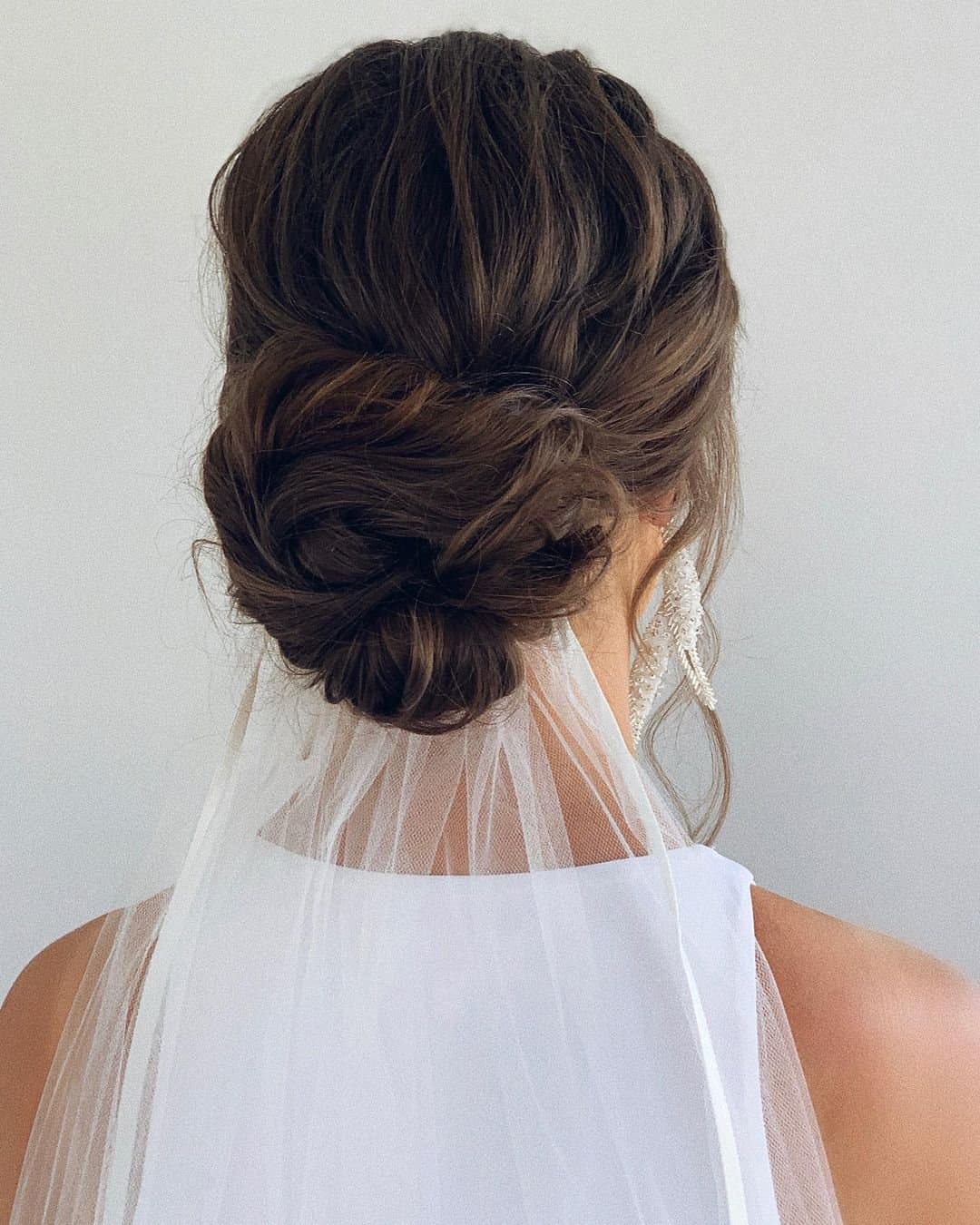
A wedding veil positioned under the bun falls straight from beneath the updo, forging a fluid, seamless path from the hairstyle right into the fabric. This placement leaves a low or structured bun visible and is especially effective when the bride wants the hairstyle, headpiece, or decorative pins to hold the spotlight.
A veil tucked underneath a bun can suit fingertip, chapel, and cathedral-length veils, but the comb absolutely must be anchored securely below the updo. The stylist might deploy crossed pins or a specially prepared support point to stop the veil from pulling downward during the ceremony.
Veil Over the Hairdo
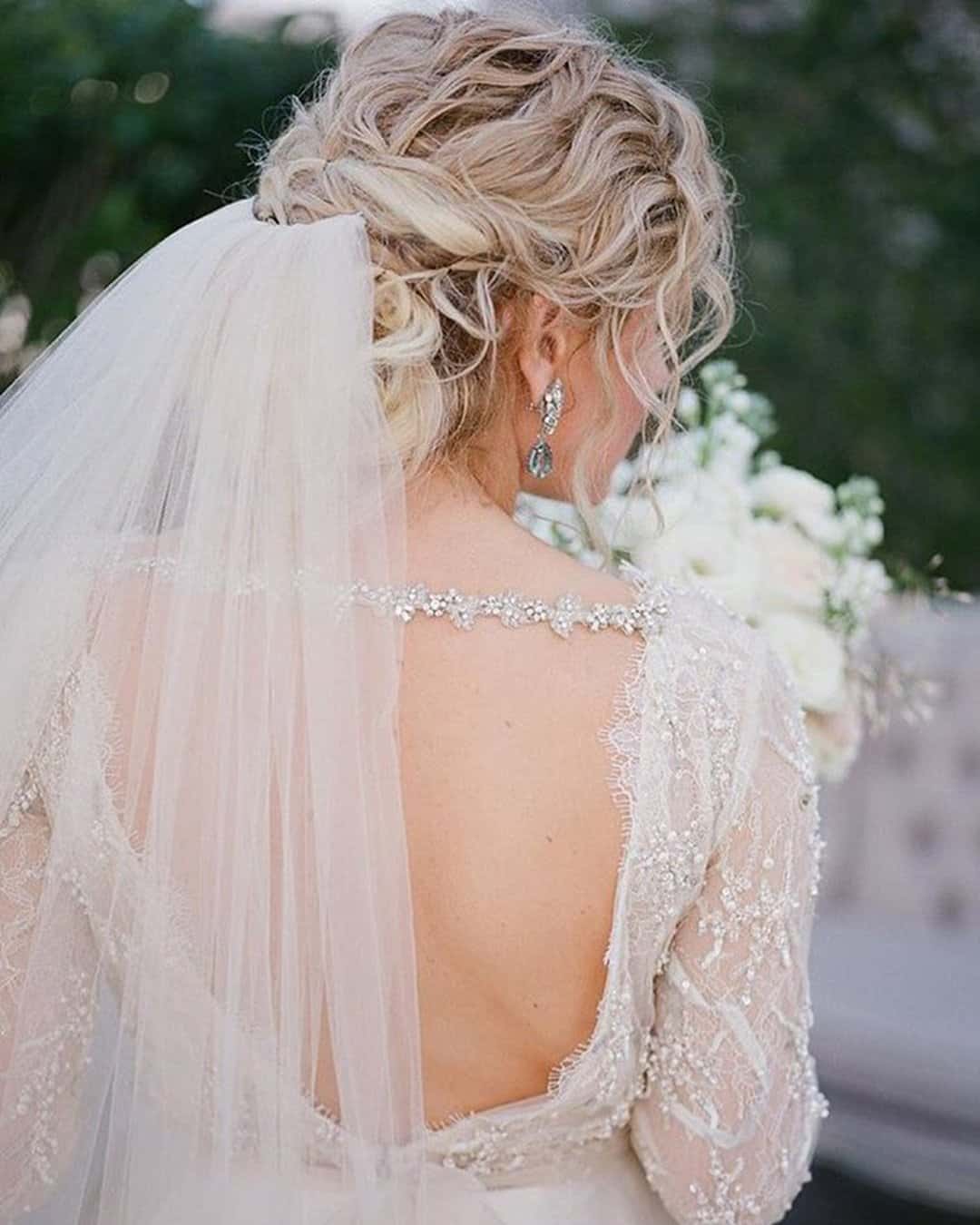
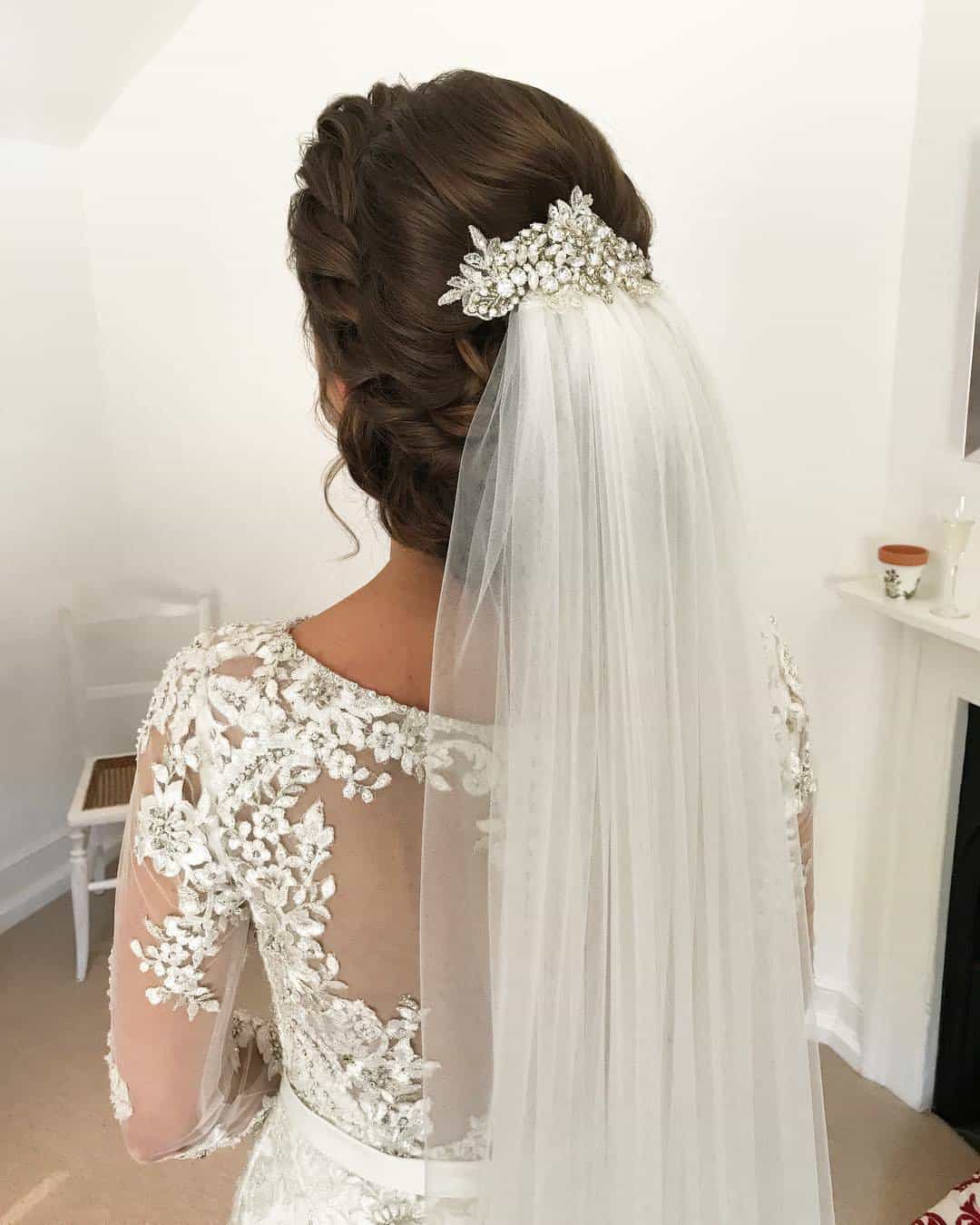
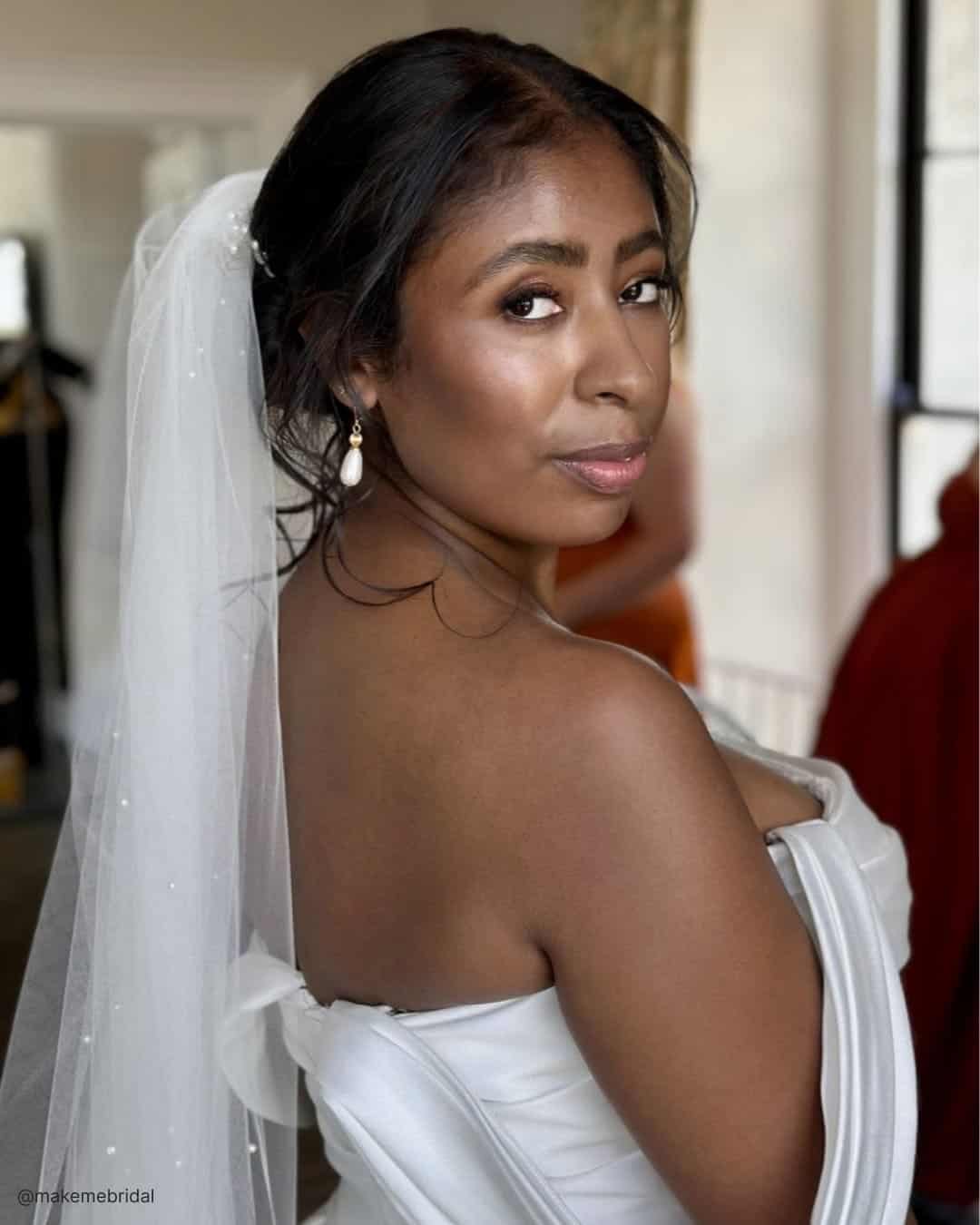
A veil draped over the hairdo forms a soft, ethereal halo around the hairstyle and boosts the veil’s prominence in the overall bridal appearance. Placing the veil over bun styles or just above a structured updo can deliver a dose of height, volume, and movement while letting the fabric gracefully trace the shape of the hair.
This placement is particularly powerful with chapel or cathedral veils, which generate a dramatic cascade of fabric flowing behind the bride. However, the veil comb simply must sit in a secure anchor so the fabric doesn’t squish delicate details or shift the hairstyle out of place.
Choosing the Right Attachment Method
Getting to grips with how to secure a veil starts with choosing an attachment method that properly matches the hairstyle and the veil’s weight. A veil comb is the most common tool of the trade, but extra support might be called for with smooth hair, loose, free-flowing styles, or heavier fabrics.
- Veil comb: A wedding veil comb should be slid into a prepared section of hair rather than just poked into loose, unsupported strands. Metal combs often clamp down with a stronger hold, while clear combs leave a more discreet, barely-there finish.
- Crossed bobby pins or hair grips: Two pins can be criscrossed beneath the top layer of hair to construct a small, hidden anchor. The teeth of the comb glide behind the crossed pins, which help block any unwanted movement.
- Backcombed anchor: A whisper of light backcombing can conjure up texture and resistance in fine, straight, or slippery hair. The surface should stay perfectly smooth while the hidden section beneath offers a firm grip for the comb.
- Hidden braid: A slim horizontal braid supplies a powerful attachment point for a veil worn with hair down. The braid can be tucked away and concealed beneath the upper layer of waves or curls.
- Elastic anchor: Small clear elastics can form one or two hidden ponytails tucked beneath the hair. The veil comb is then plugged into the elastic-supported section instead of gambling on loose strands alone.
Adapting the Attachment to Your Hair and Hairstyle
How to secure a veil in your hair depends on the amount of structure already woven in. Hair length, density, texture, and natural slipperiness all dictate how much additional backup the veil genuinely requires.
- Structured updo: A bun, chignon, or twisted updo generally provides a rock-solid base for the comb. The veil can be placed above, behind, or below the updo, depending on how much of the hairstyle you want to keep visible.
- Half-up hairstyle: A veil with half-up hair can be anchored above the gathered section or hidden right underneath it. The secured join needs to stay firm enough to properly brace the comb without causing the style to droop or loosen.
- Loose hair: A veil with hair completely down calls for a concealed anchor because loose strands alone simply may not hold the comb. Crossed pins, a hidden braid, light backcombing, or small elastic anchors can step in to provide support without disturbing the visible hairstyle.
- Pixie cut: A veil for short hair might call for a smaller comb, a headband attachment, discreet loops, or carefully positioned hair grips. Lightweight veils are typically much easier to secure in very short hair.
- Short bob: A hidden braid, small elastic anchor, or crossed pins can support the veil beneath the top section of the bob. The attachment should be thoroughly tested to make sure it doesn’t separate the hair or create a visible lump or bump.
Fine or slippery hair may need a little extra texture and backup, while naturally thick or textured hair can often clutch a comb more firmly. A heavy, densely gathered, or cathedral-length veil generally demands a far stronger anchor than a lightweight single-layer veil.
Wedding Veil Hair Trial Checklist
A wedding veil hair trial lets the stylist test-drive the complete look well before the actual wedding day. Bring the real veil whenever humanly possible, since a sample comb or a stand-in fabric might not have the same weight, width, or attachment style.
- Bring the real veil, tiara, hair comb, pins, earrings, and any other accessories that will live near the hairstyle.
- Test the preferred veil placement and at least one backup position.
- Check for pressure, pulling, slipping, or any kind of discomfort around the attachment point.
- Walk, sit, turn your head, hug someone, and mimic a few lively dance moves.
- Practice taking the veil off and putting it back on without messing up the hairstyle.
- Confirm that the veil removal test doesn’t loosen your curls, flatten the volume, or expose an unfinished, messy anchor.
- Take photographs from the front, back, sides, and three-quarter angles.
- Record the precise position of the comb, hair grips, elastics, and support pins for the wedding-day stylist to follow.
Wedding-Day Veil Timeline
A wedding-day veil timeline helps safeguard the veil during travel and makes certain that someone knows exactly when and how to attach or remove it.
- After the hairstyle is complete: Attach a lightweight or shorter veil right after the stylist finishes the hair and double-checks the anchor point.
- After arriving at the venue: Think about attaching a long chapel or cathedral veil only after arriving at the venue so it doesn’t crease, catch on car doors, or yank on the hairstyle during the ride over.
- Before the ceremony: Have the stylist, planner, or a trusted member of the bridal party confirm that the veil is perfectly centered and anchored rock-solid.
- During portraits: Keep the veil in position for formal portraits, ceremony photos, and any planned dramatic veil shots.
- Before the reception or dancing: Remove a long or heavy veil if it restricts your movement or puts too much heavy tension on the hairstyle. A shorter second veil or a decorative headpiece can be popped in its place.
- After removal: Stash the veil in a clean garment bag or a dedicated veil bag, tucked safely away from makeup, drinks, candles, and heavily trafficked areas.
- Prepare a backup kit: Keep extra bobby pins, hair grips, clear elastics, a small comb, and any specialty fasteners used during the hair trial close at hand.
Choose one trusted person and teach them how to remove the veil correctly. They should support the hair surrounding the attachment point, pluck out any securing pins first, and then gently slide the comb free without yanking on the curls or updo.
Classic Wedding Hairstyle with Veil
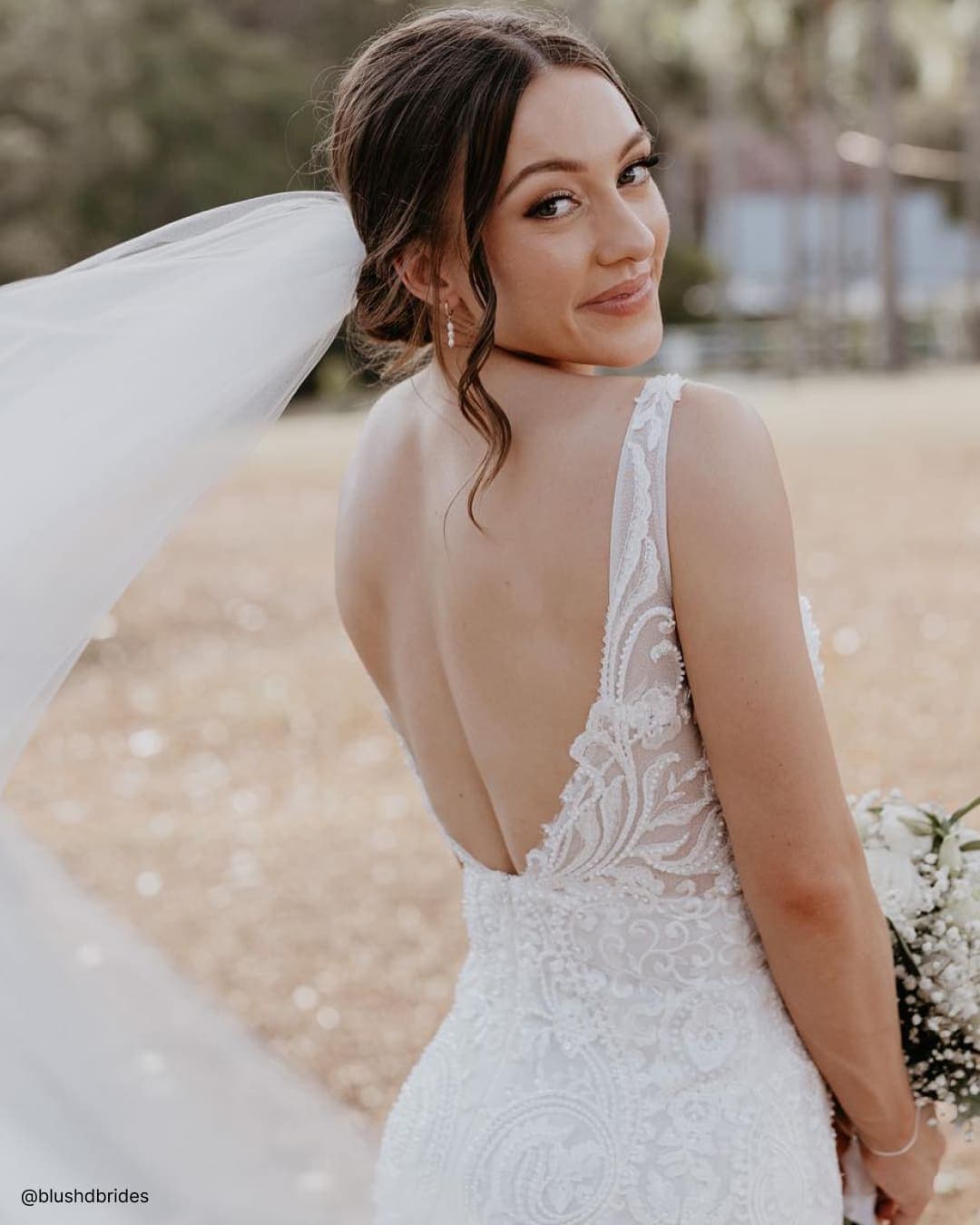
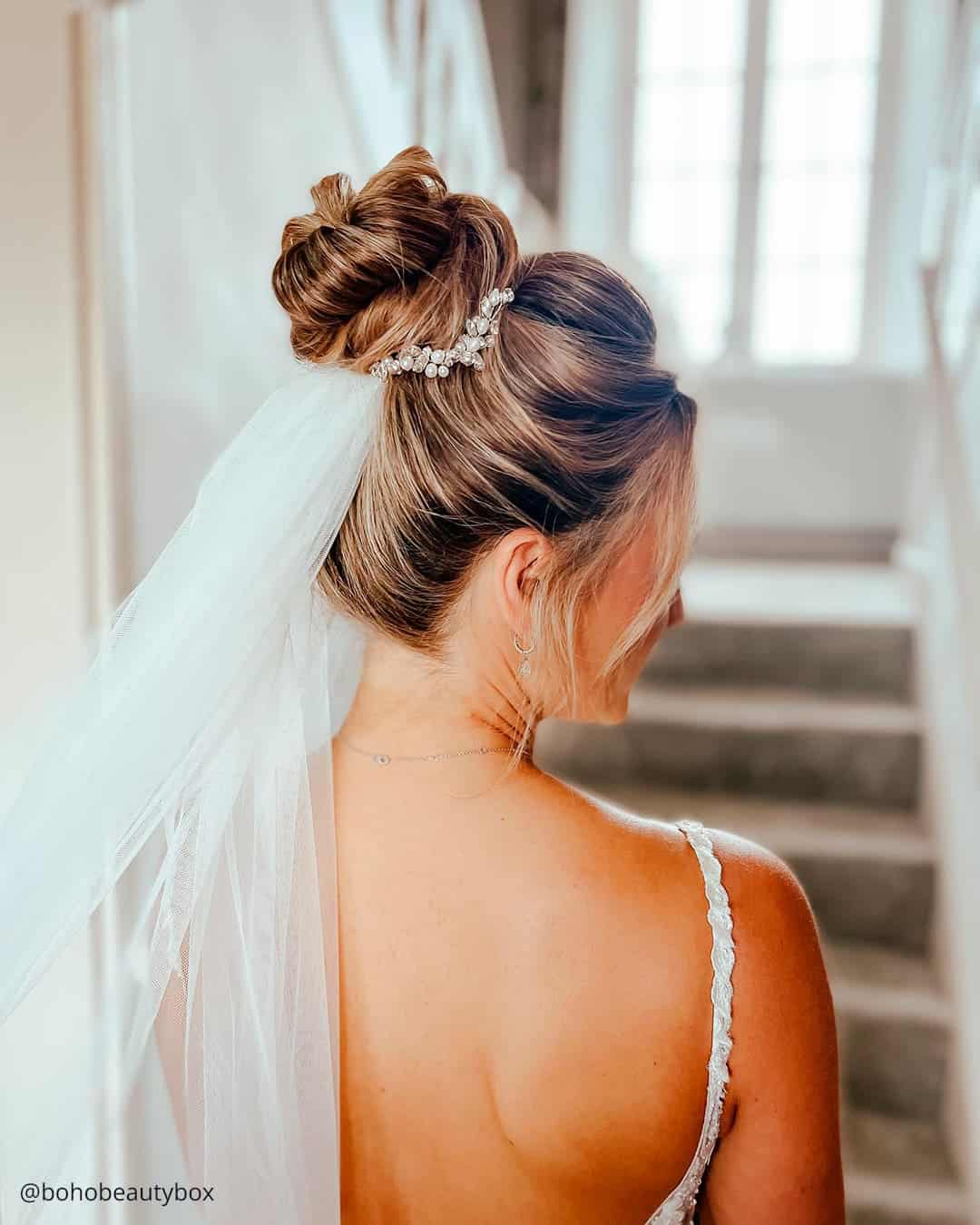
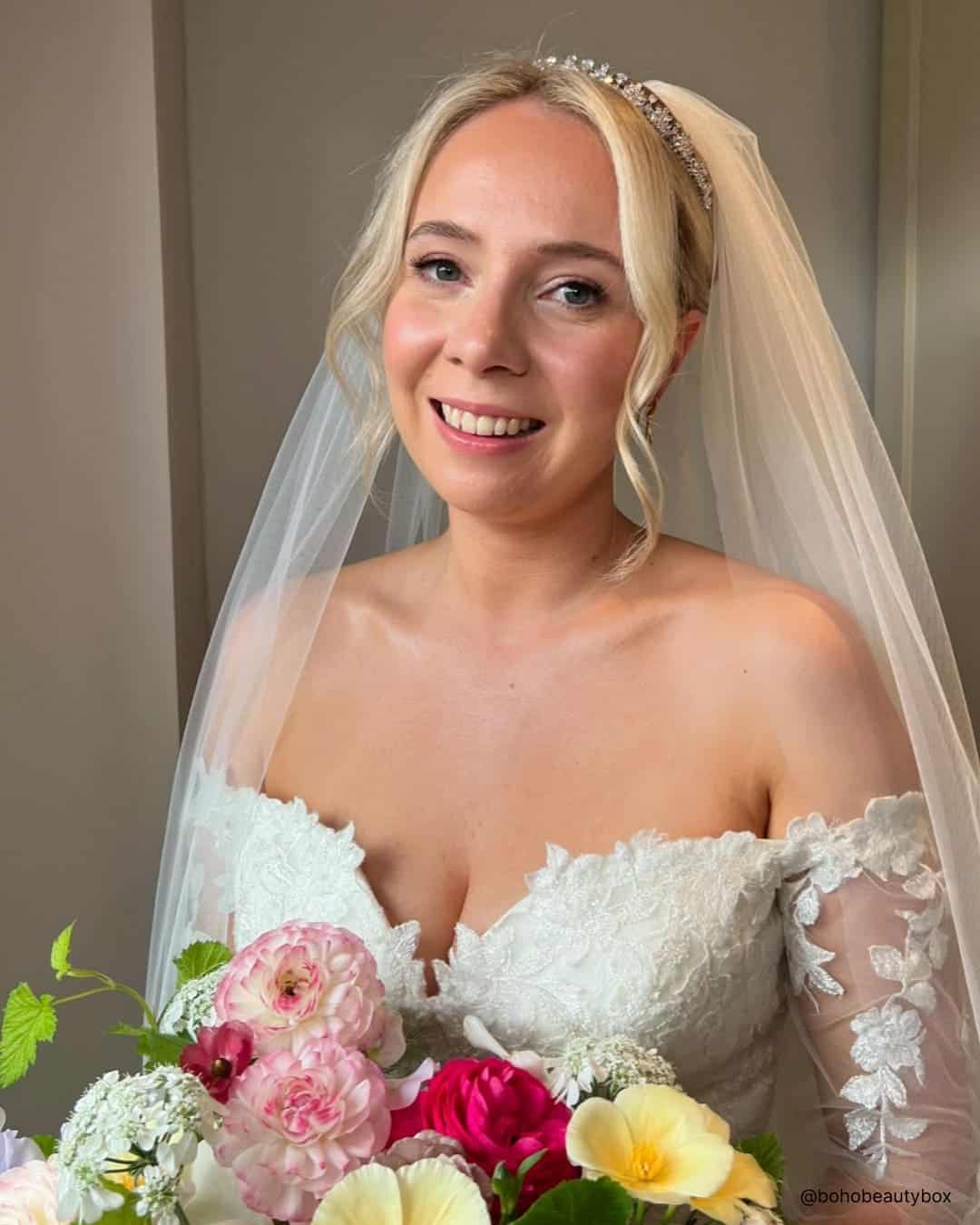
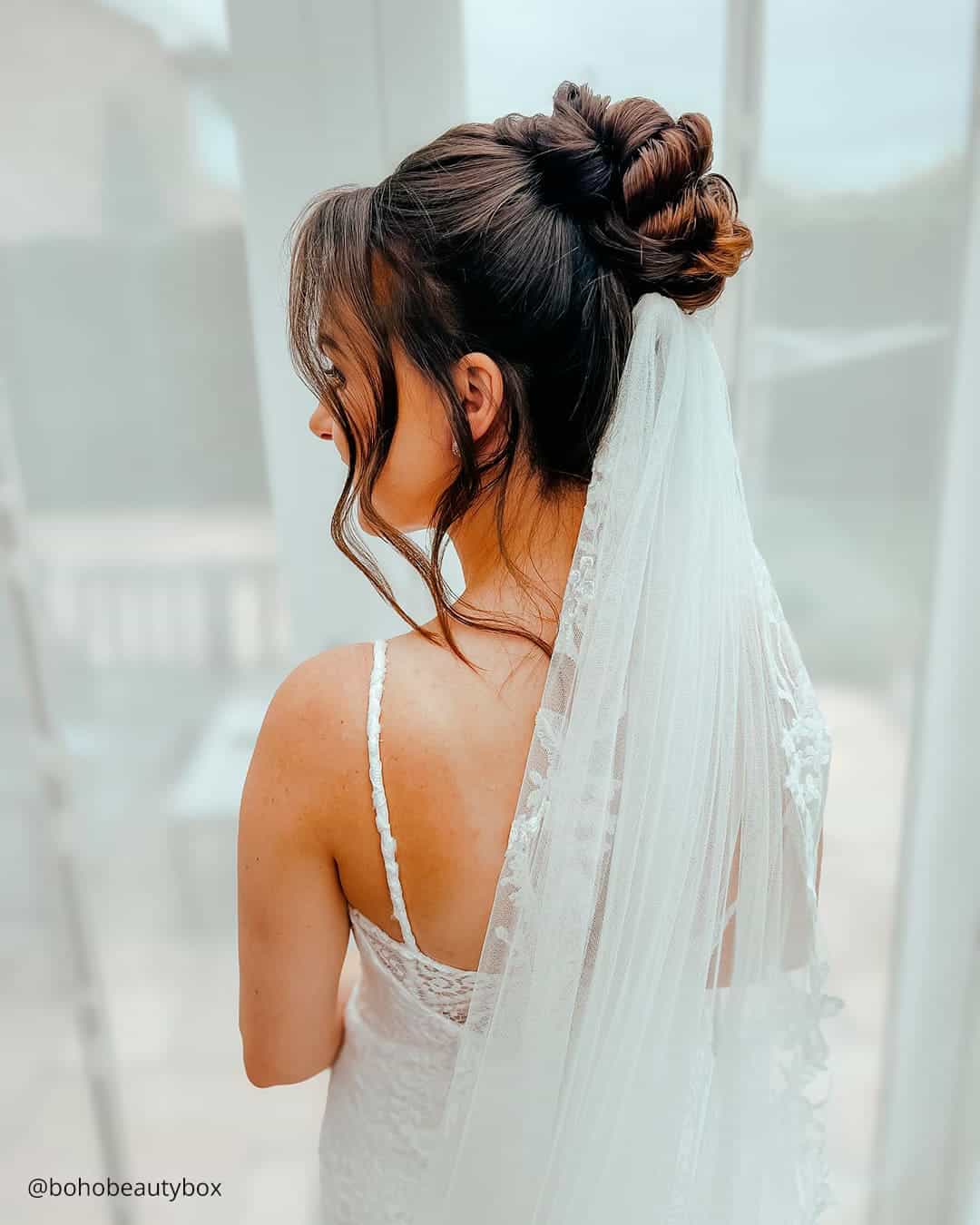
Classic wedding hairstyles like sleek chignons, ballerina buns, and elegant finger waves practically radiate timeless sophistication. Pair these refined styles with a Mantilla or Cathedral veil for a serious dose of grandeur.
Enrich the entire look with touches of lace embroidery or the gentle gleam of pearl embellishments to craft an elegant and exquisitely polished bridal appearance.
Romantic Wedding Hairstyle with Veil
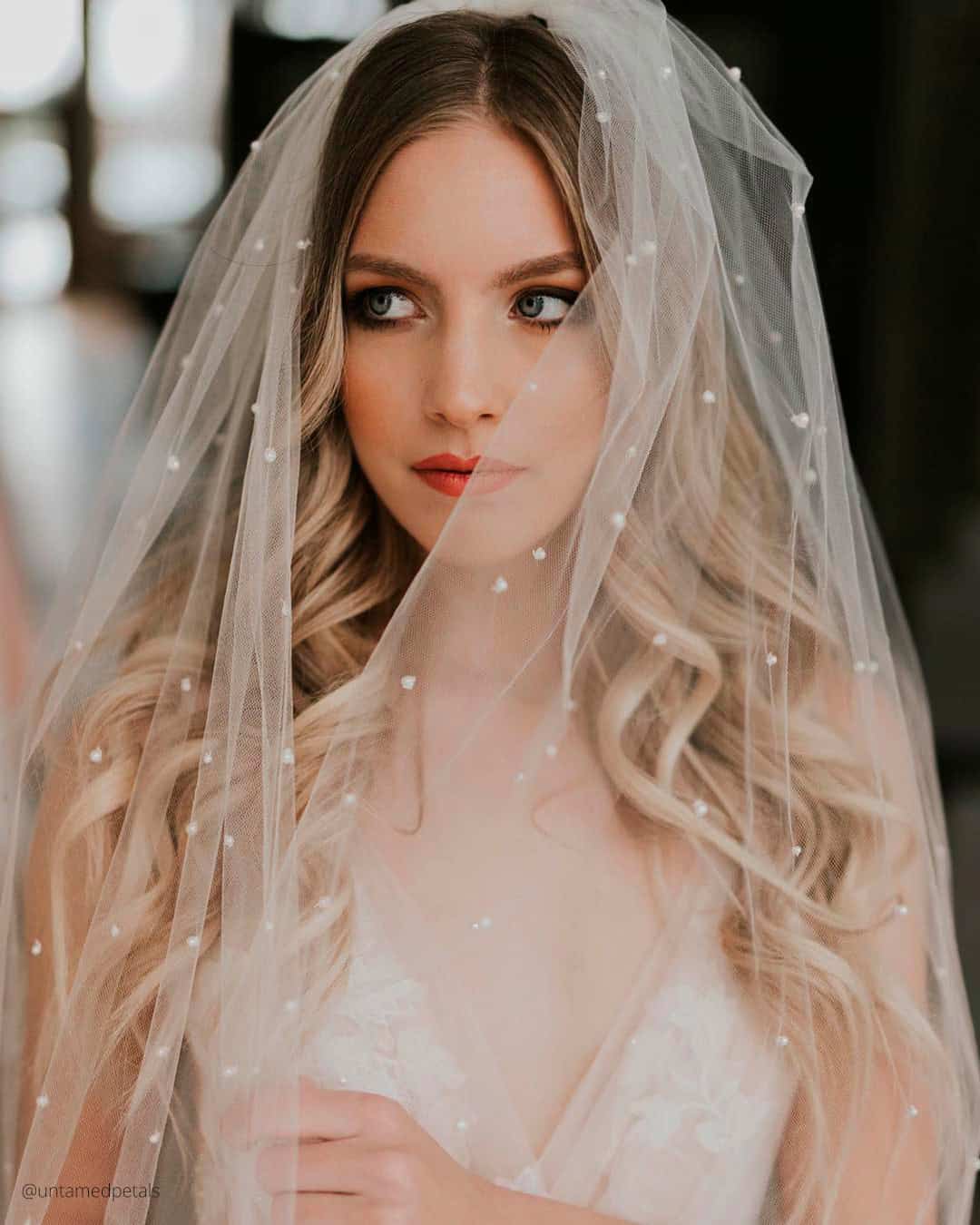
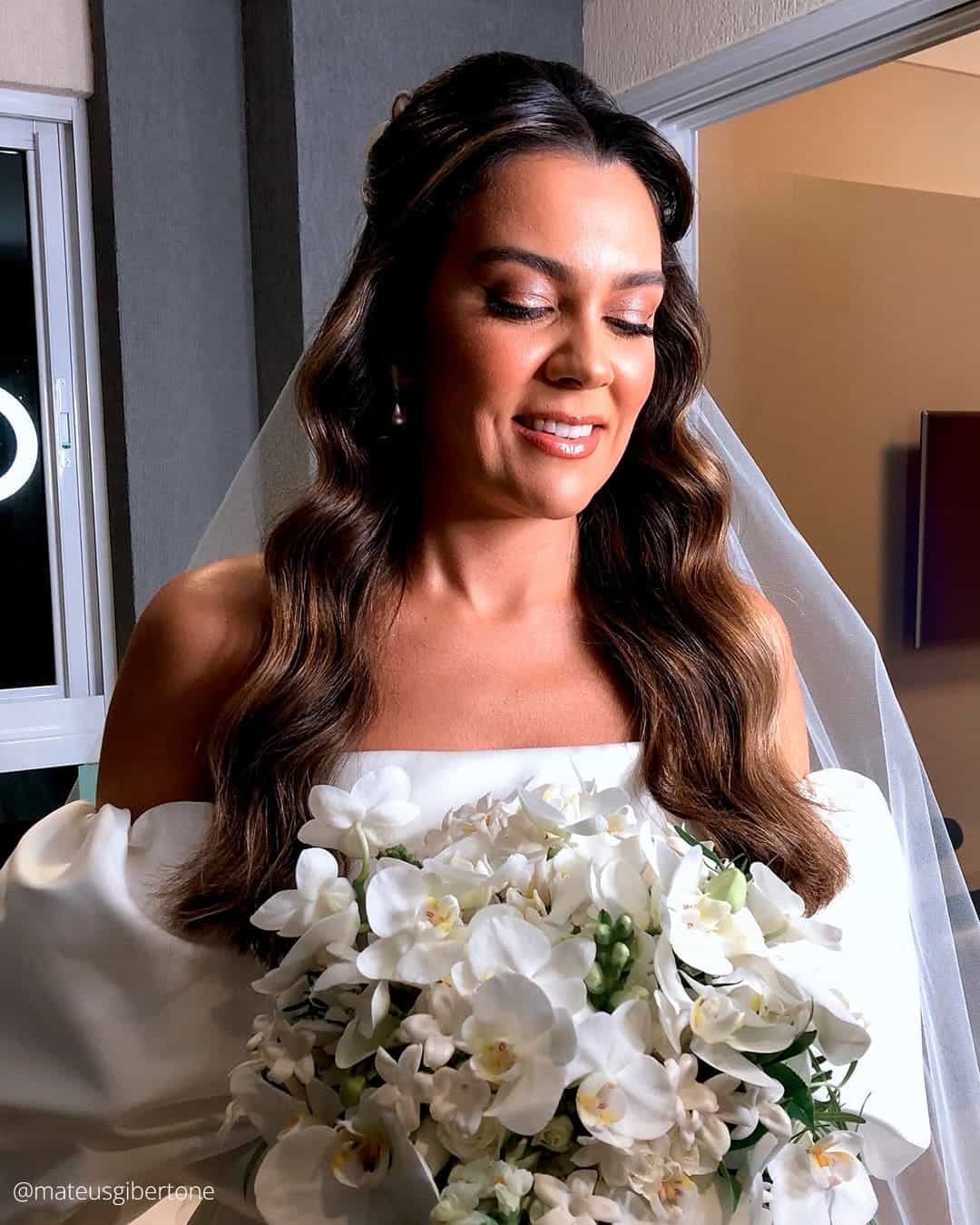
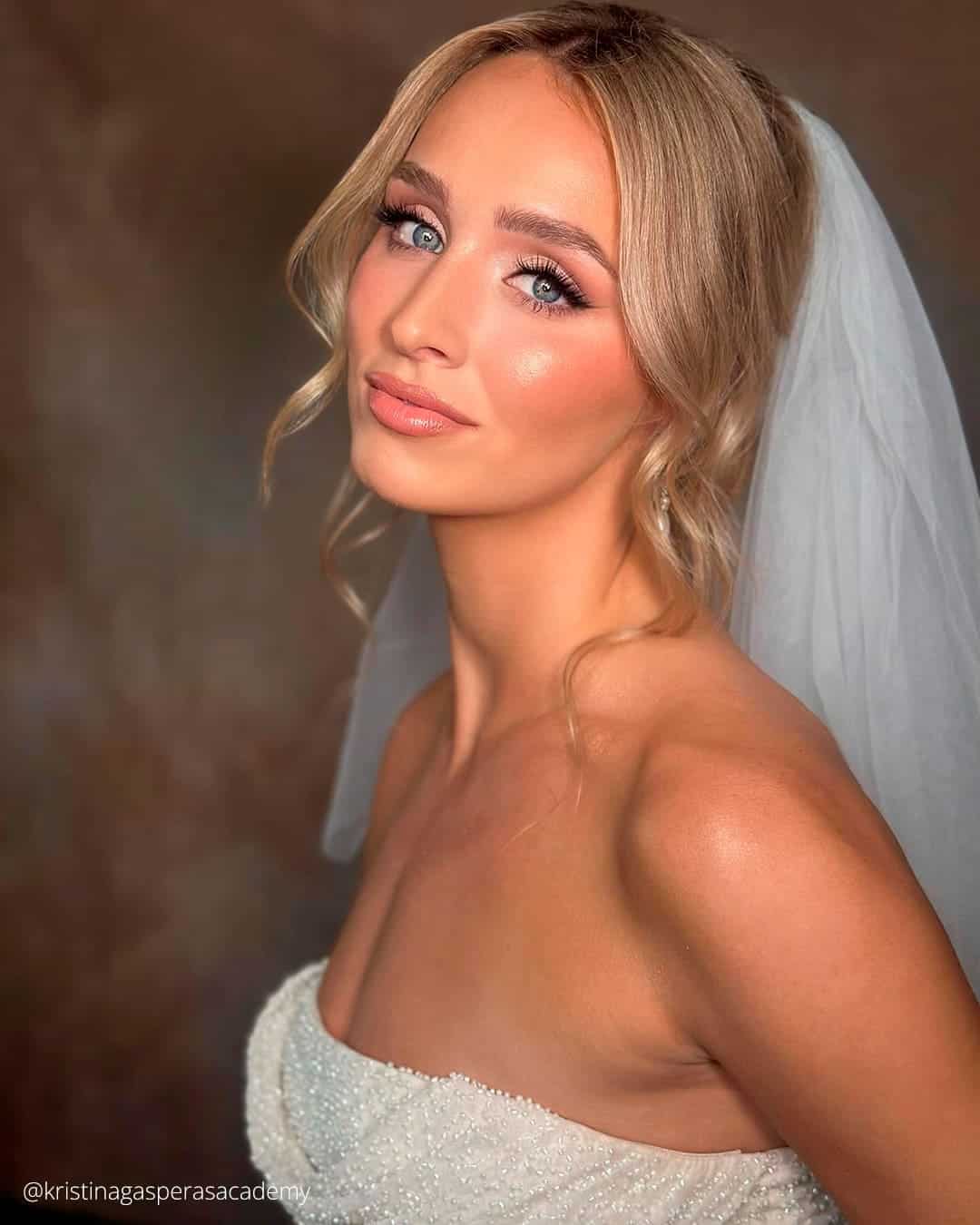
When you picture a wedding, a romantic vision of the bride defined by softness, flowing lines, and natural curls in her hairstyle often comes to mind. Perfectly matched for this dreamy look are loose buns crowned with a veil, half-up styles, and cascading waves of hair worn down with a veil that celebrate natural or curly textures.
A chapel-length veil amplifies this romantic atmosphere, especially when decorated with scattered flowers or luminous pearls, layering on a touch of dreamy, ethereal elegance.
Boho Wedding Hairstyle with Veil
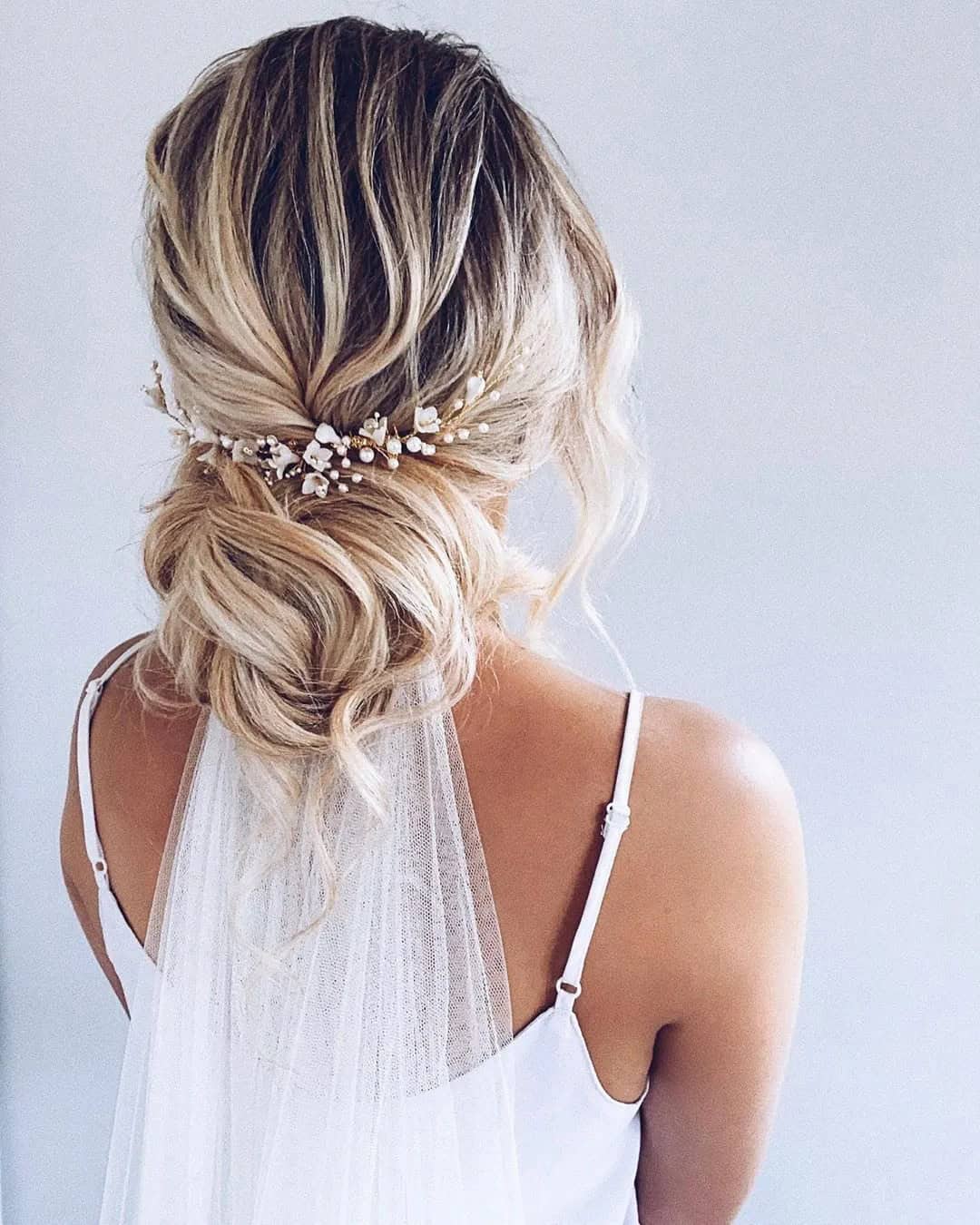
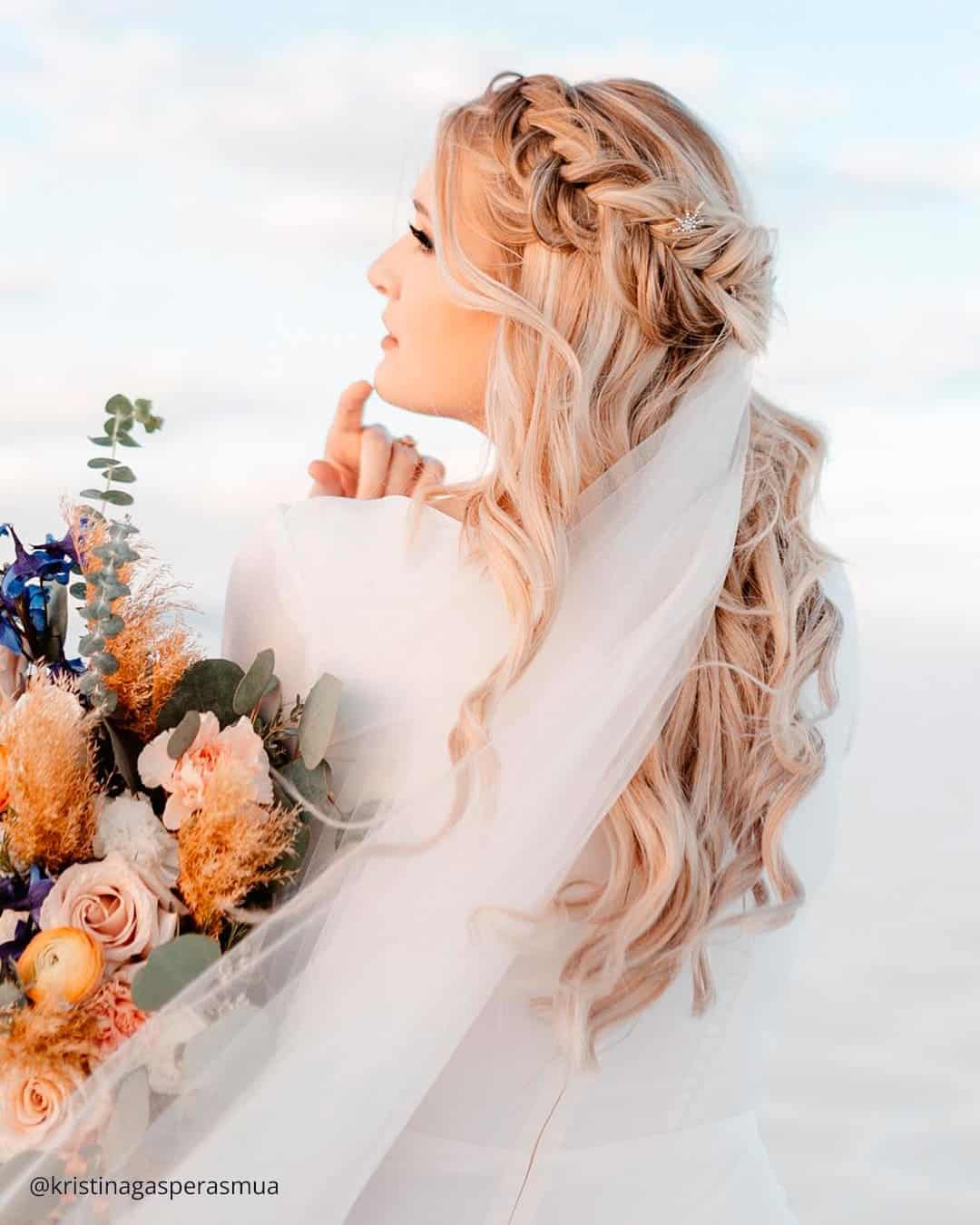
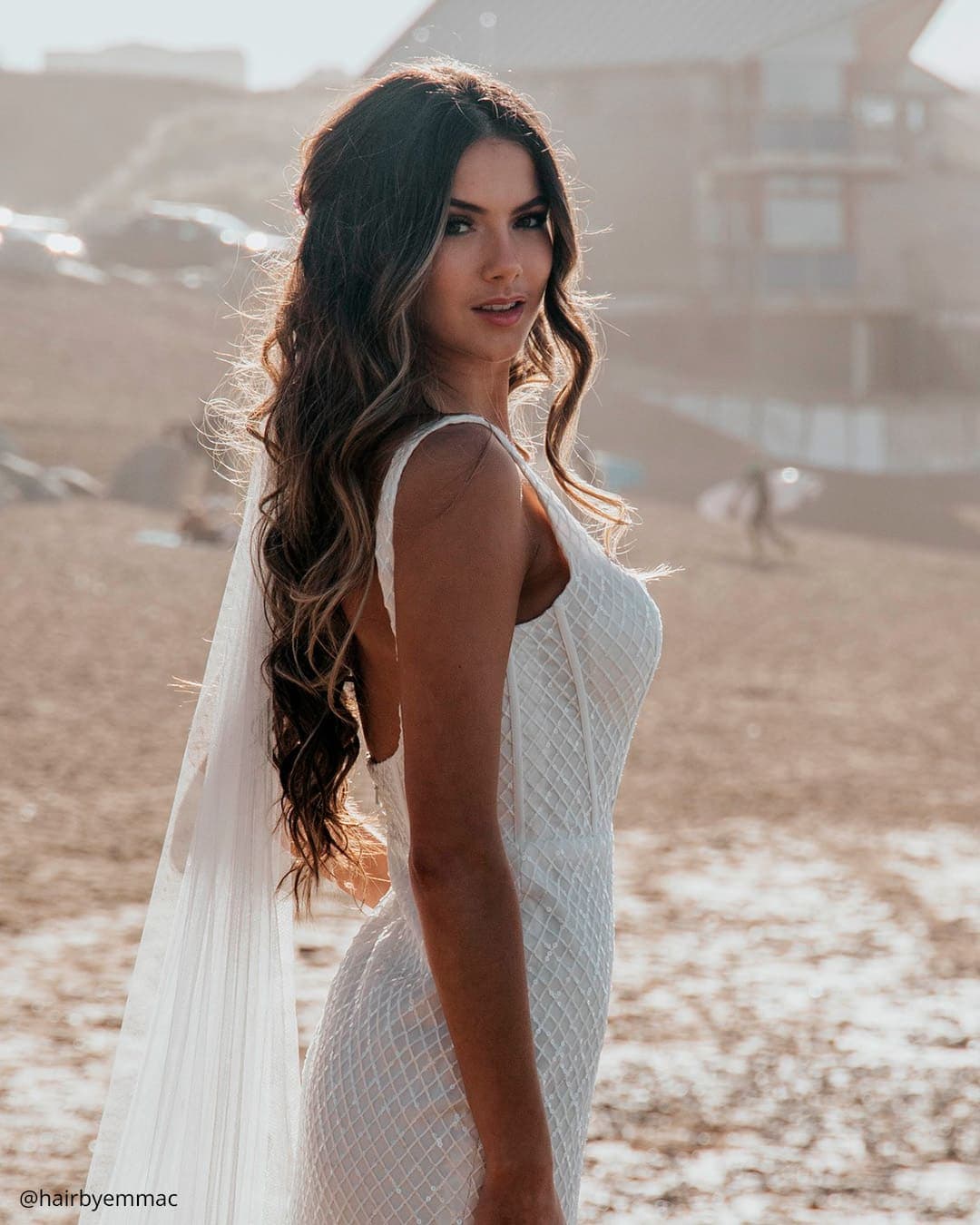
Boho wedding hairstyles absolutely must be rooted in natural texture. The best looks feature messy, tactile updos and braided styles, which can be paired effortlessly with half-up half-down arrangements and veils.
For a bohemian bridal look with a veil, turn your eye toward a Juliet Cap Veil, Mantilla Veil, or a single-tier veil.
It also fits beautifully for a rustic wedding hair updo paired with a veil. Toss in a dash of whimsical elegance with embellishments, imagine floral appliqués, delicate beadwork, or a shimmer of metallic accents.
These veil styles effortlessly elevate the bohemian aesthetic.
Vintage Wedding Hairstyle with Veil
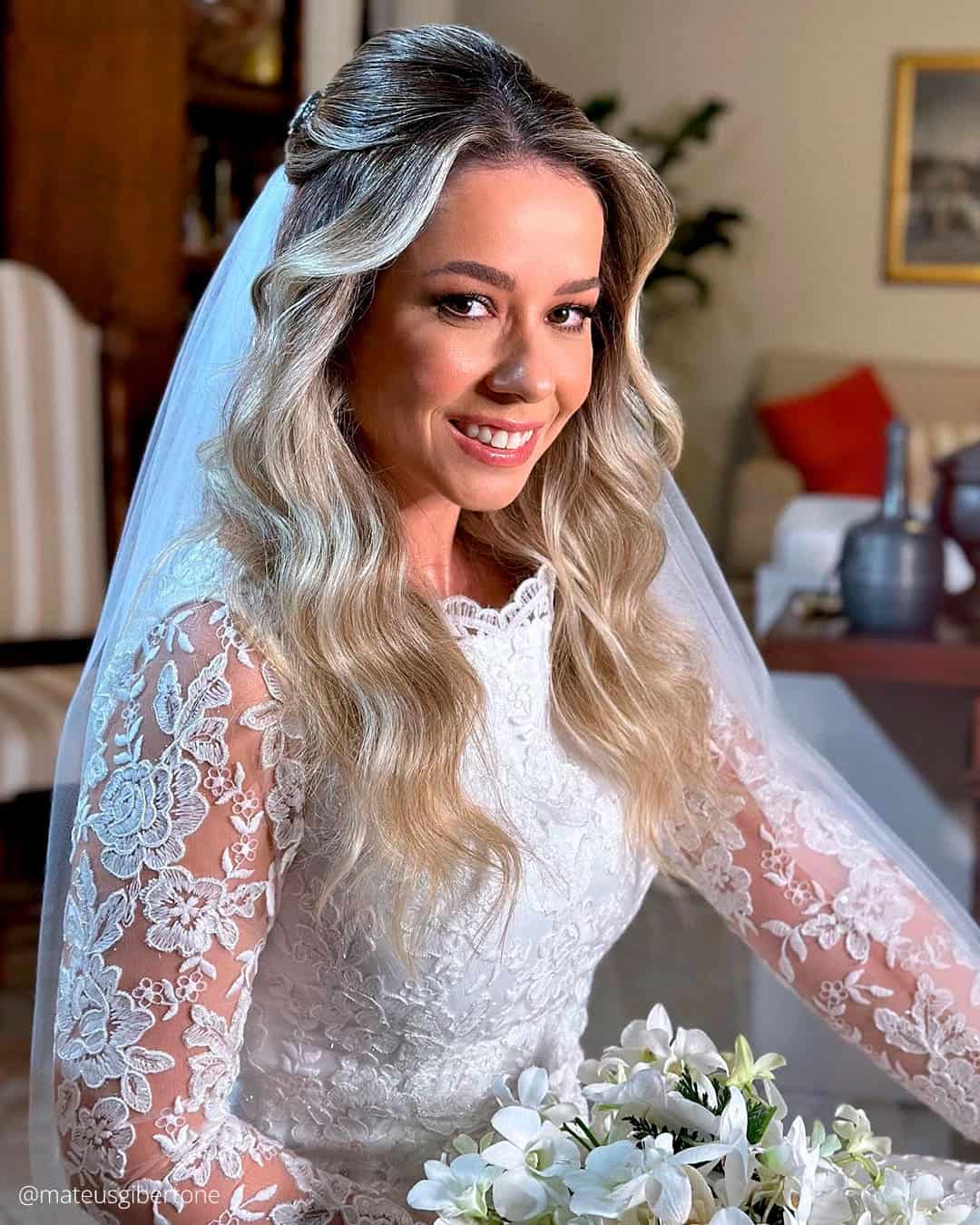
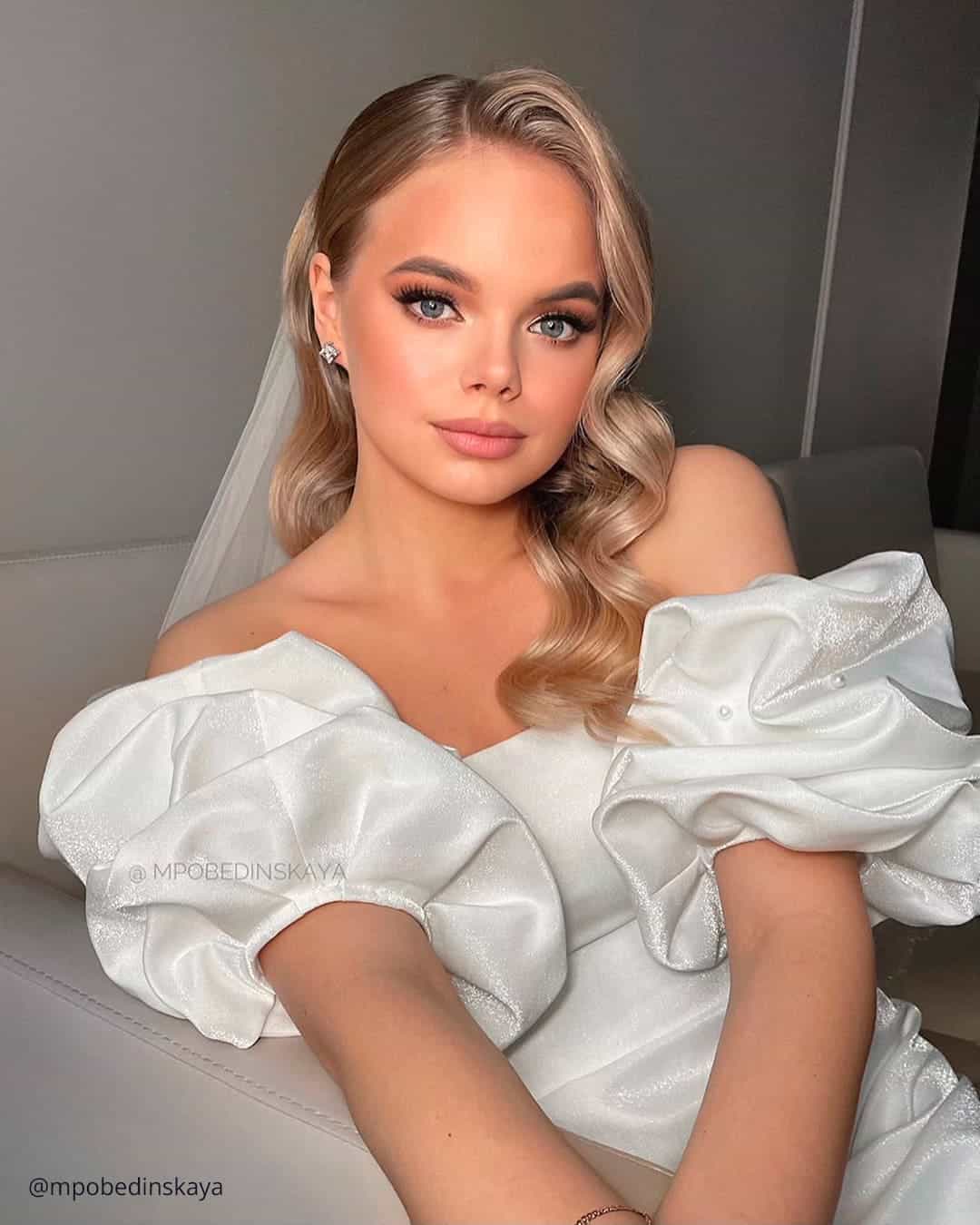
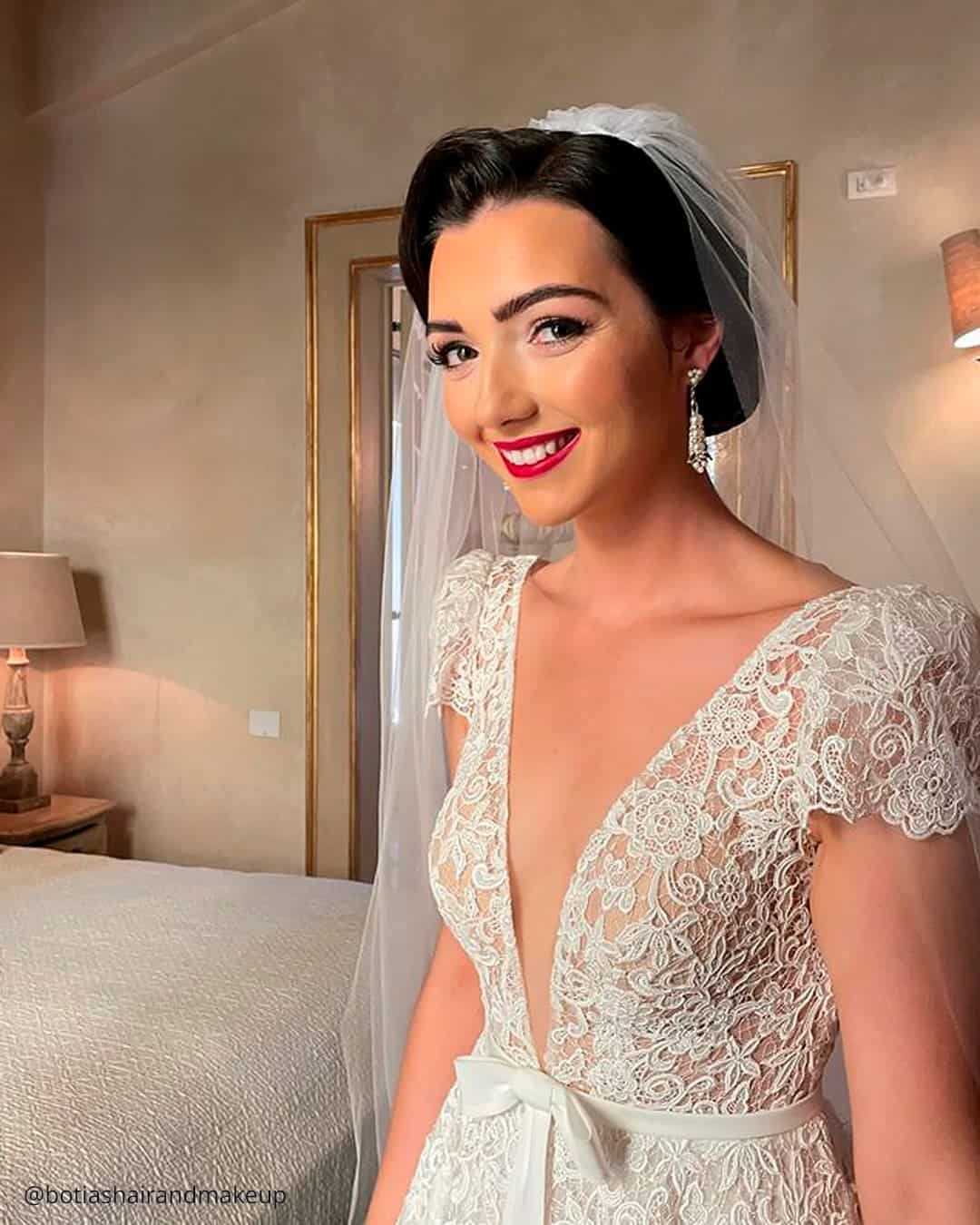
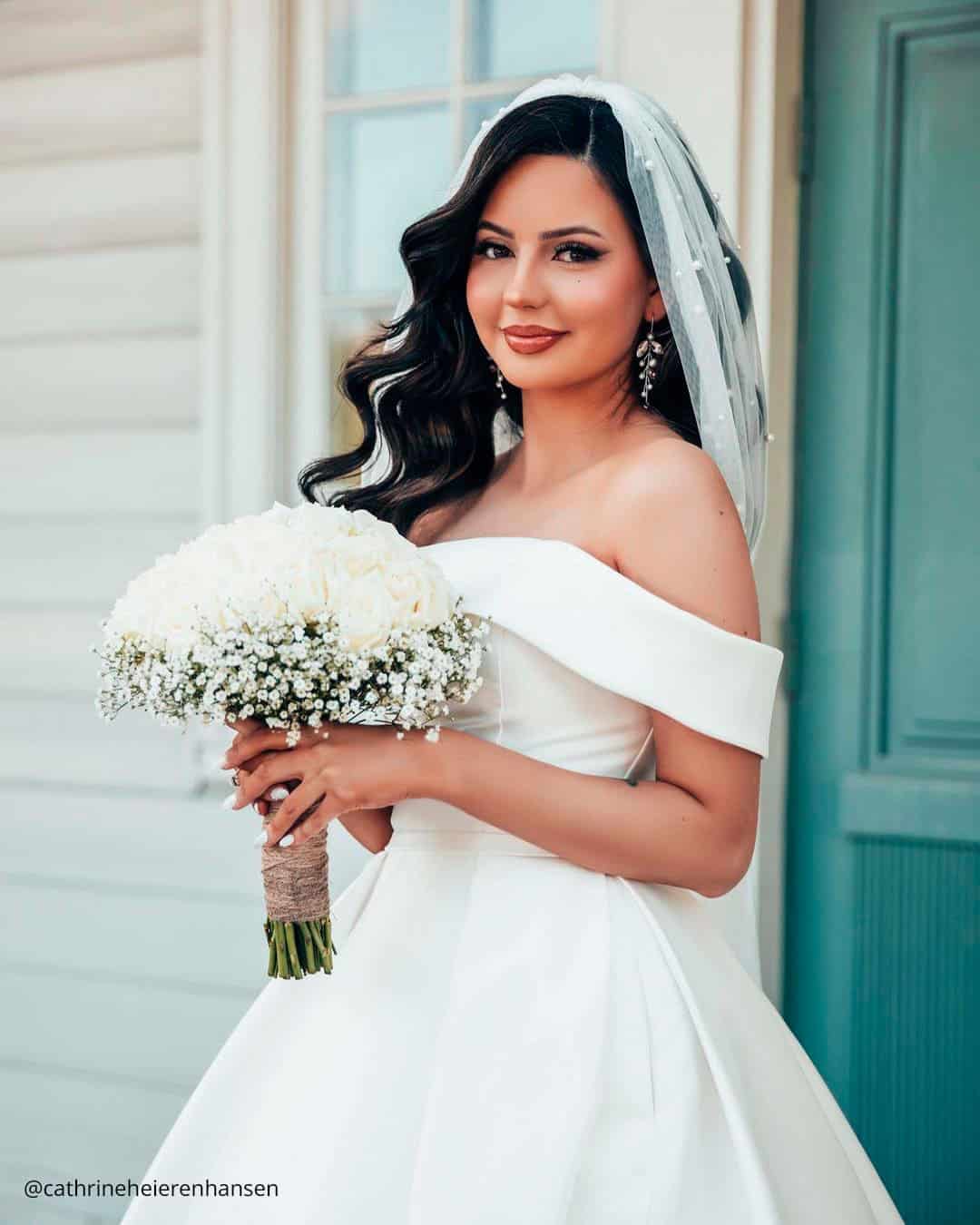
Vintage hairdos for brides scoop up the classic sophistication and elegance of bygone eras. Picture luxurious Hollywood waves, bountiful crown looks, or stylish beehive updos.
These glamorous picks are best matched with a birdcage veil, a scallop lace edge veil, or an elegant fingertip veil.
Weave in pearl, lace, or embroidery details on the veil to seamlessly pull the vintage look into your modern ensemble. These classic accents will not just elevate the charm of the veil but will absolutely sprinkle in a trace of nostalgic retro glam aura that pays tribute to an unbeatable style, ensuring you radiate timelessly chic glamor on your wedding day.
Black Wedding Hairstyles With Veil
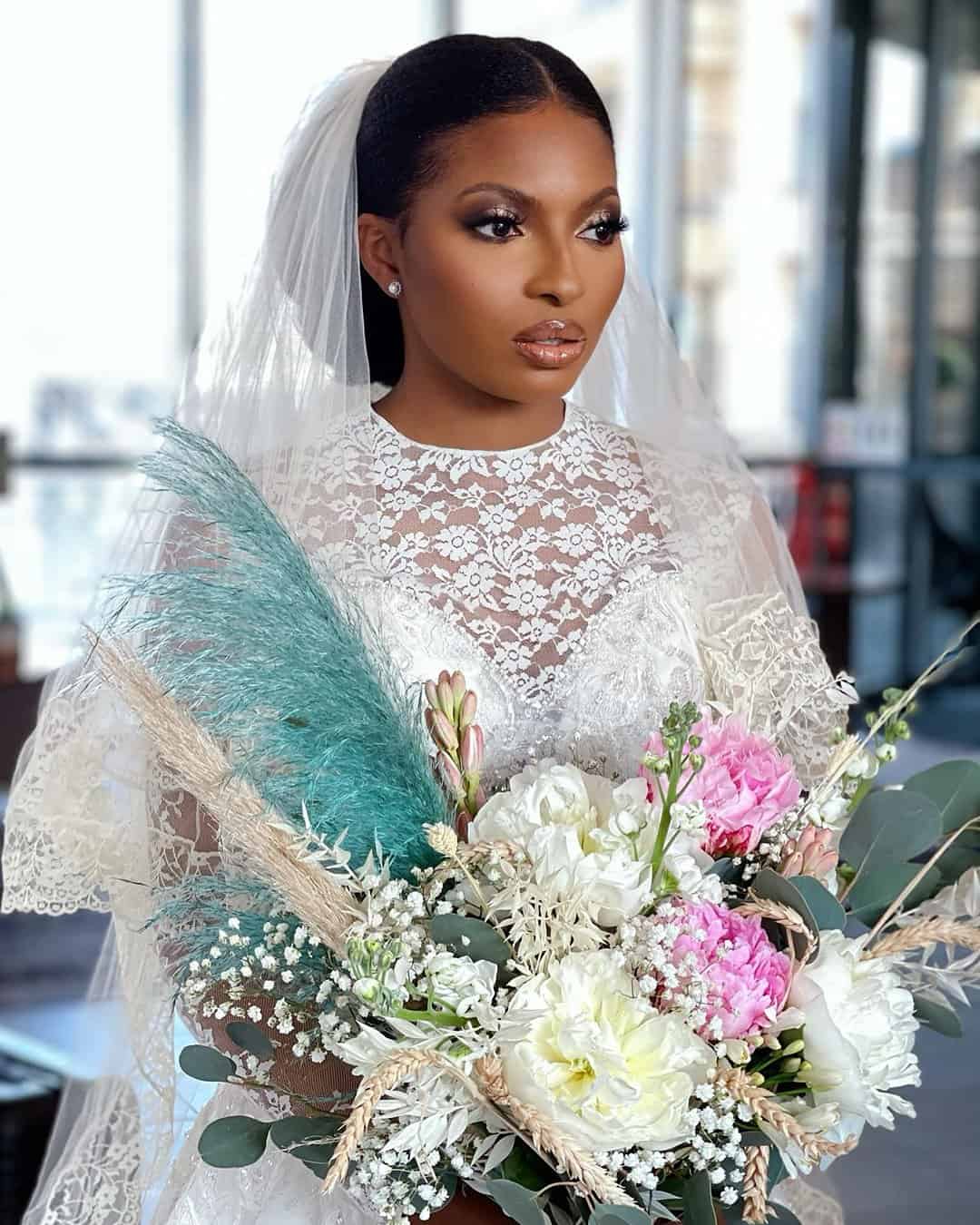
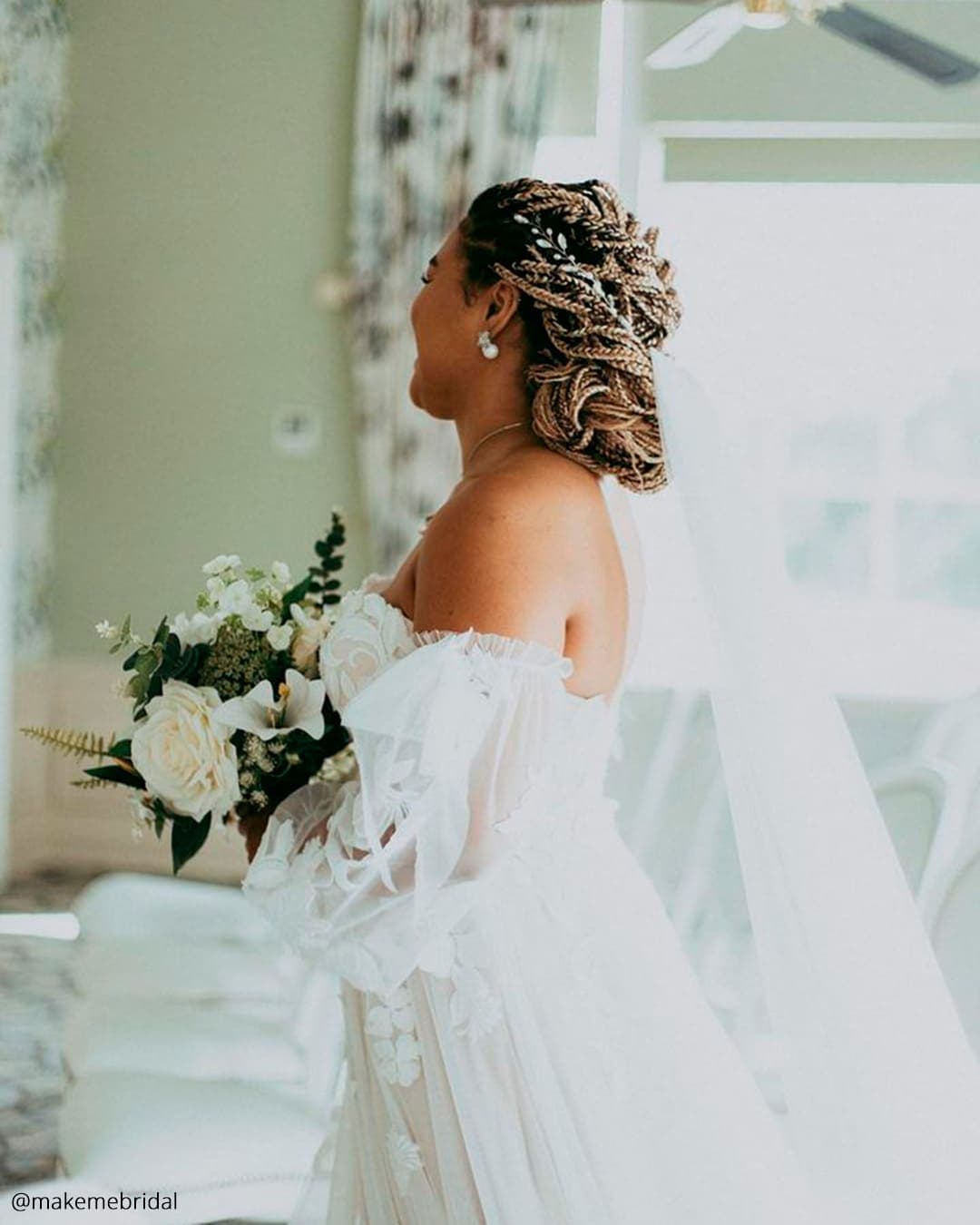
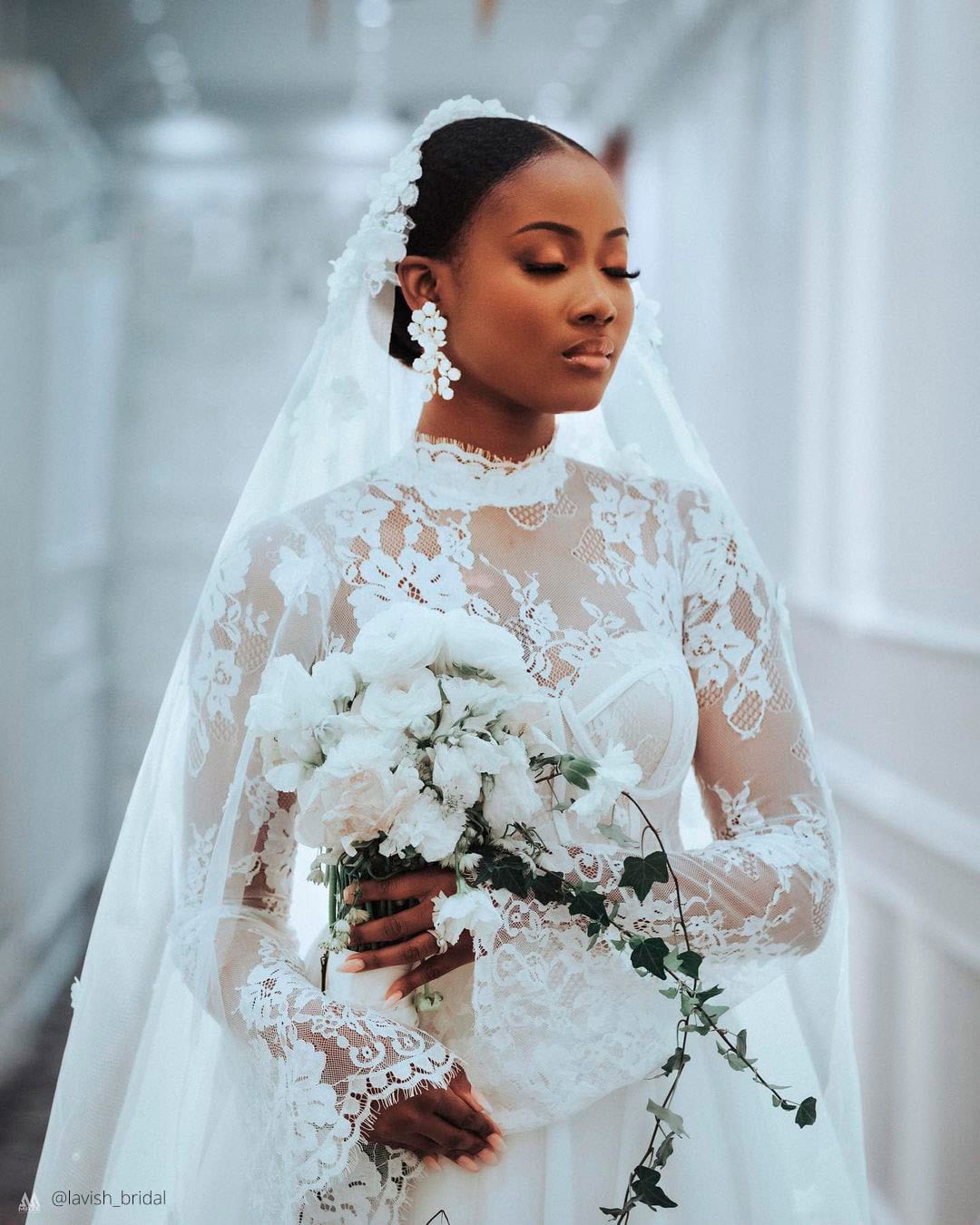
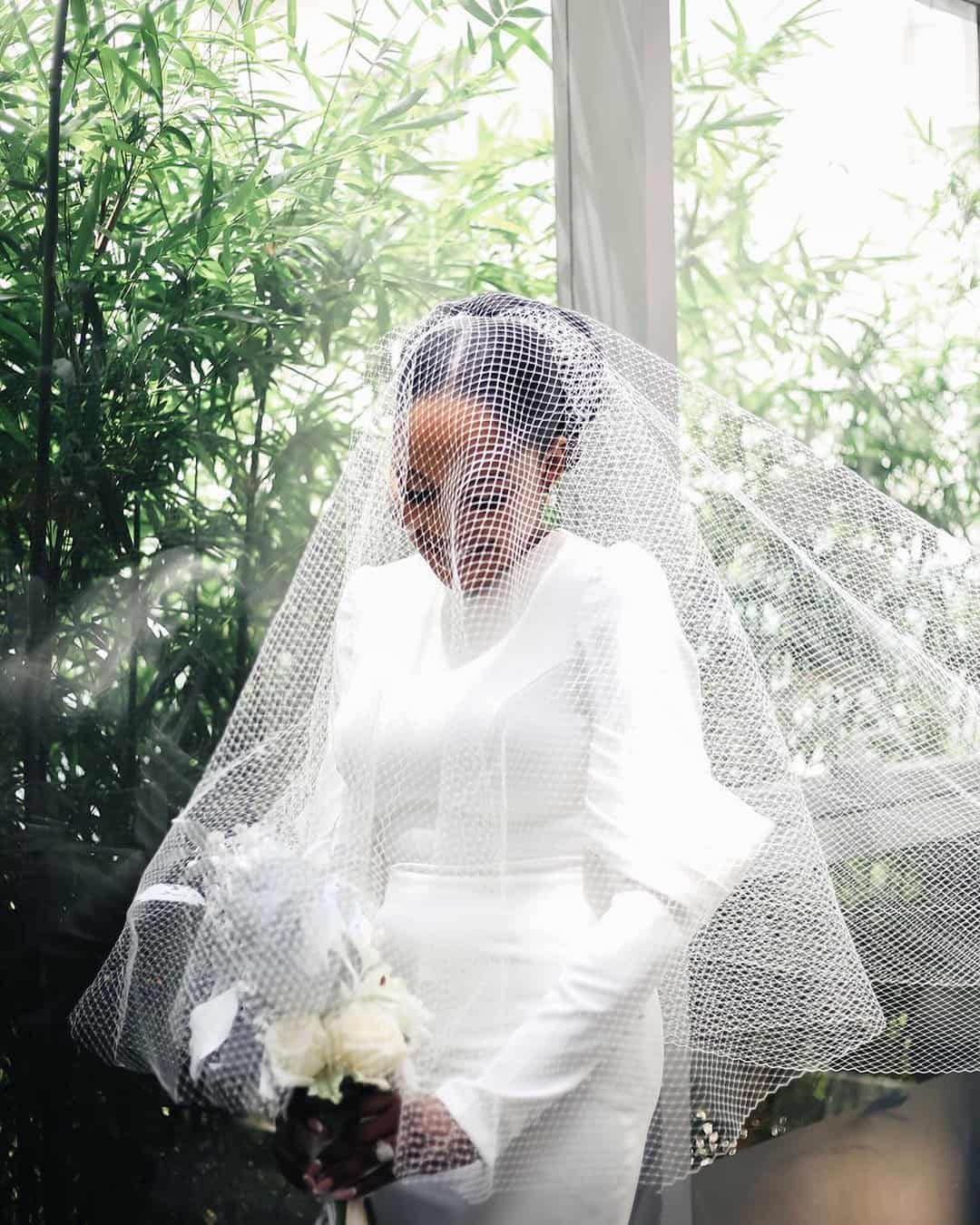
Elegant Black bridal hairstyles can look stunning with natural hair or extensions. Soft, defined curls can be swept up into a romantic bun, while a wavy ponytail creates a relaxed yet polished vibe.
Brides who lean toward more sculptural structure can go for a braided updo, a sleek bun, defined curls, or a pompadour-inspired silhouette.
When styling natural hair with a veil, pick a secure placement that doesn’t mask the hair’s beautiful texture or shape. Natural curls and protective updos frequently provide a wonderfully stable base for the veil comb.
Bridal braids paired with a veil can also cleverly use the braided structure as a subtle, discreet attachment point.
For wedding locs with a veil, twists, or other protective styles, slip the comb behind or beneath the main design. This approach helps keep the decorative pattern clearly visible and stops the veil from altering the hairstyle’s intended shape.
Your stylist may choose to add extra pins or an elastic anchor, depending on your hair density and the veil’s weight.
Above all else, the attachment needs to feel comfortable and totally secure. It should never flatten curls, yank on locs, or warp the structure of protective wedding hairstyles.
Test the full look during your wedding hair trial to make sure it stays beautifully balanced all day long.
Wedding Hairstyles With Veil And Tiara
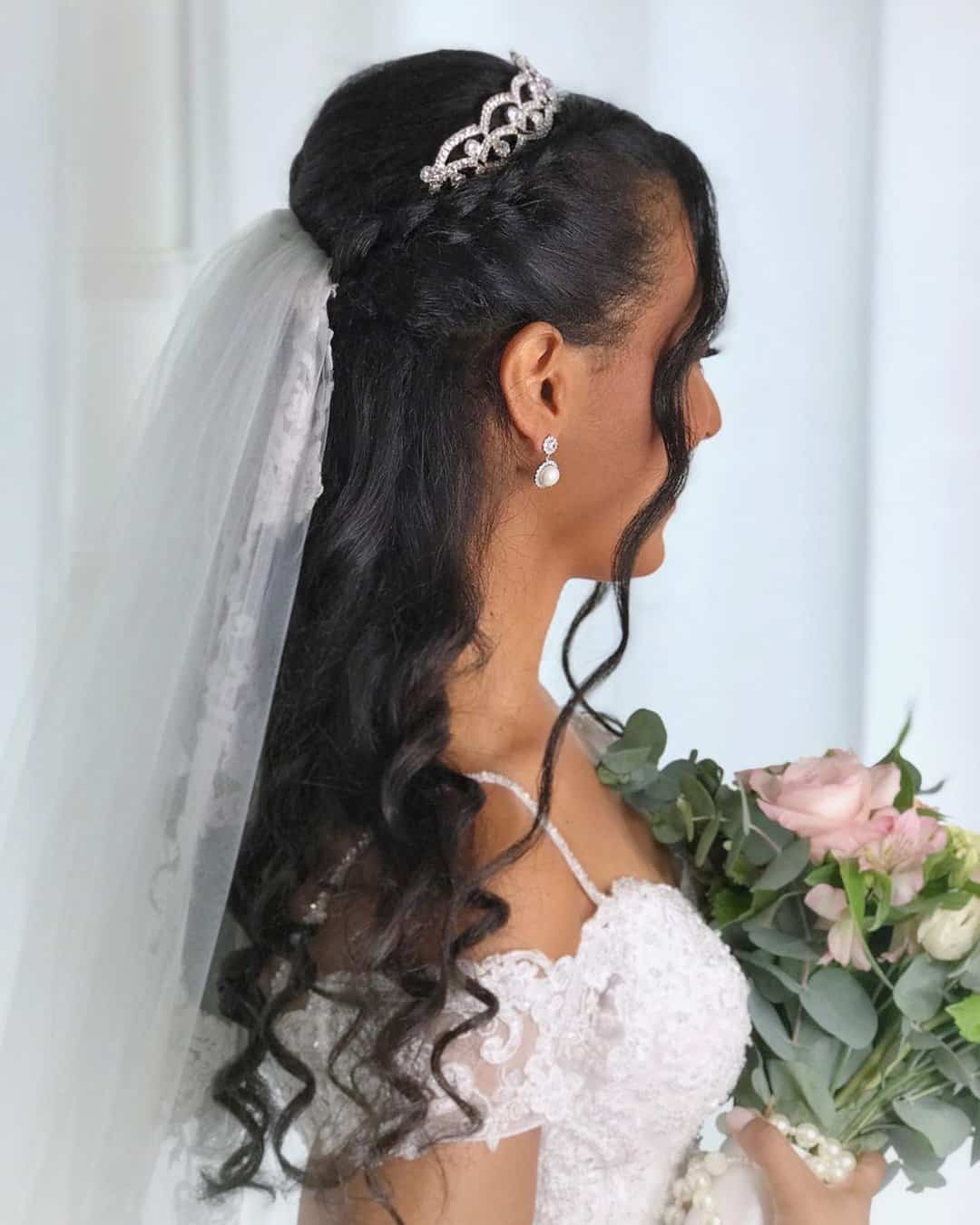
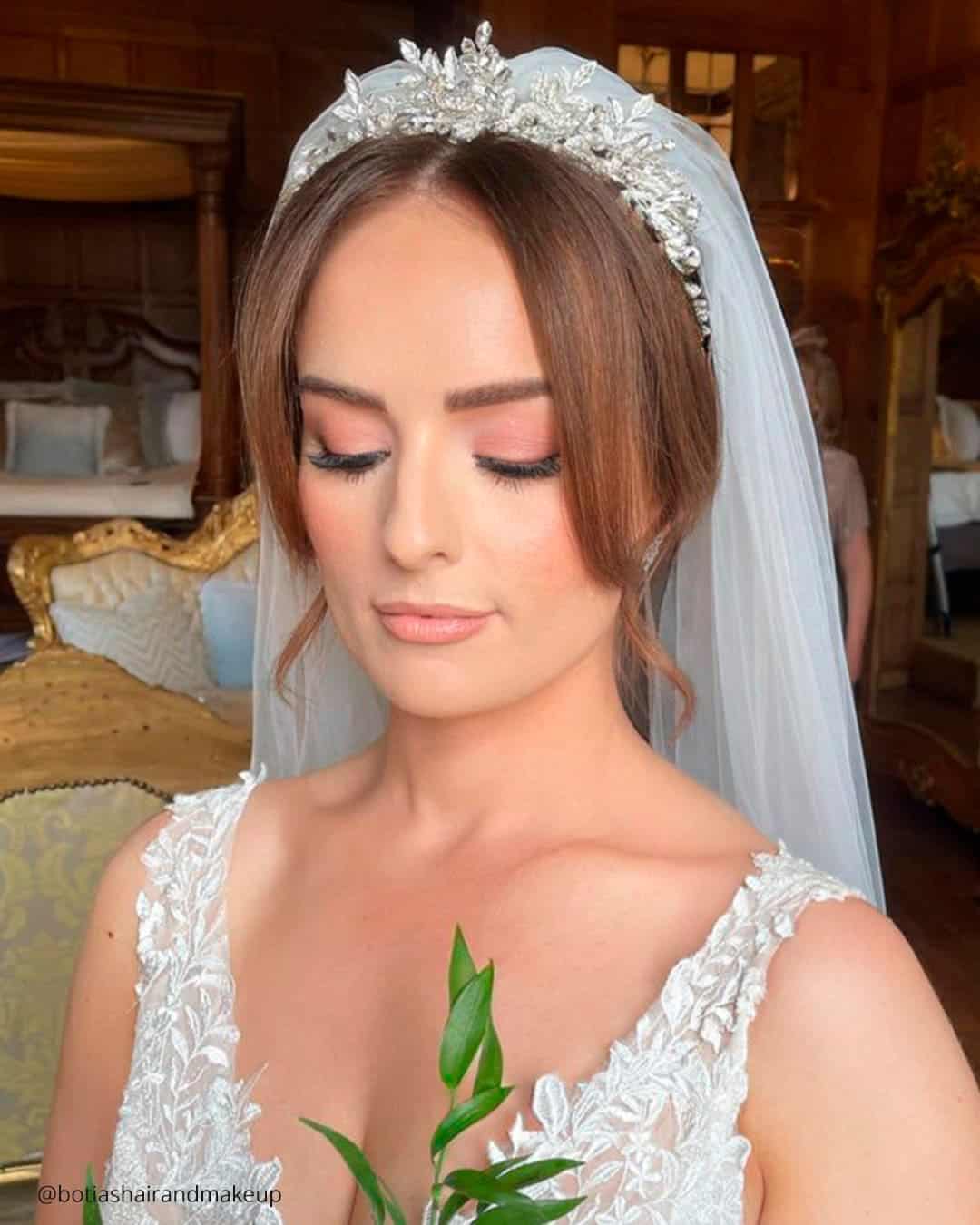
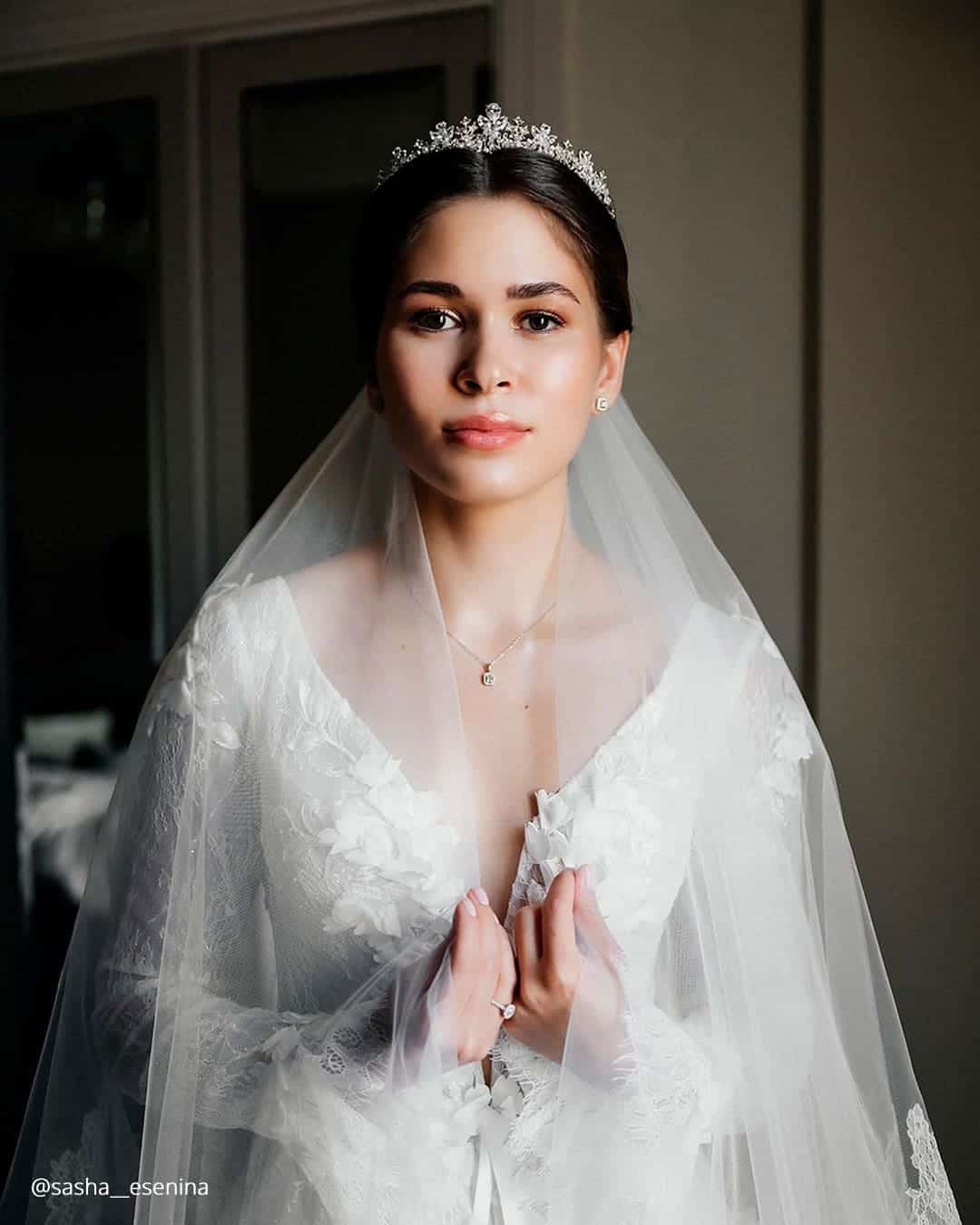
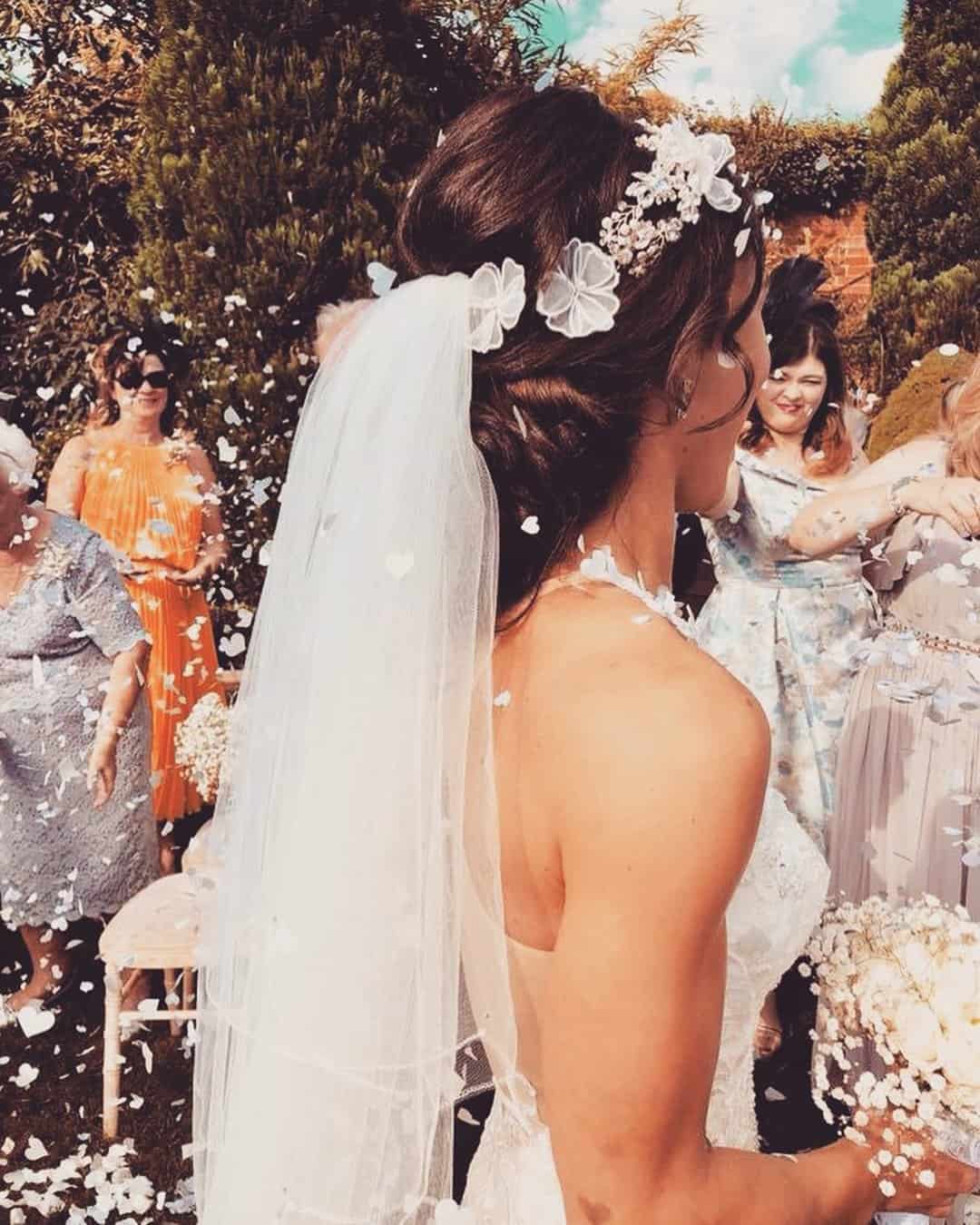
Wedding hairstyles with a crown and veil forge an elegant, truly regal bridal look. A delicate tiara can beautifully complement a side-braided hairstyle, a romantic half-up style, or a classic low bun.
For a softer, more relaxed finish, pair it with loose curls, finger waves, or a relaxed updo.
For a more polished look, sweep the hair away from your face and rest the tiara near the crown area. The remaining curls can be gathered into a soft or messy bun, with the veil anchored securely underneath.
This specific placement keeps both accessories completely visible without overwhelming the hairstyle.
When combining a tiara and veil, secure the veil behind or just slightly below the tiara. Leave enough breathing space so the veil comb with the tiara claims its own solid anchor point instead of leaning entirely on the decorative base.
Separate attachments will help both pieces stay securely locked in and reduce unwanted pressure on your bridal updo or half-up hairstyle.
Wedding Hairstyles With Veil And Headpiece
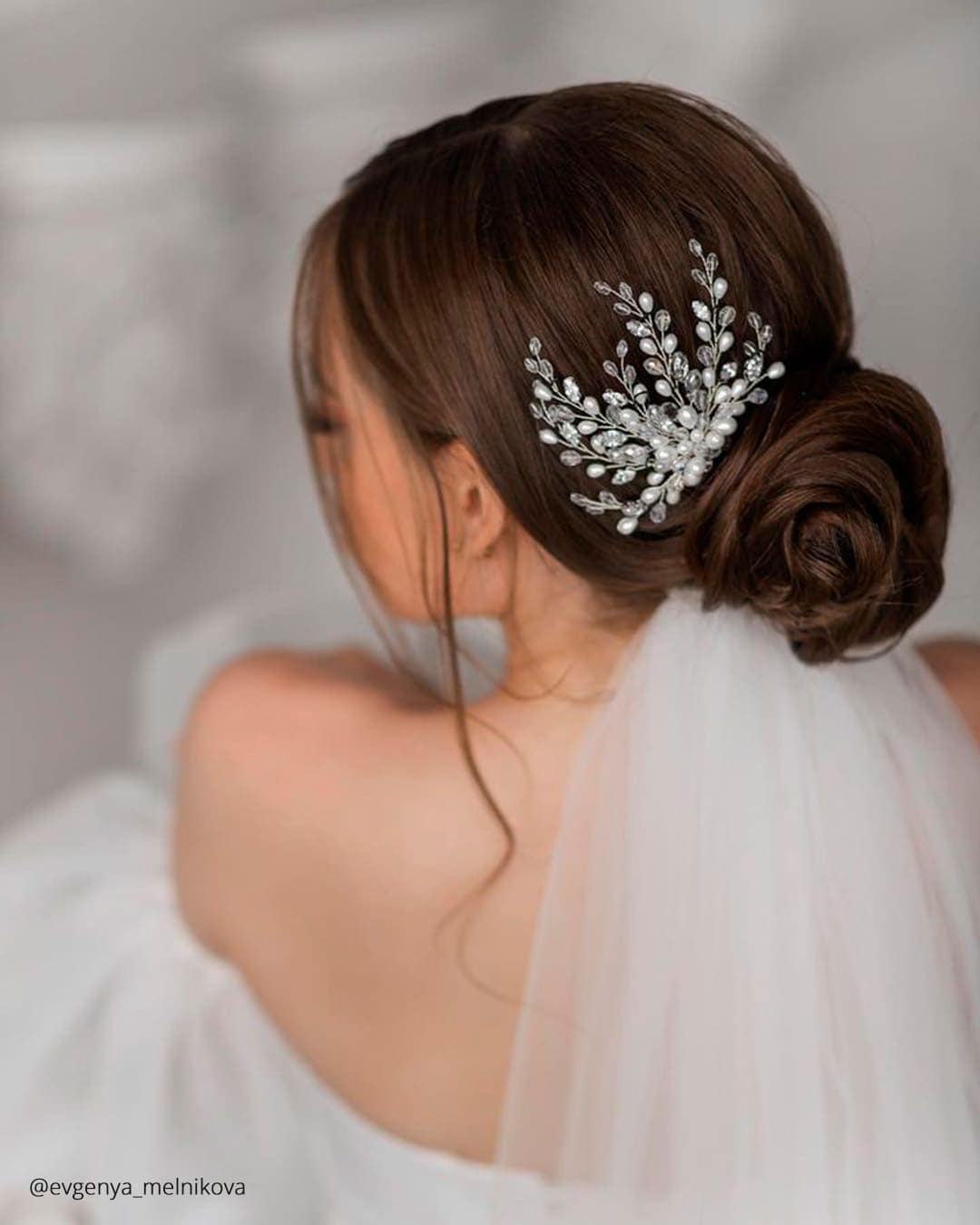
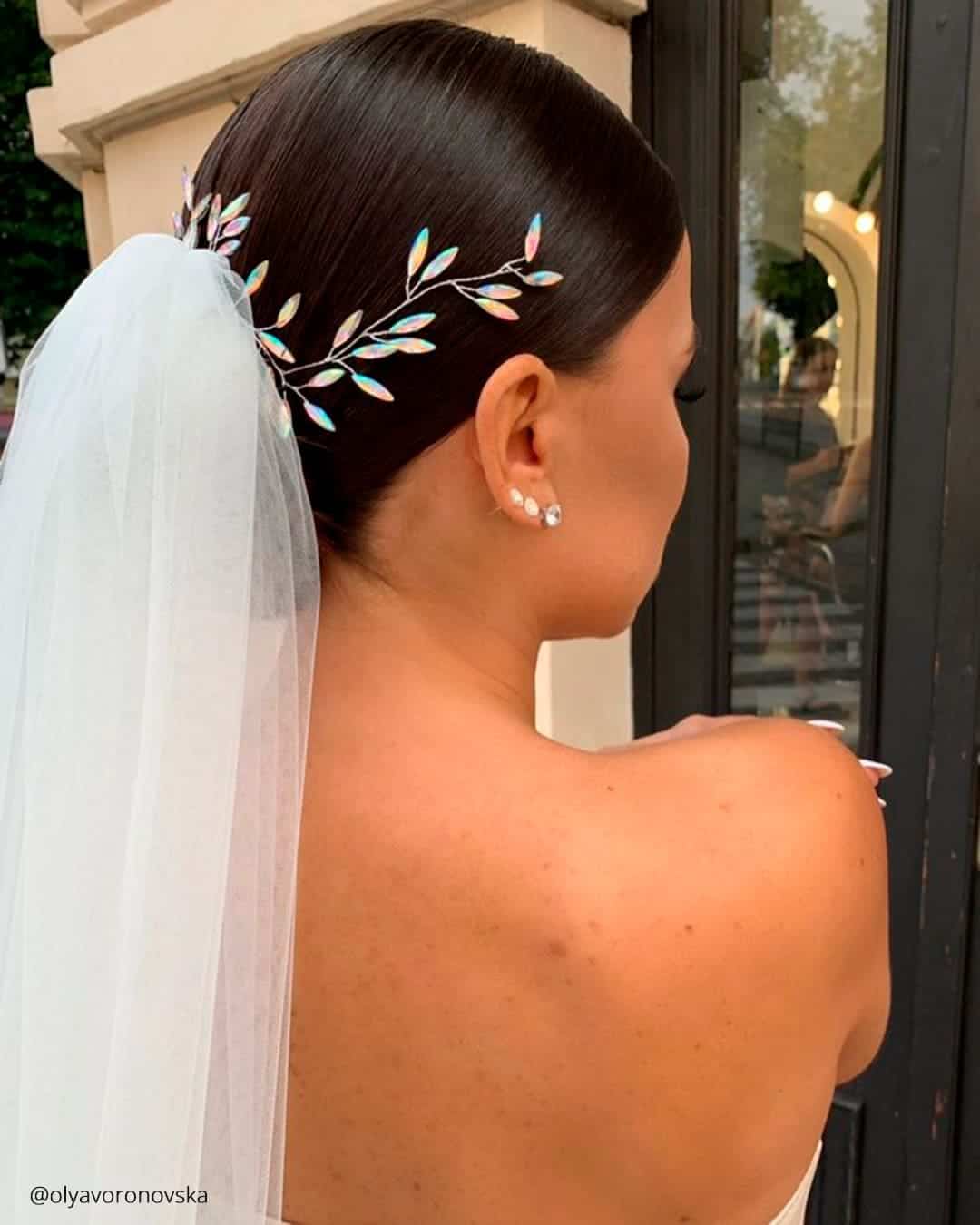
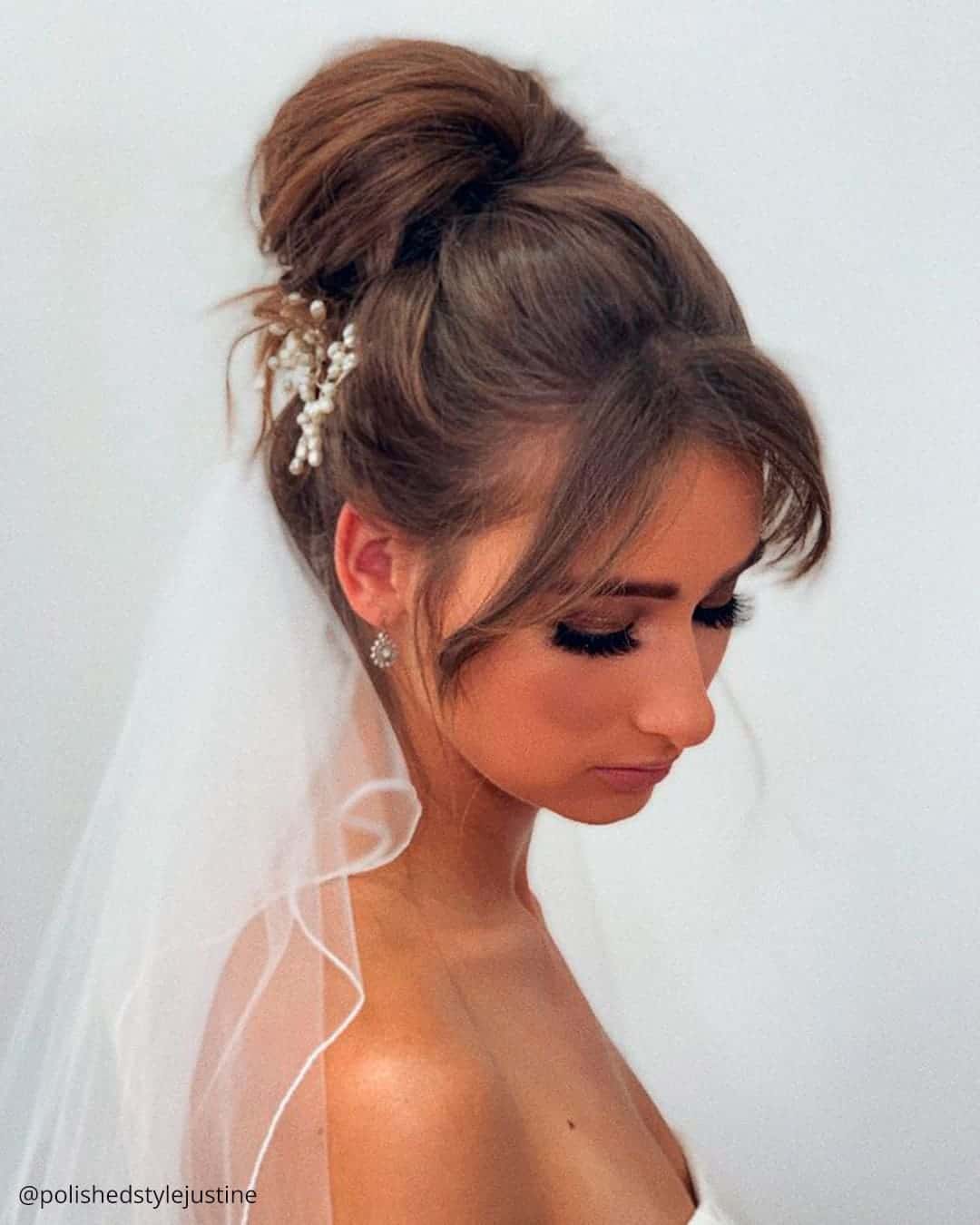
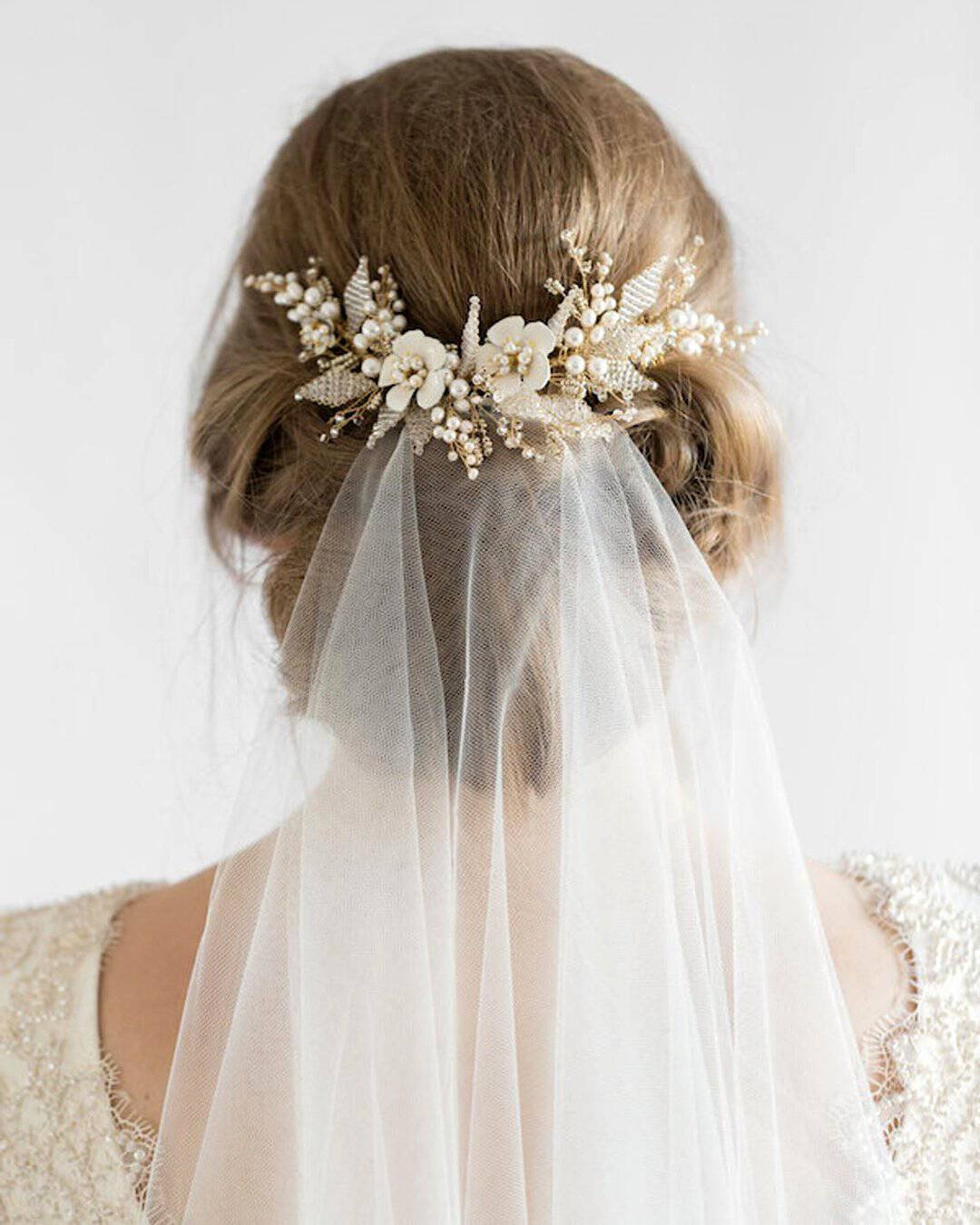
Wedding hairstyles with veils and hairpins can skip between feeling romantic, modern, vintage, or softly understated. Bridal clips and barrettes look beautiful woven through flowing curls, waves, buns, chignons, and ponytails.
Decorative combs and fascinators can also mirror the fine details of your dress and add that final polished touch.
When choosing bridal hair accessories to wear alongside a veil, keep the functional support totally separate from the pure decoration. A veil comb, hair grips, or sturdy hairpins should be responsible for holding the veil solidly in place.
Headbands, fascinators, flowers, bridal clips, and decorative combs can then be artfully arranged around the attachment point to complete the look.
A decorative hair comb worn with a veil might not be beefy enough to support the accessory all on its own. Give each piece its own independent secure anchor and leave ample space between them.
This tactic helps spread the weight evenly and stops one area of the hairstyle from feeling tight, pinched, or uncomfortable.
You can place a decorative comb right above the veil, slightly off to the side, or encircling the base of an updo. Hairpins can be sprinkled throughout the hairstyle or clustered near the veil to sculpt a continuous, flowing design.
Headbands, ribbons, and small hats are also lovely avenues for brides who lean toward a vintage-inspired or less traditional overall look.
Bridal Look with Veil and Flowers
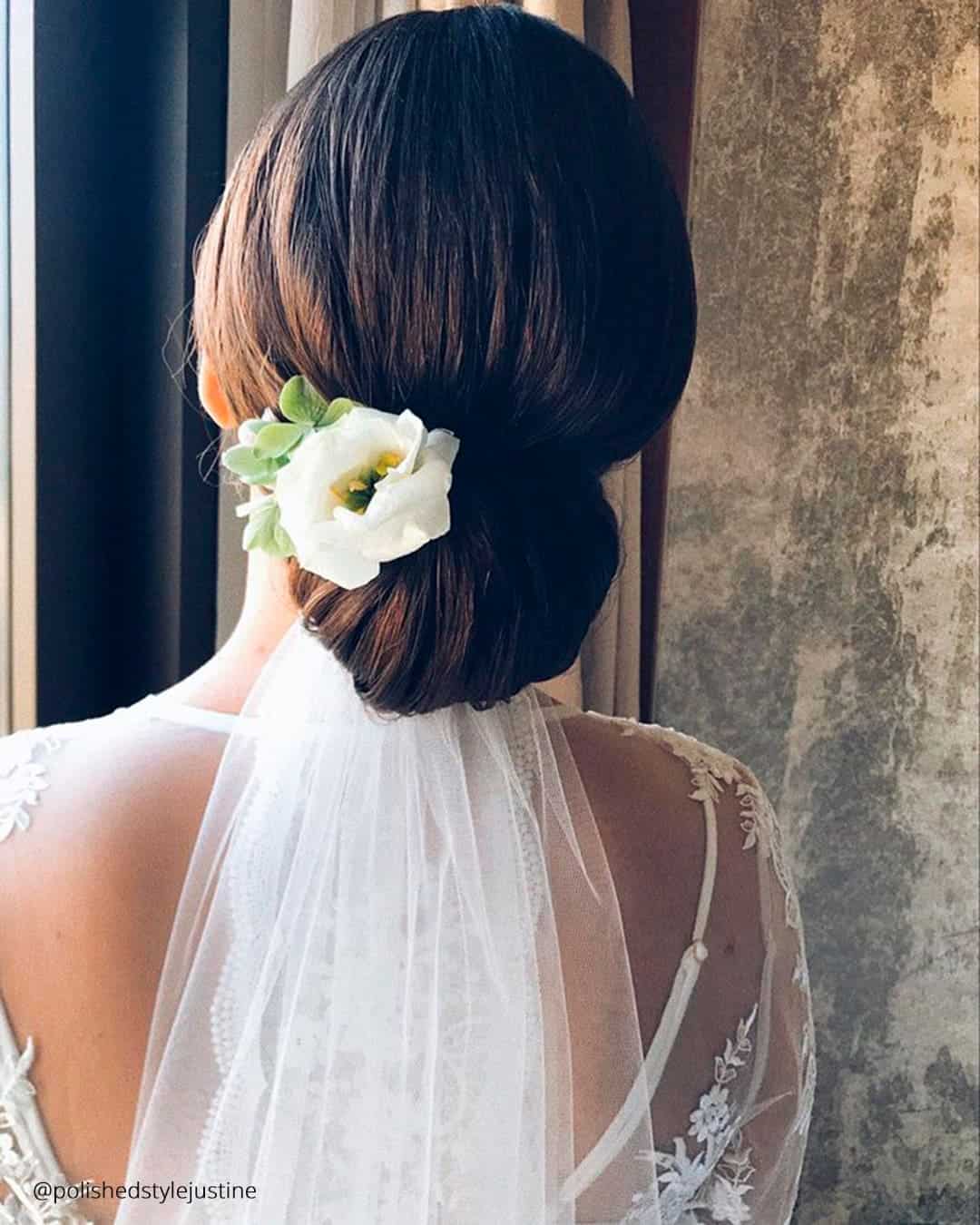
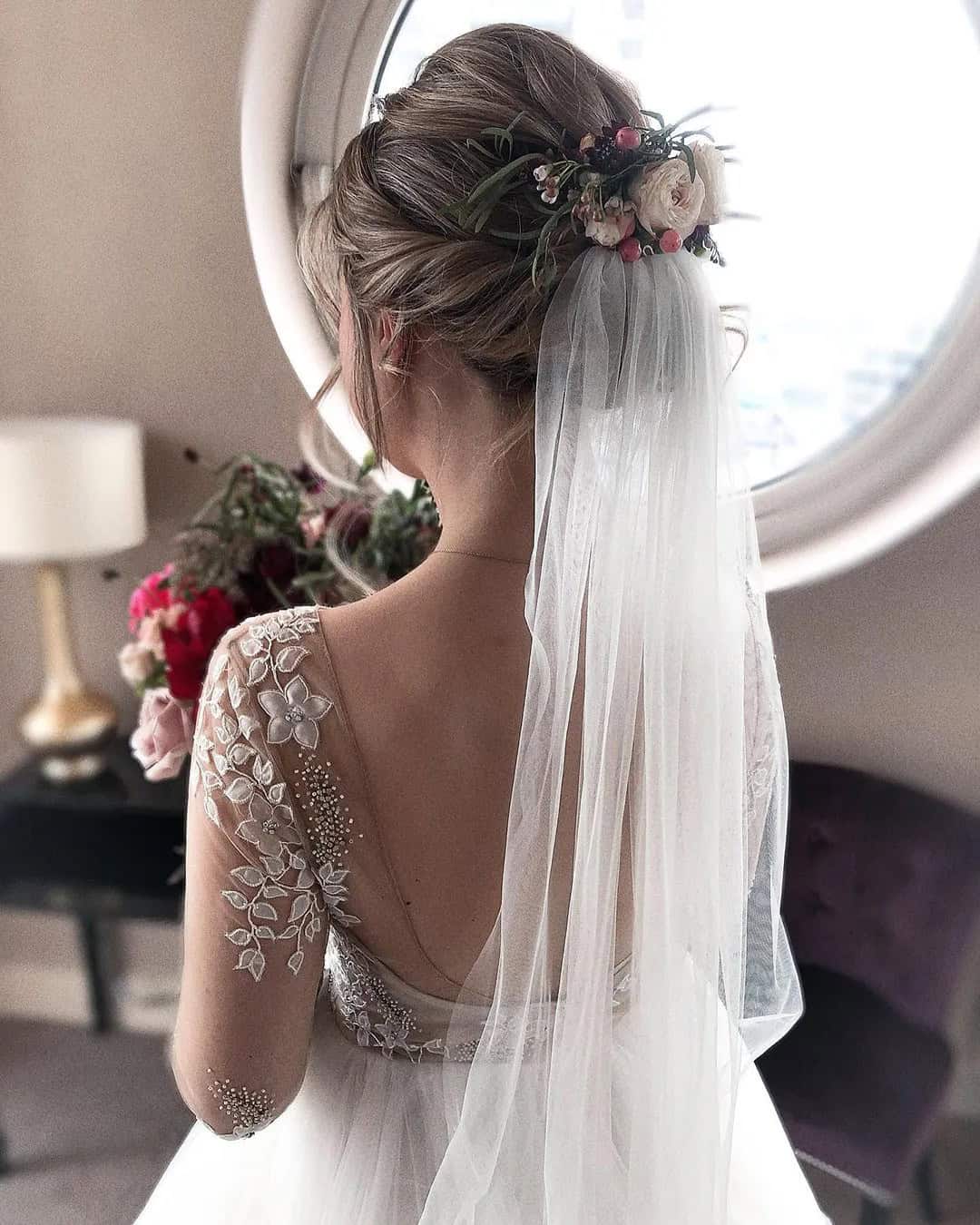
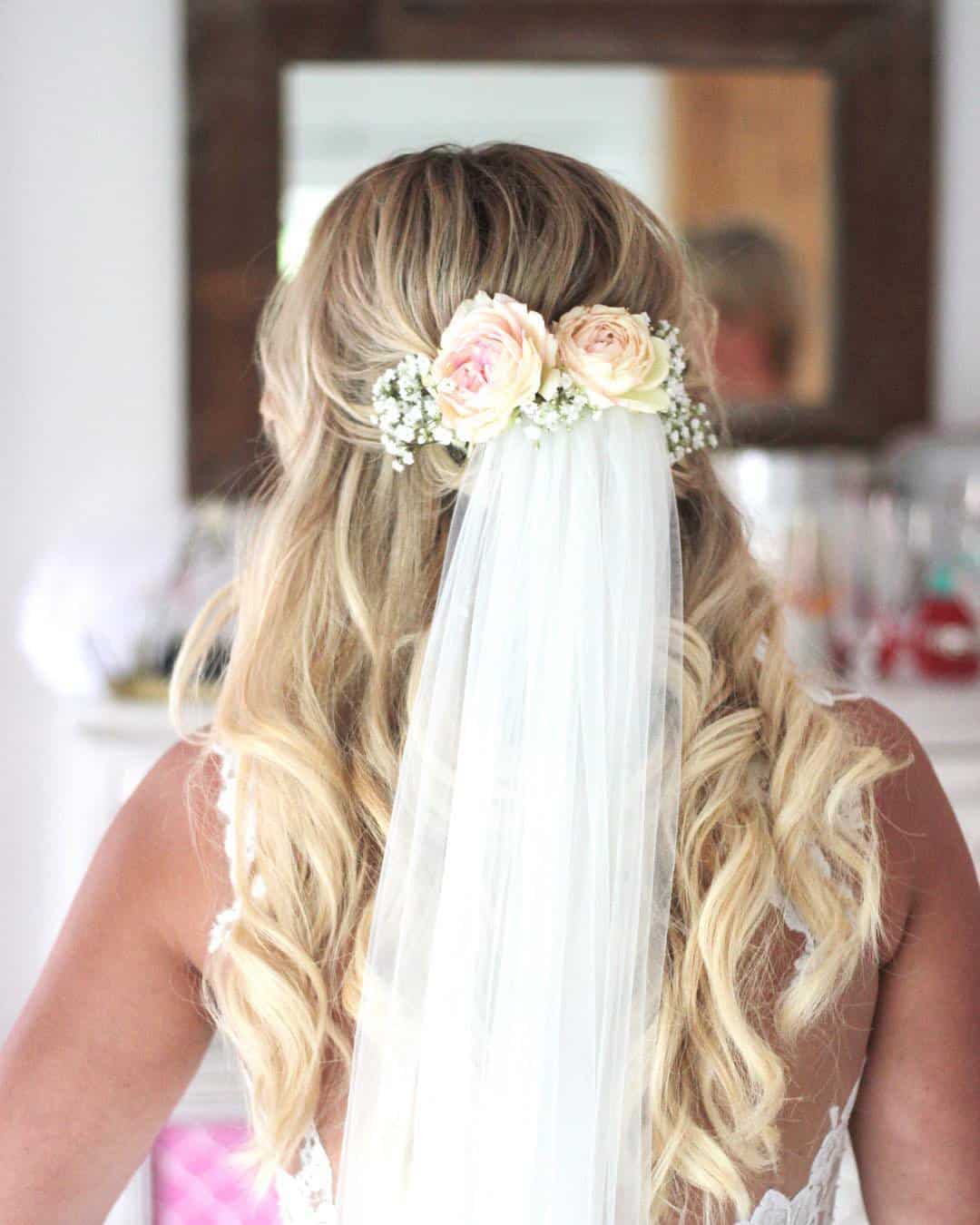
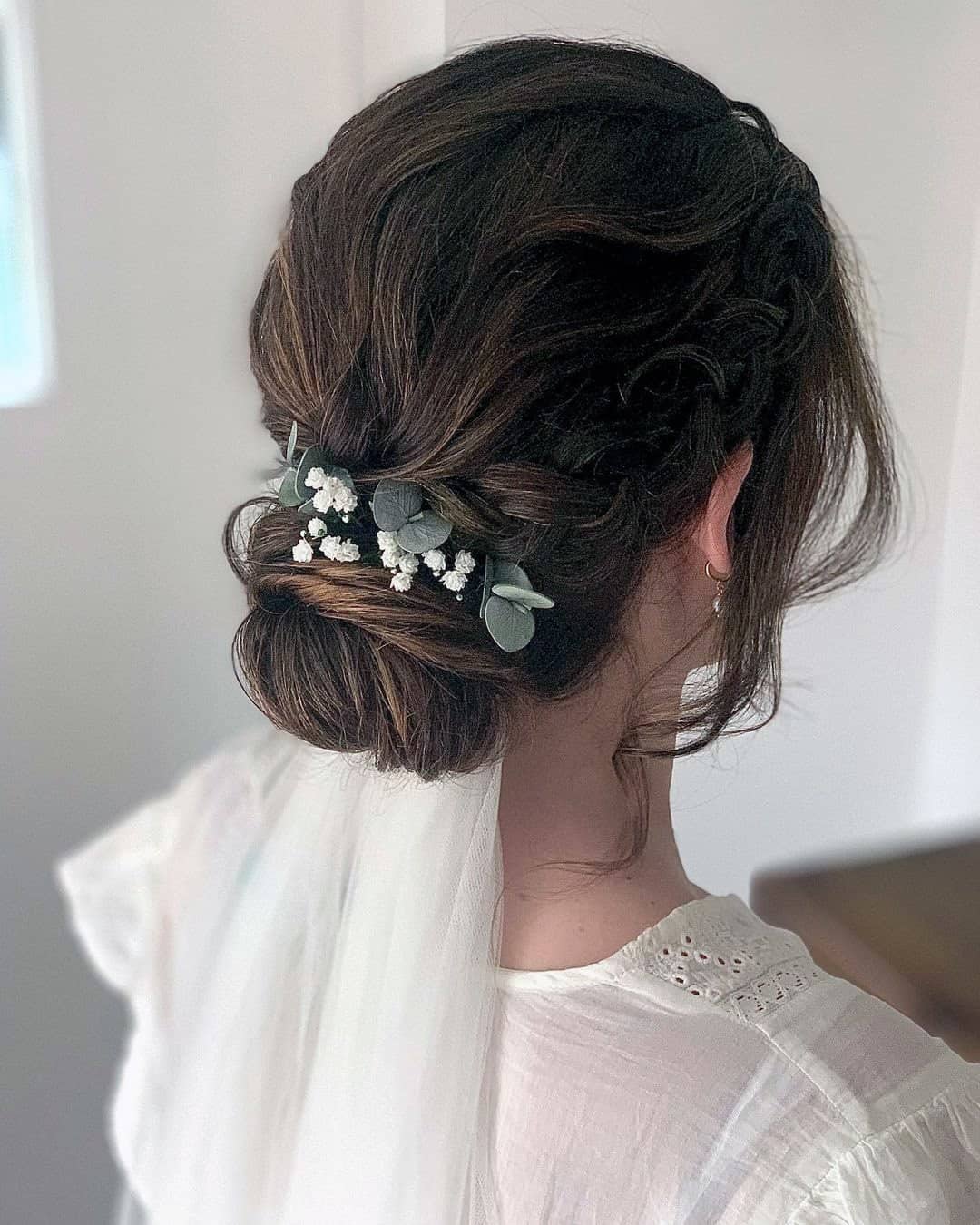
Wedding hairstyles with veils and flowers are absolutely breathtaking and we’re not shy about shouting it. Flower-veil pairings are a smash hit for garden, rustic, beach, woodland, and country weddings.
They match beautifully with the Mermaid silhouette, tea-length dresses, slips, strapless gowns, and mono-strap designs. Try pairing a flower crown woven with wispy petals, lush foliage, and Scottish ferns in a sweet partial crown shape.
Combine this crown with a veil placed on your chosen hairstyle to give an instant hit of ethereal magic. You can also craft floral petals into headbands using textural succulents to produce a fresh, organic vibe.
There’s also the route of flower combs loaded with multiple blooms to deliver pops of vibrant color throughout the hair.
Combs are just perfect for partial updos. And if you’re truly a minimalist at heart, a single, stunning bloom tucked into your hair would absolutely do the trick.
Wedding Veil Alternatives
Alternatives to a traditional wedding veil can either produce flowing, dramatic drapery behind the bride or add striking decoration directly onto the hairstyle. The smartest choice depends squarely on your dress silhouette, hairstyle, preferred attachment point, and how much freedom of movement you’re hoping to enjoy.
Bridal Cape
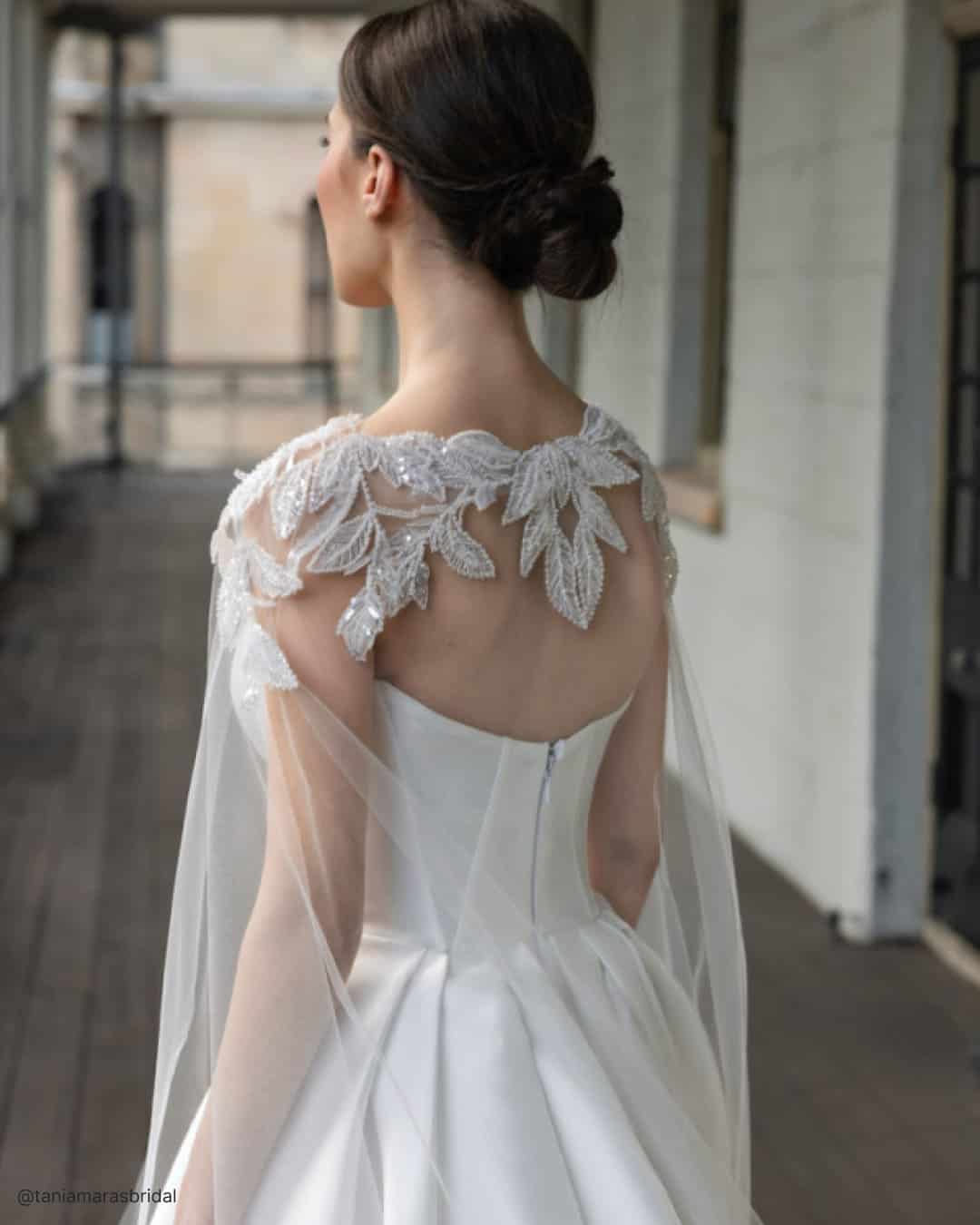
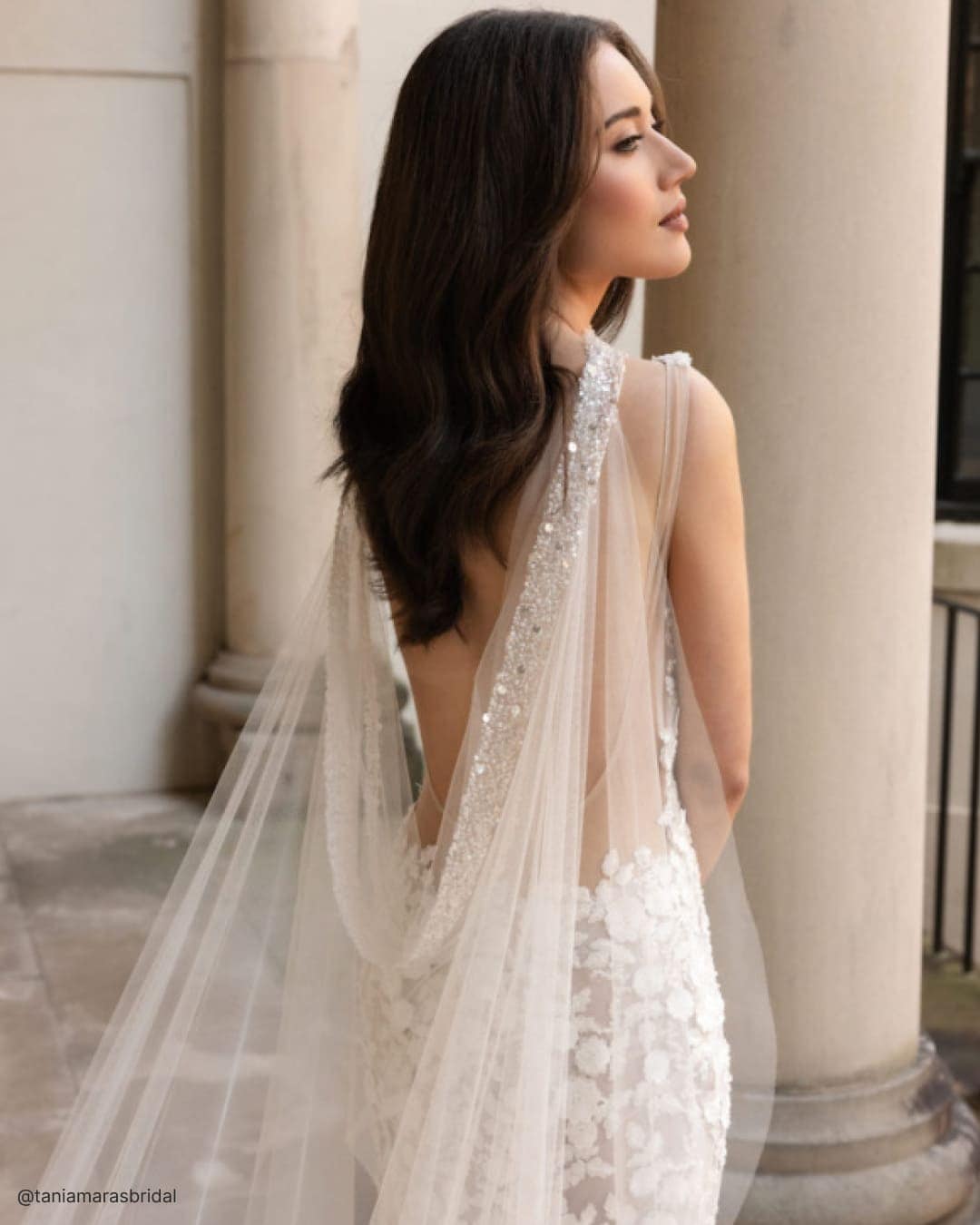
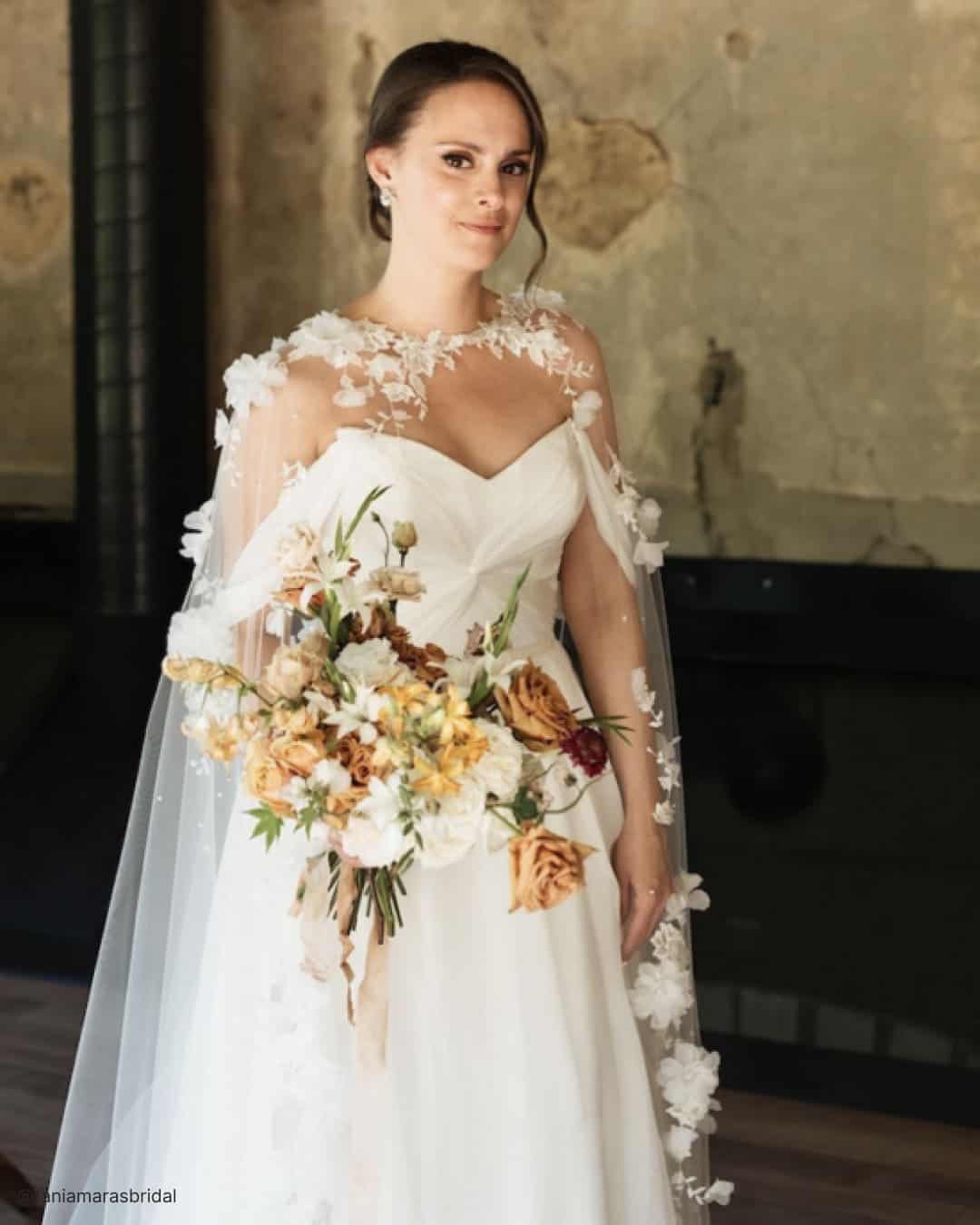
A bridal cape fastens to the dress or shoulders, creating dramatic, sweeping length without dumping any weight onto the hair. It works especially well when paired with simple, clean gowns and structured, architectural silhouettes.
Bridal Wings
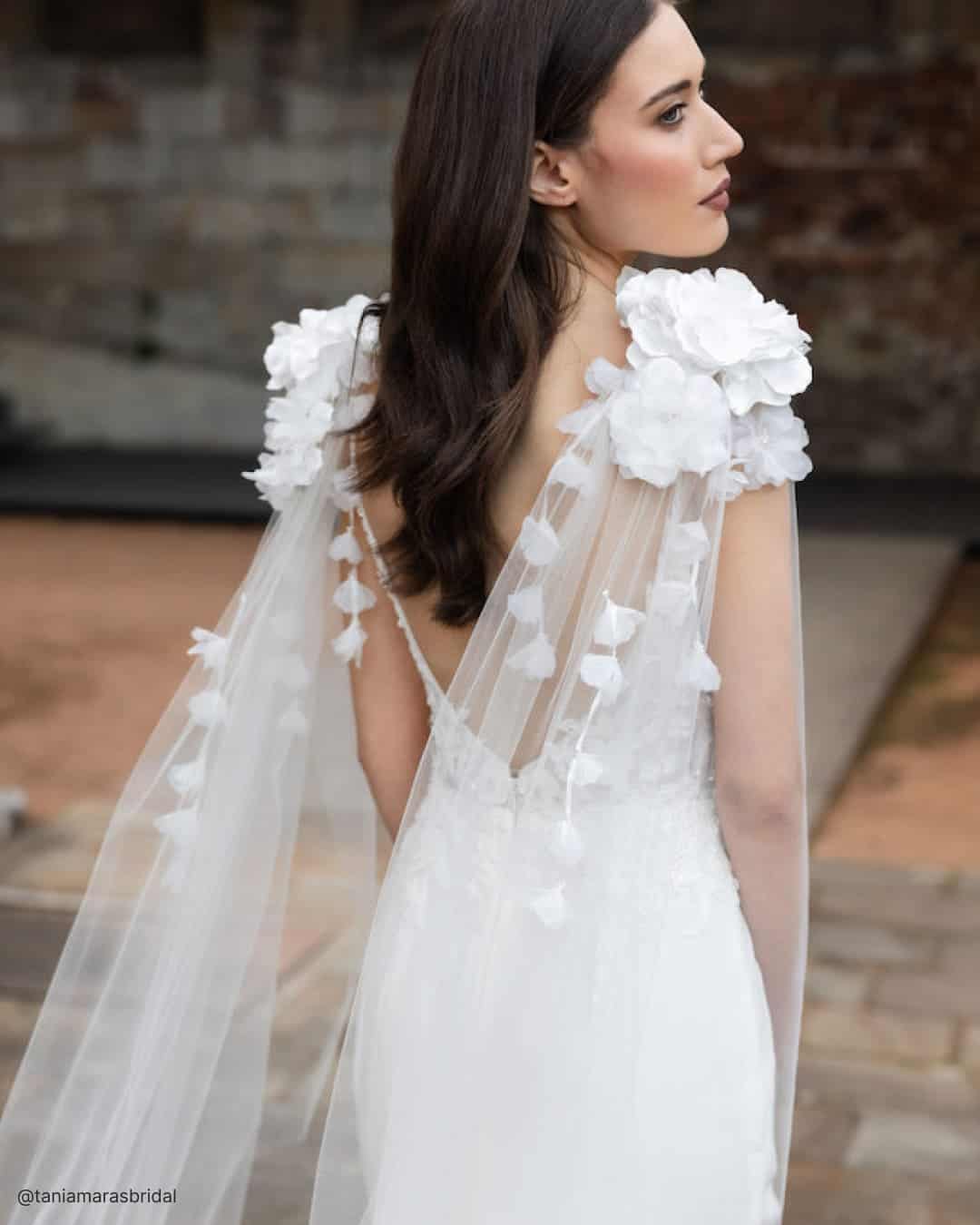
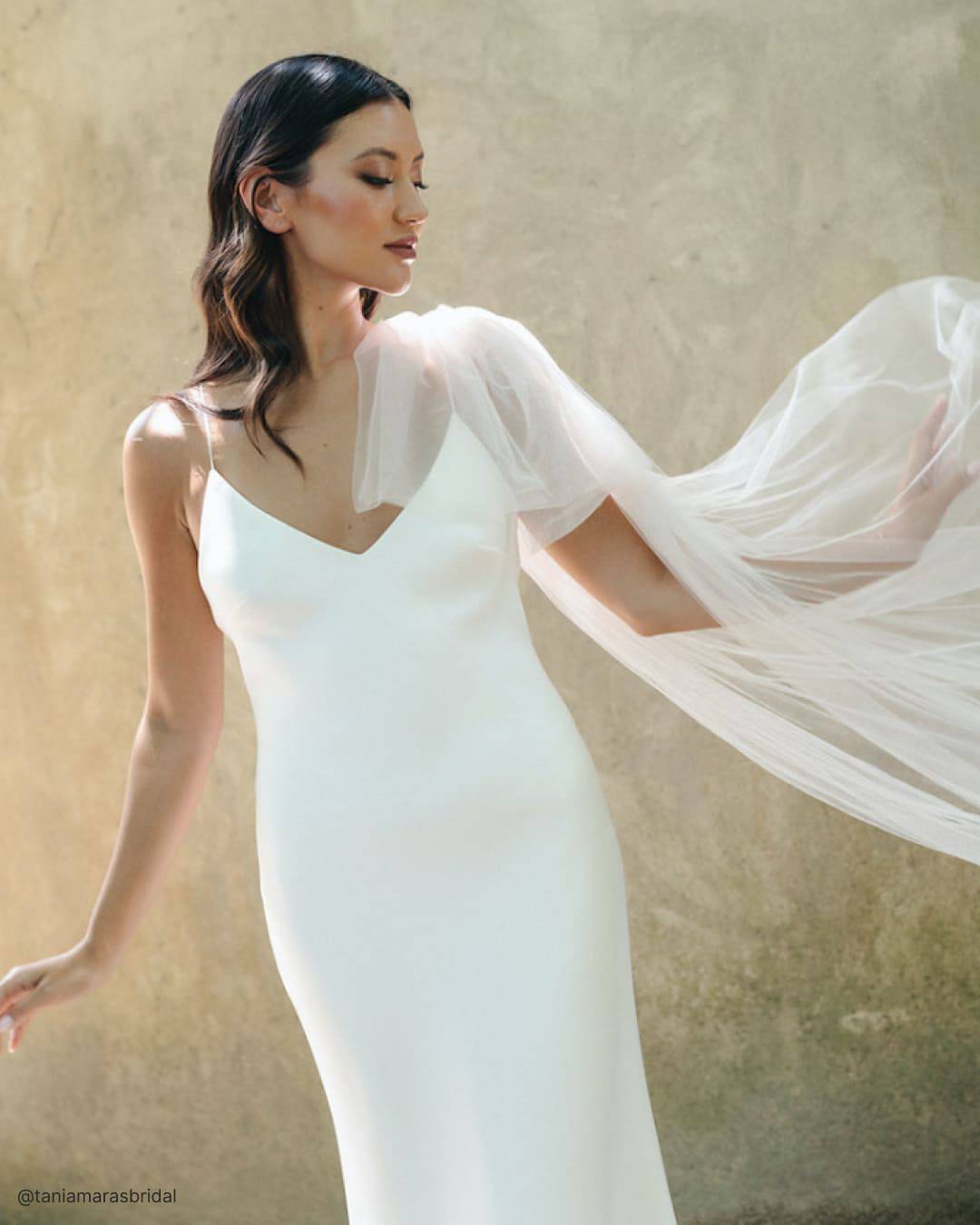
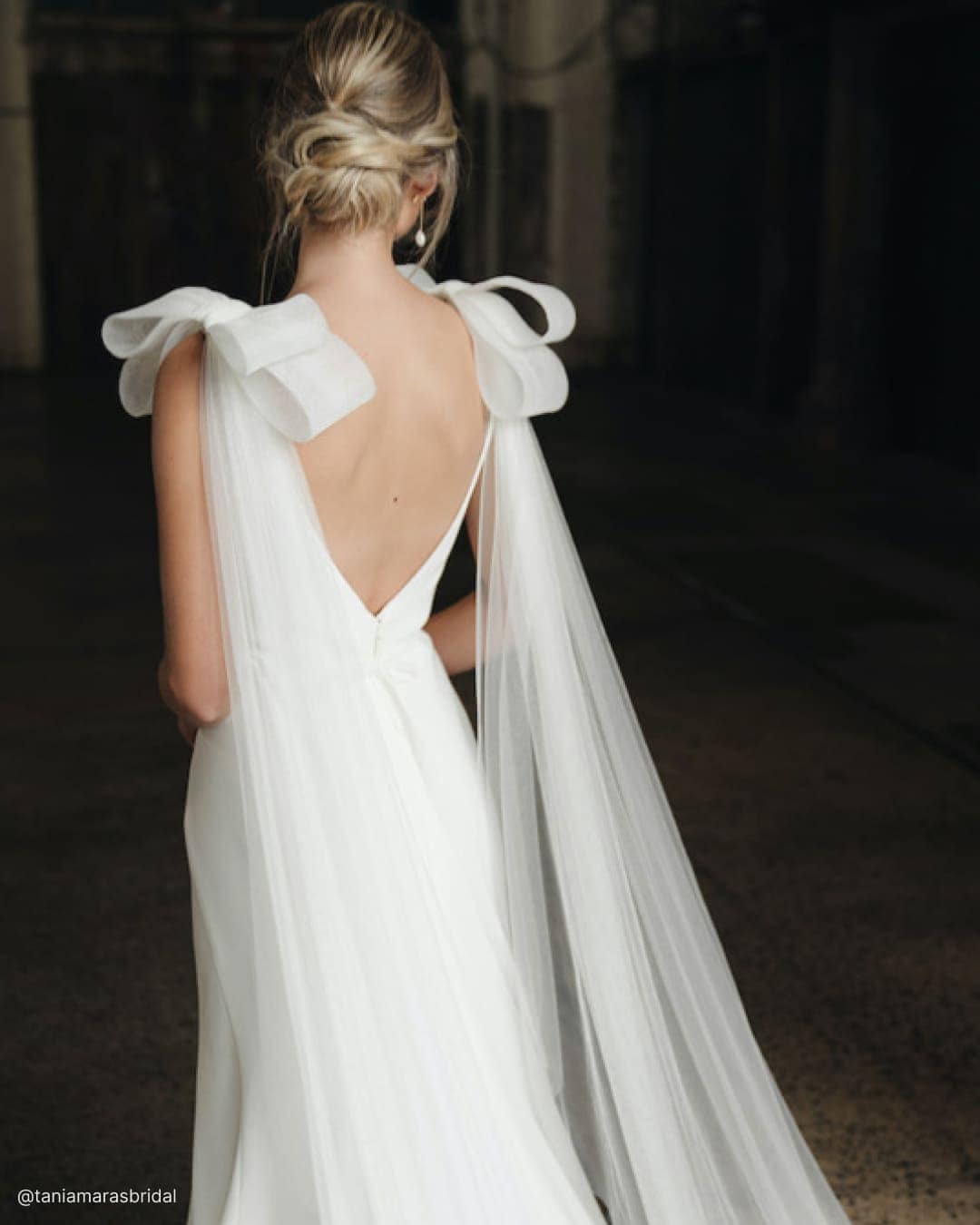
Bridal wings attach right to the shoulders or straps, leaving the hairstyle completely visible and untouched. They supply gorgeous movement while keeping your head and neck totally unrestricted and free.
Floral Crown
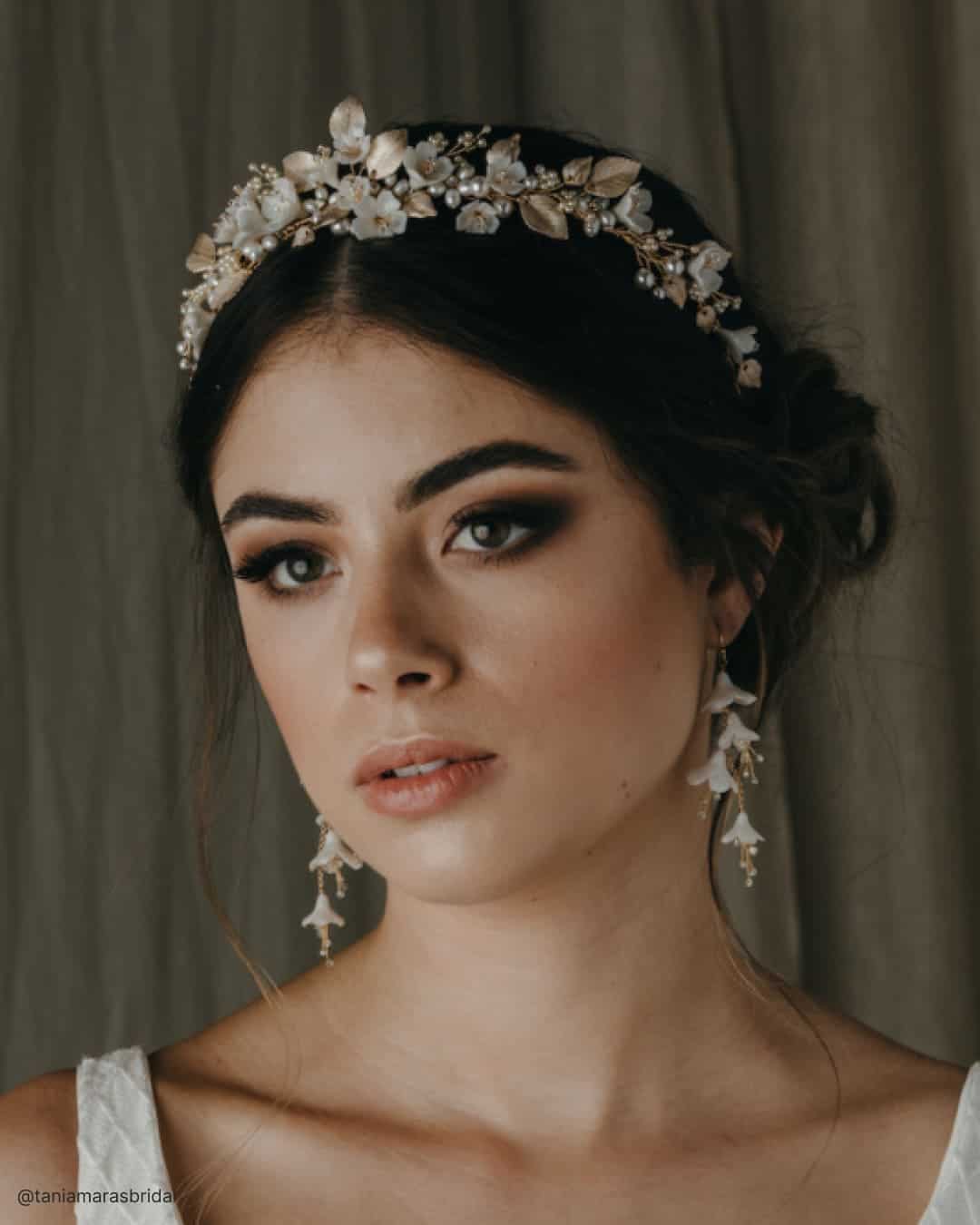
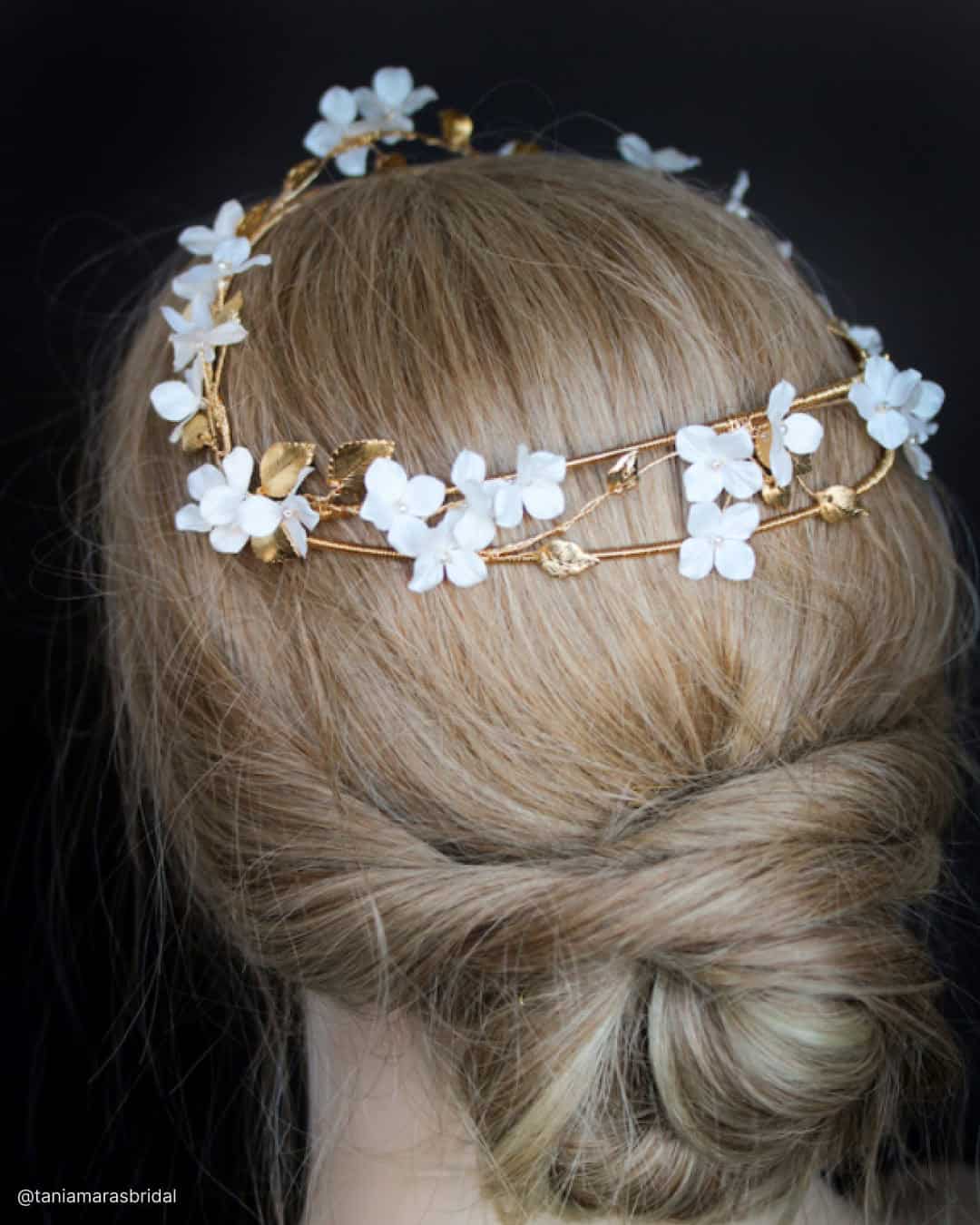
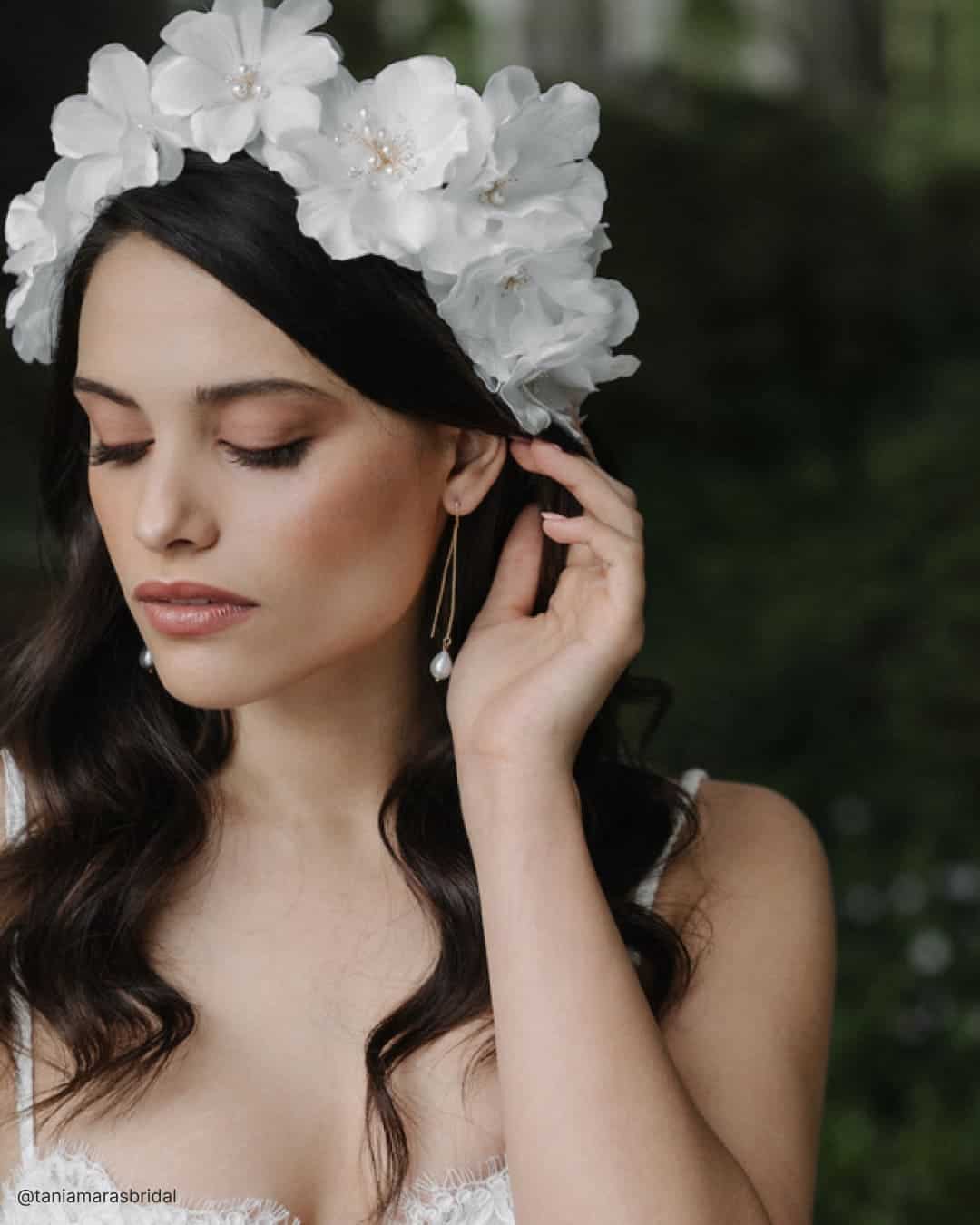
A floral crown can seamlessly replace the veil for garden, boho, beach, or rustic weddings. Fresh or carefully preserved flowers pile on texture and life but do demand a secure, perfectly comfortable fit.
Bridal Hair Comb
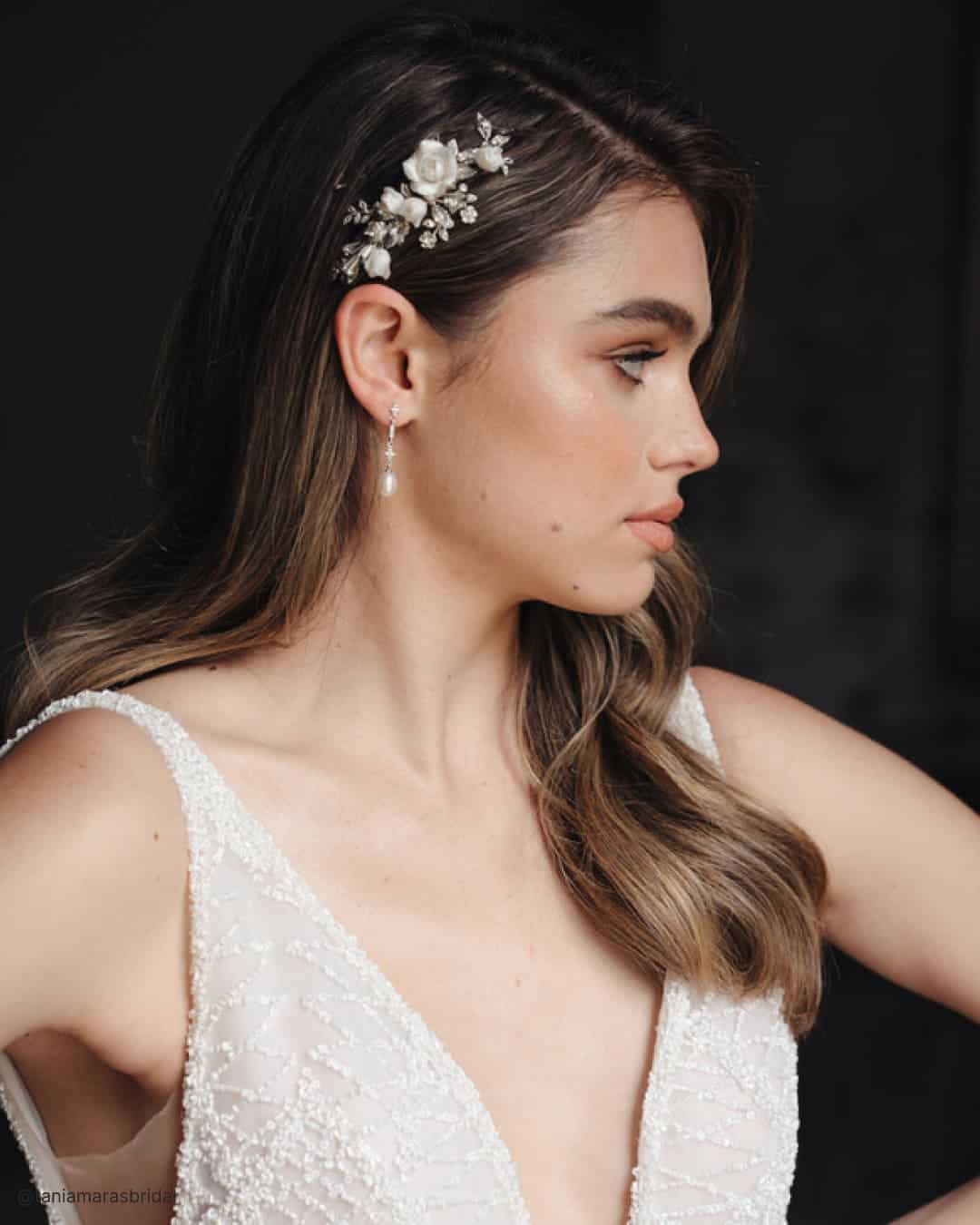
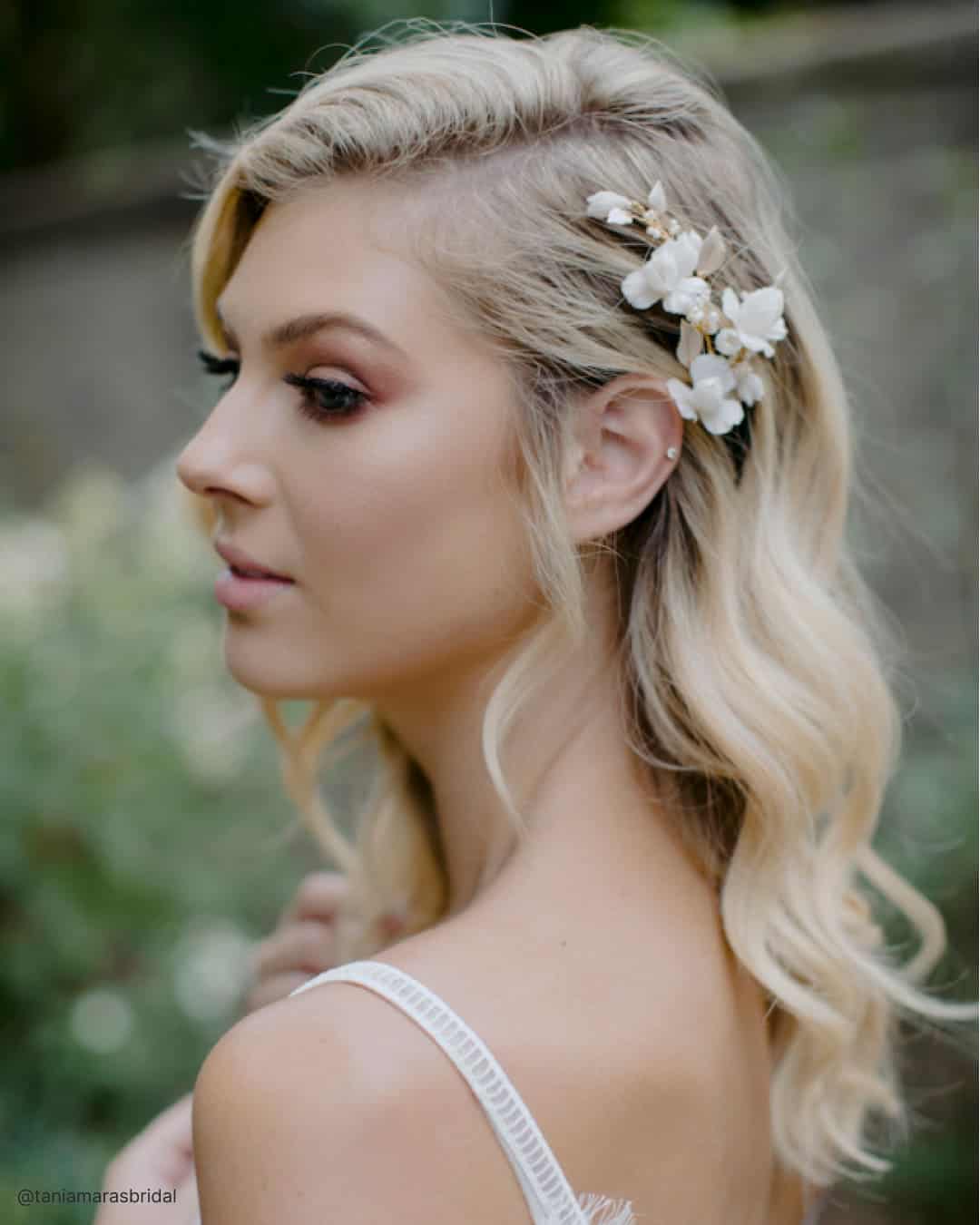
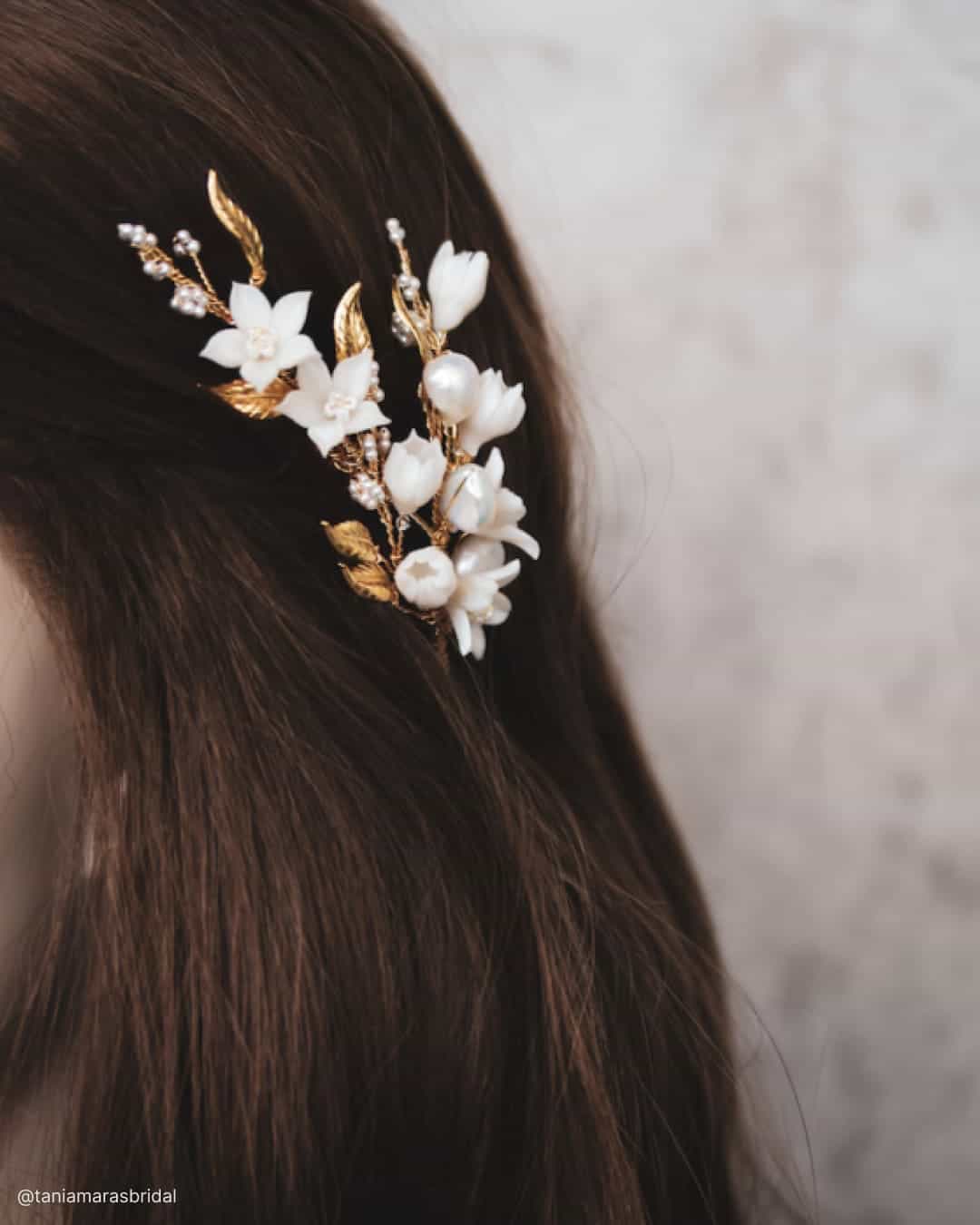
A bridal hair comb is a beautifully compact choice for an updo, half-up hairstyle, or side-swept hair. It injects detail and sparkle without any trailing fabric or limiting your movement in the slightest.
Decorative Hair Pins
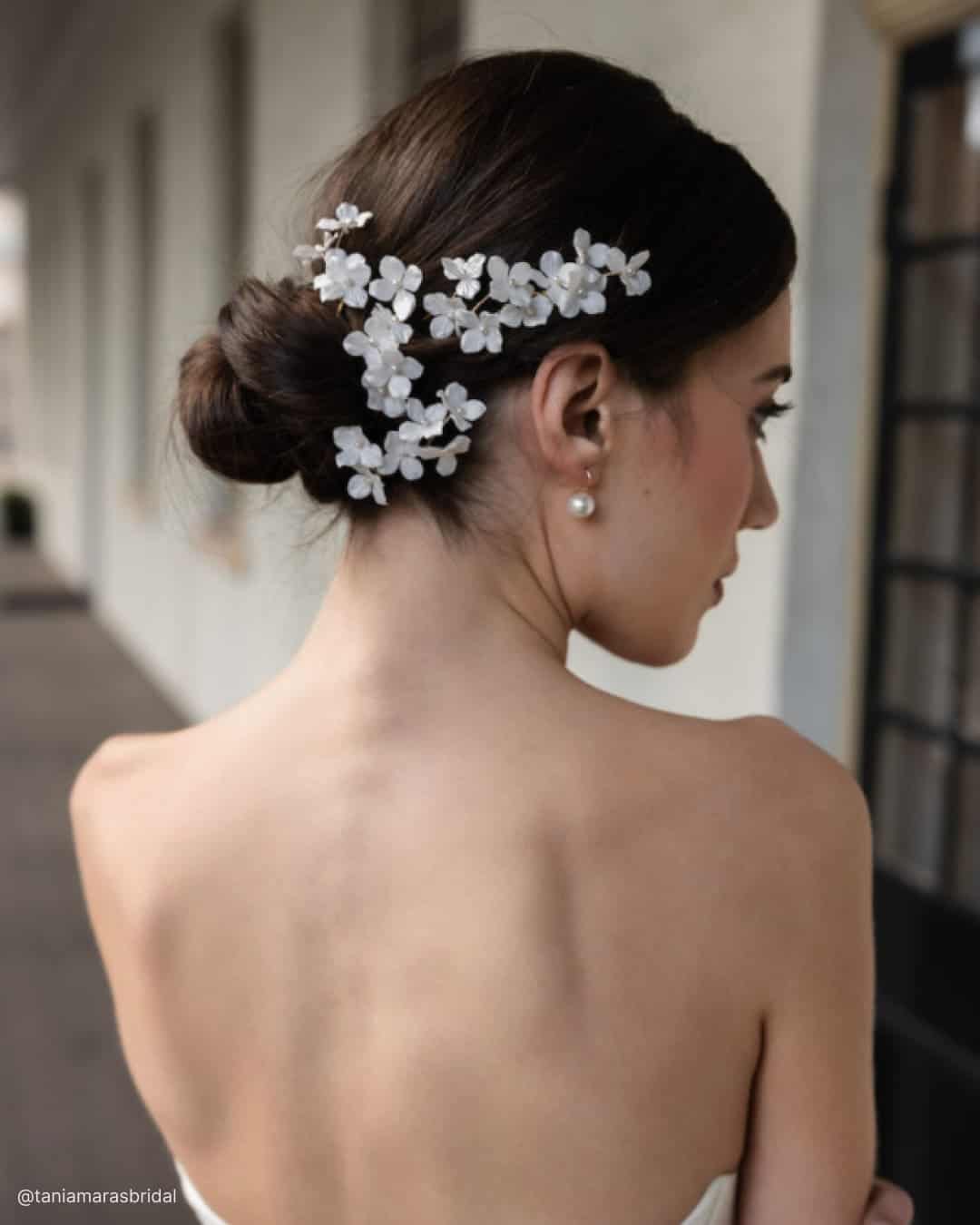
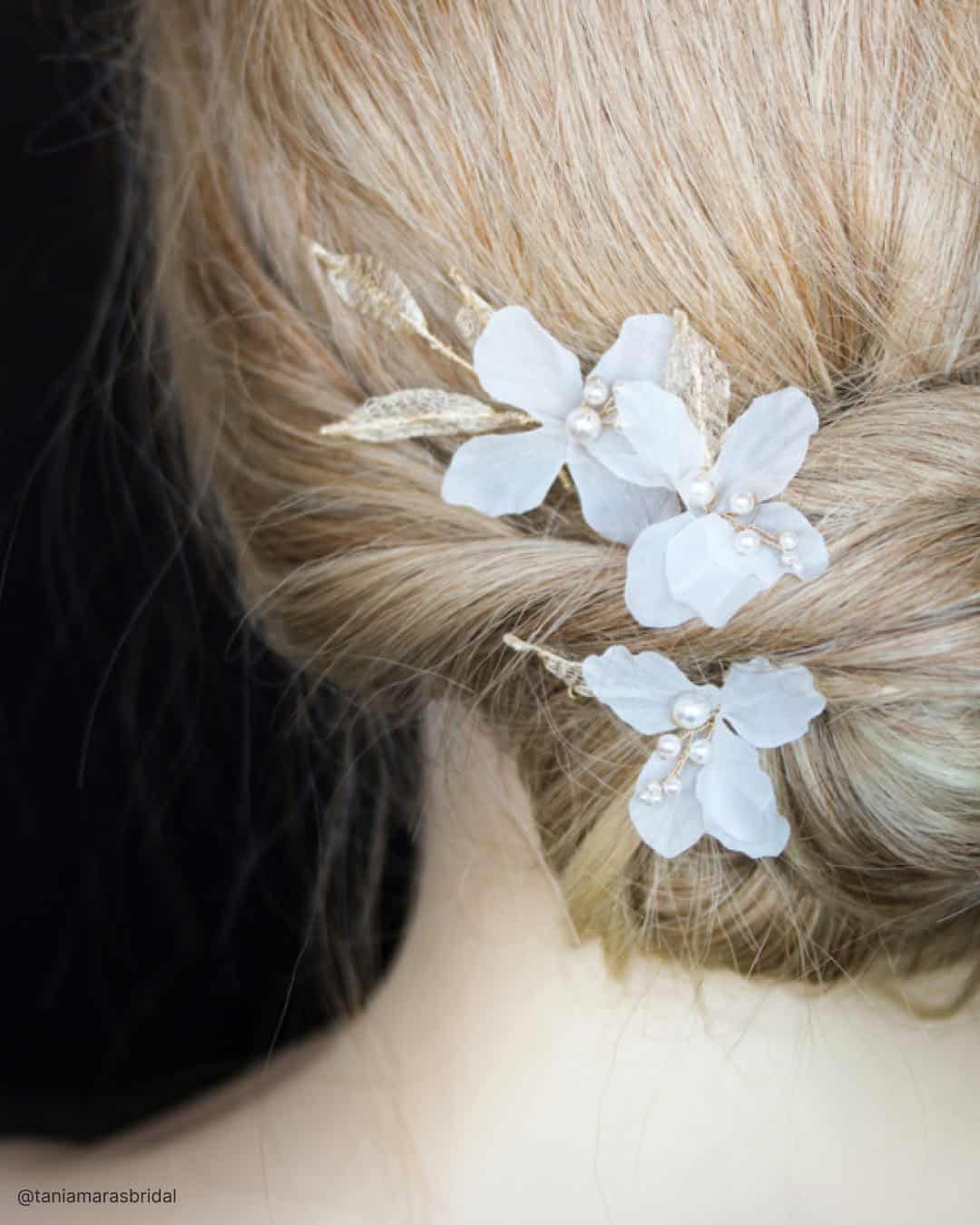
Decorative hair pins are perfectly suited for a minimalist veil-free bridal look. They can be distributed with easy precision across a bun, braid, twists, or loose, flowing waves without ever affecting the flow of the dress.